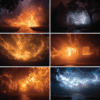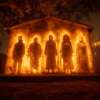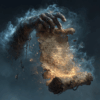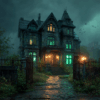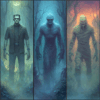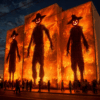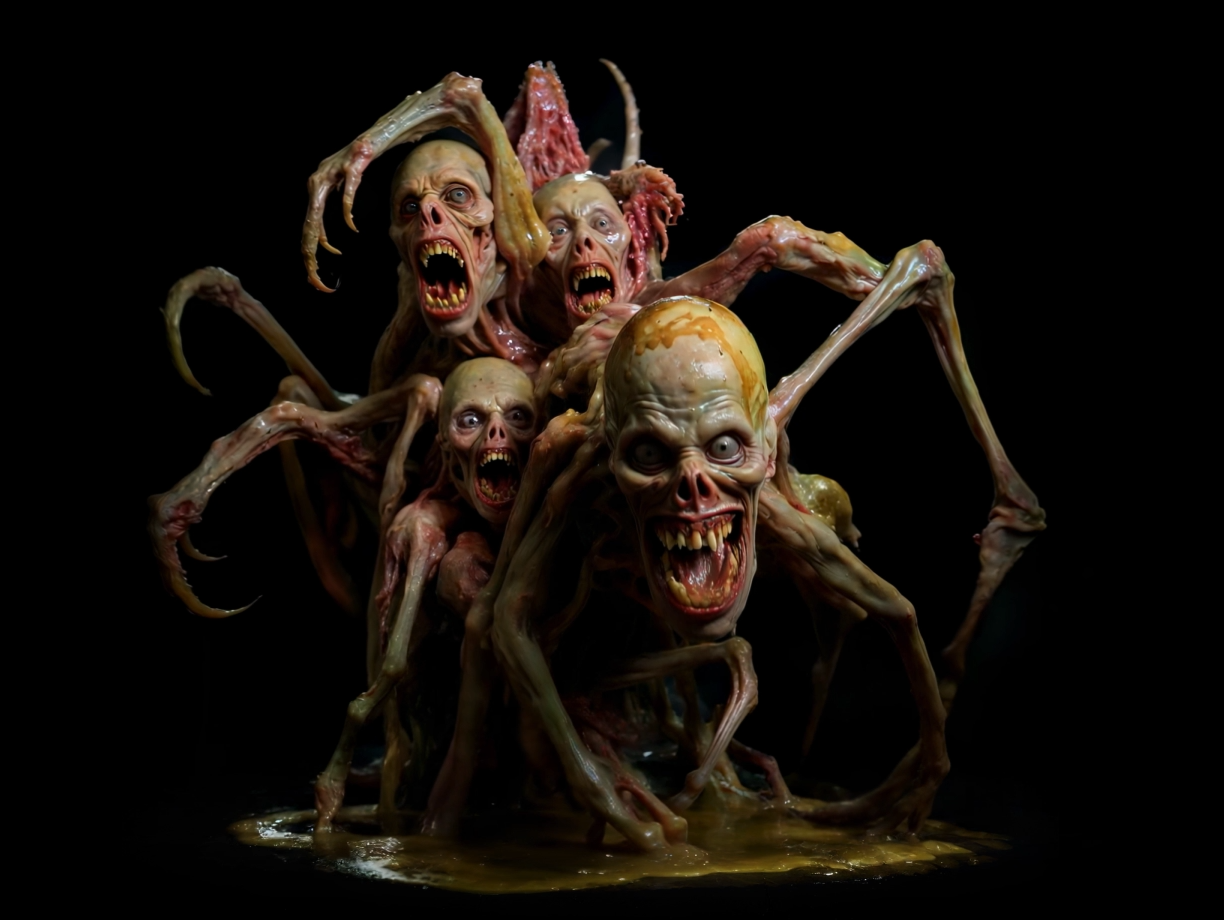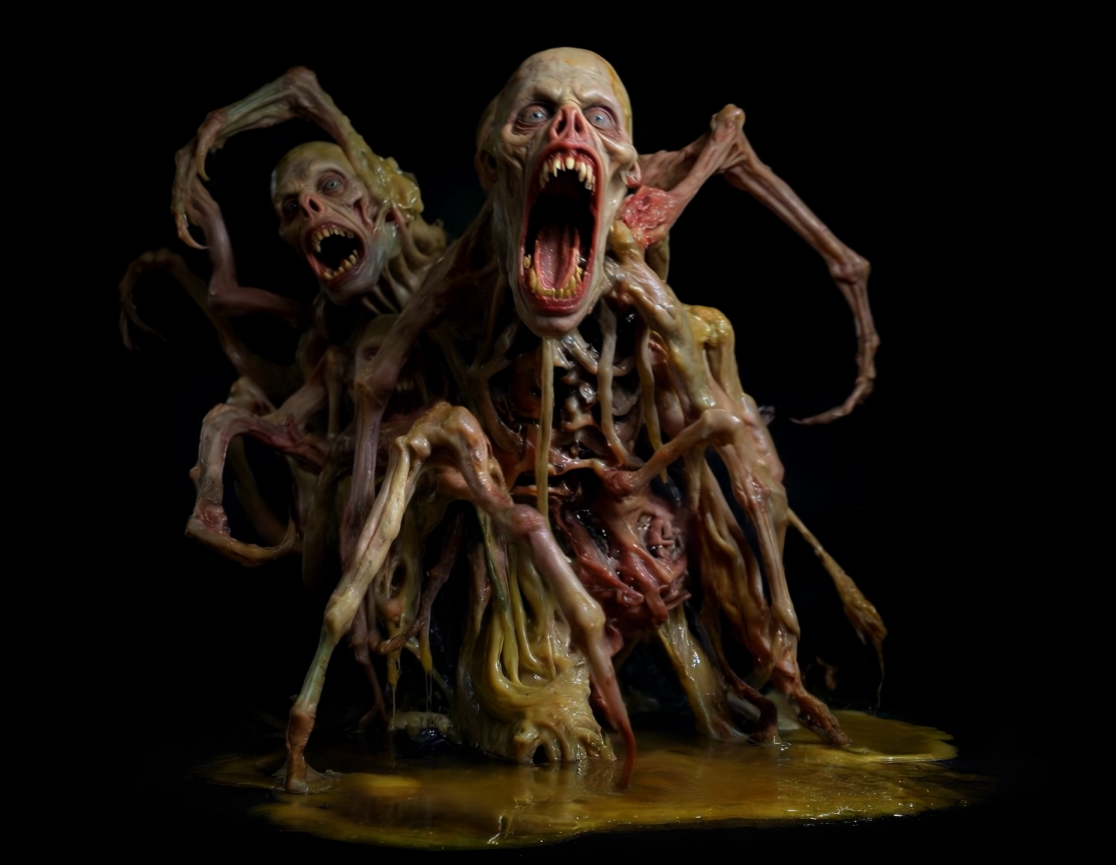

AtmosFX’s Nightmares collection is a chilling new entry in the world of digital Halloween projection—and marks the studio’s first dive into AI-generated horror. This bold creative leap conjures six grotesque monsters straight from the depths of a fever dream, each designed to evoke discomfort, curiosity, and pure dread. With three unique scenes per creature, the collection offers 18 total animations that push past the realm of traditional Halloween frights and into surreal psychological terror. Whether displayed on windows, walls, TVs, or Hollusion Projection Material, these nightmarish beings bring high-concept horror to life like never before.
Unlike previous AtmosFX offerings, which often balance humor, nostalgia, or family-friendly scares, Nightmares is deliberately disturbing. These creatures aren’t playful ghosts or mischievous skeletons—they’re writhing mutations, decaying dolls, cursed spellcasters, and malformed abominations born from the subconscious. It’s a collection designed for serious haunters looking to create a spine-tingling experience that lingers with guests long after the decorations come down. With Nightmares, AtmosFX doesn't just ask you to celebrate Halloween—they dare you to confront it.
- Nightmares - Abomination
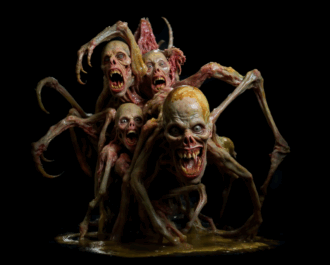
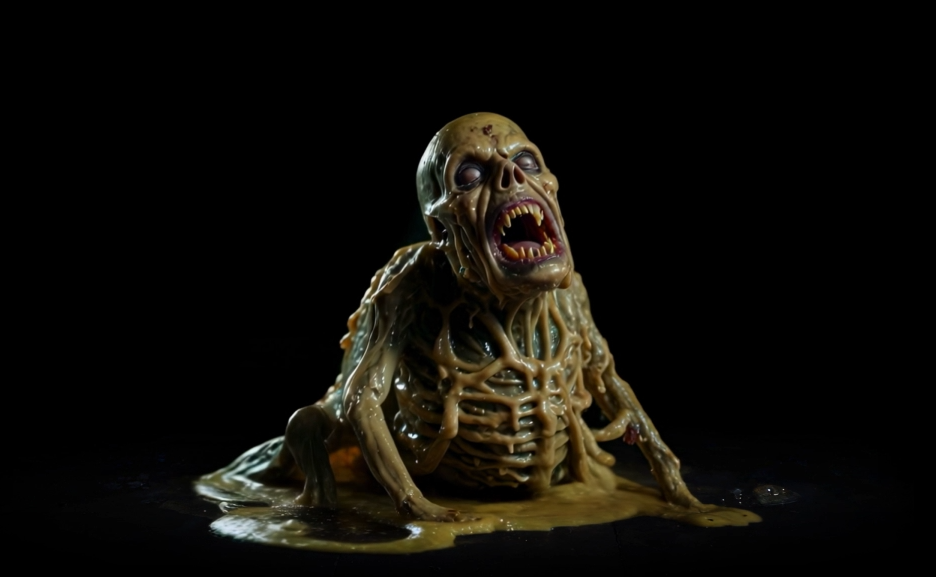
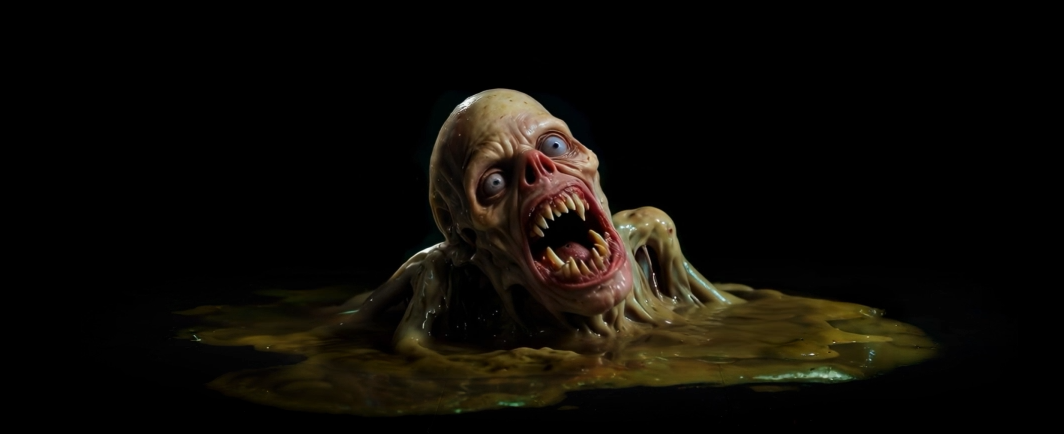
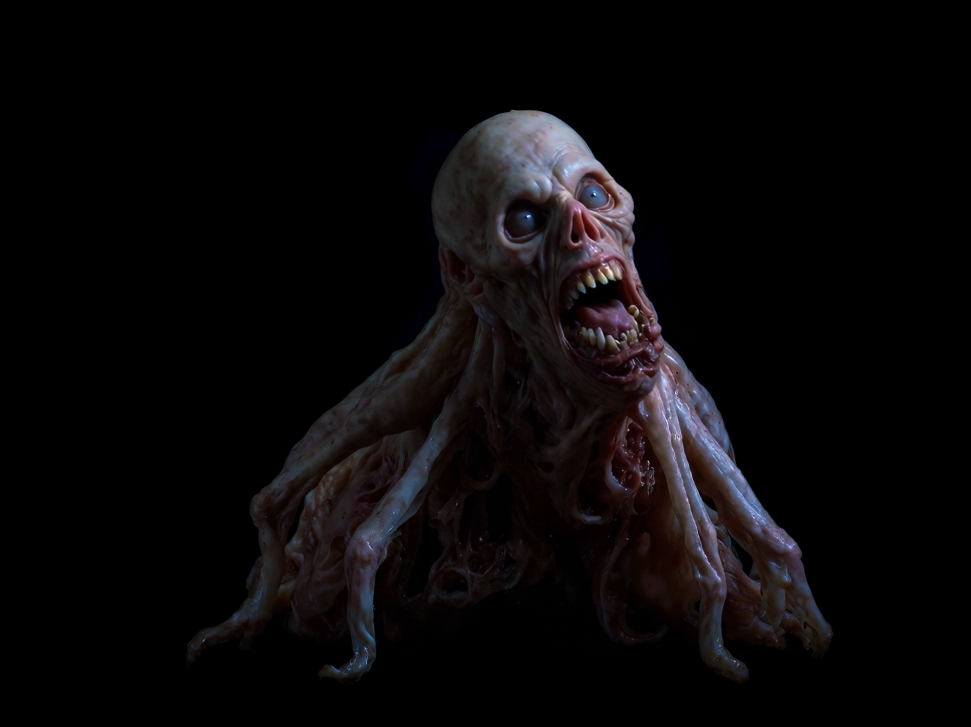
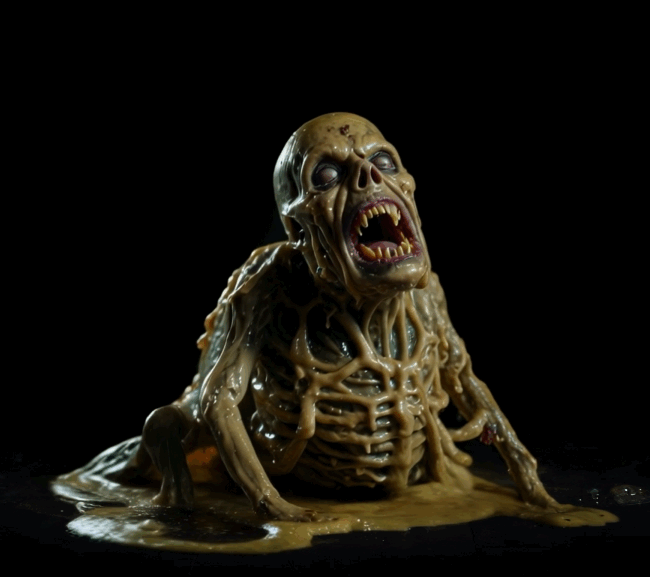
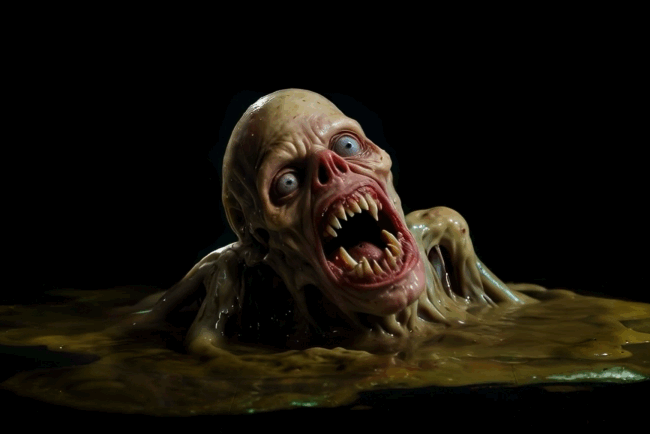
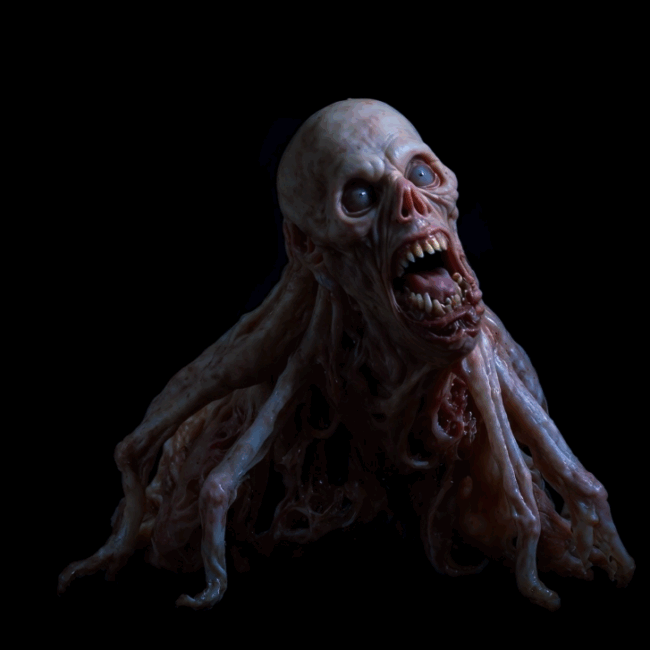
The first Abomination scene begins with a pulsating puddle of slime that bubbles and writhes at the center of the screen. Slowly, a grotesque creature claws its way out from the viscous goop—its form constantly shifting as new limbs and malformed torsos emerge from its expanding body. As the horror peaks, the abomination unleashes a piercing scream, then melts back into the sludge as the puddle vanishes, leaving nothing but unease in its wake. It’s a jarring and intense sequence, with a tone far too disturbing for younger viewers, but tailor-made for thrill-seeking teens and adults.
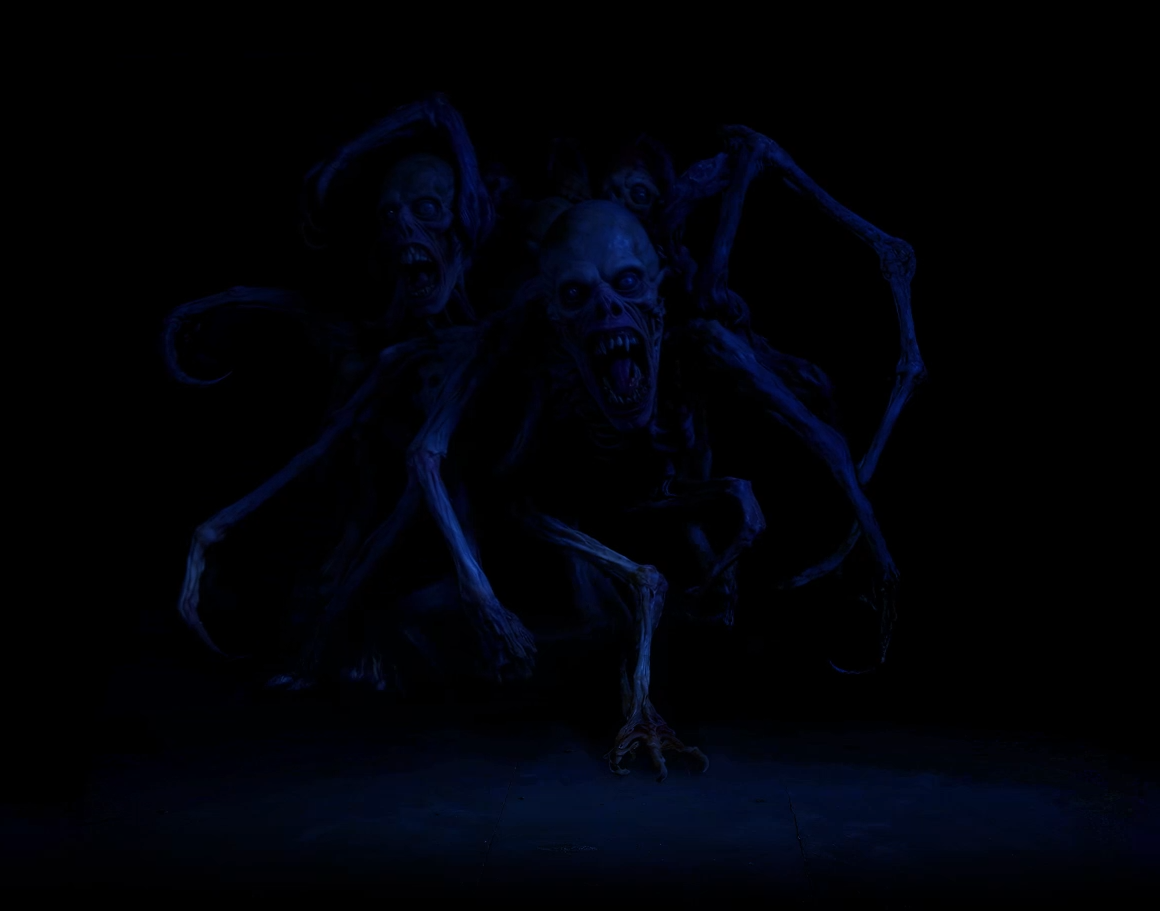
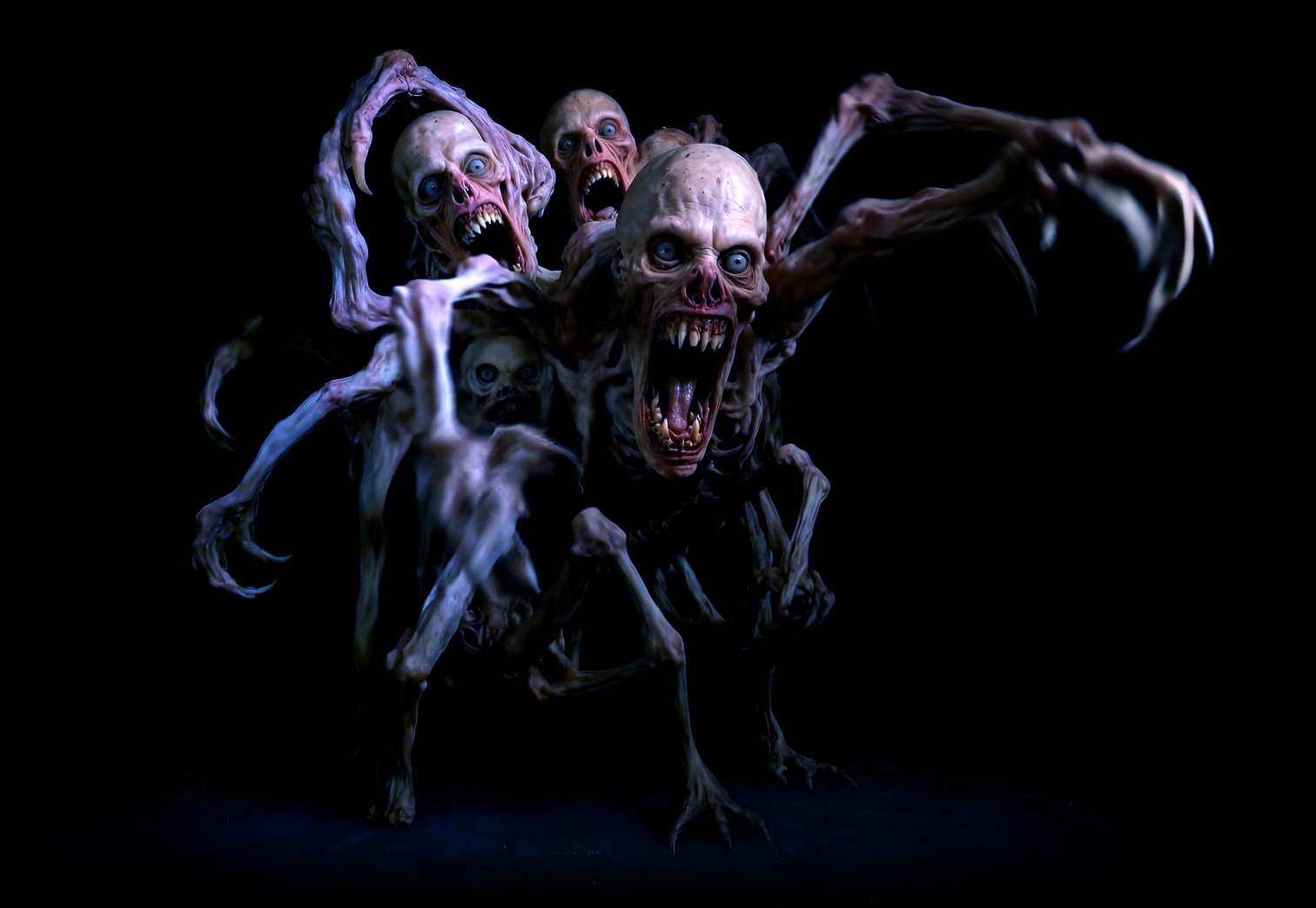
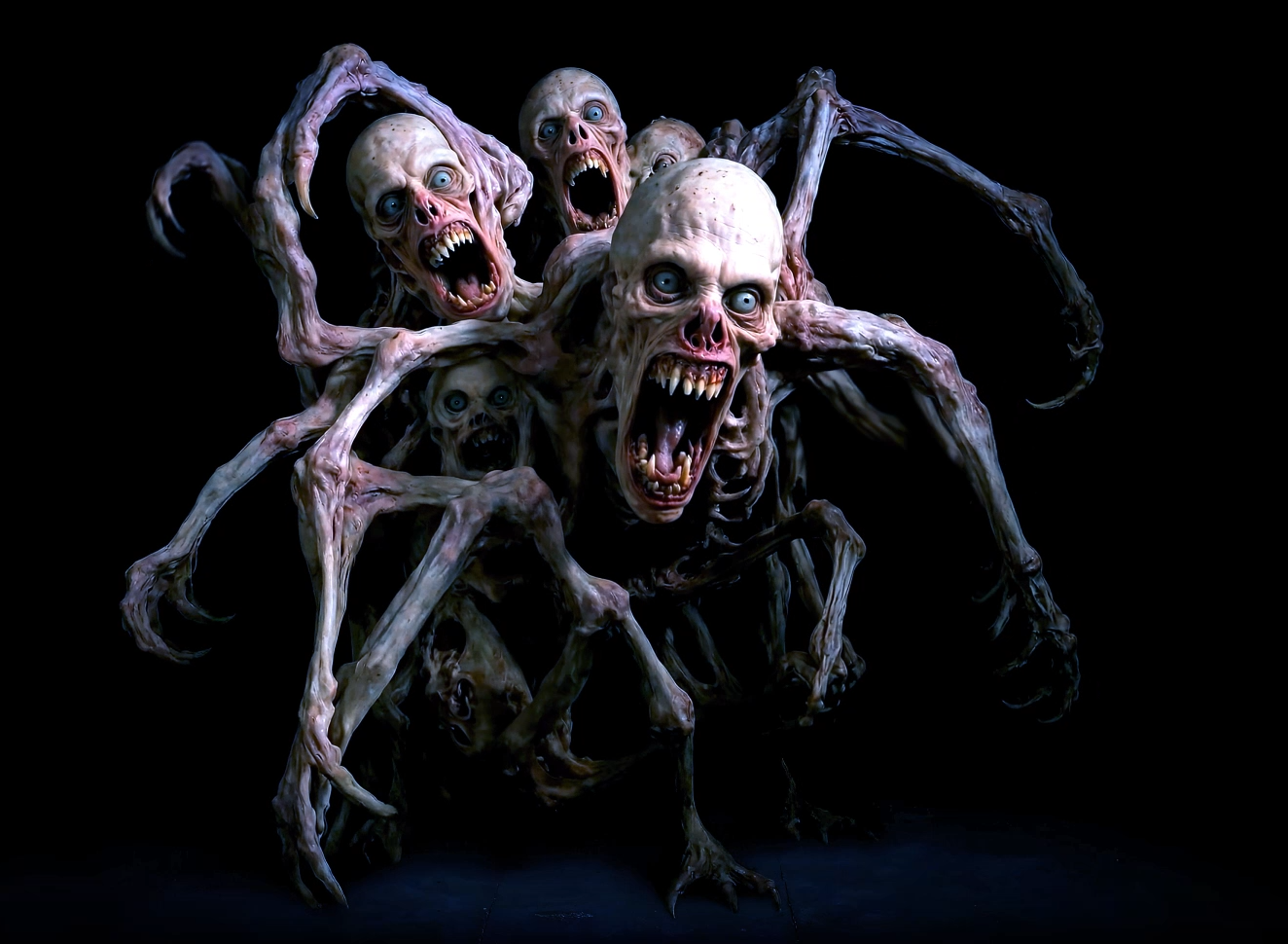
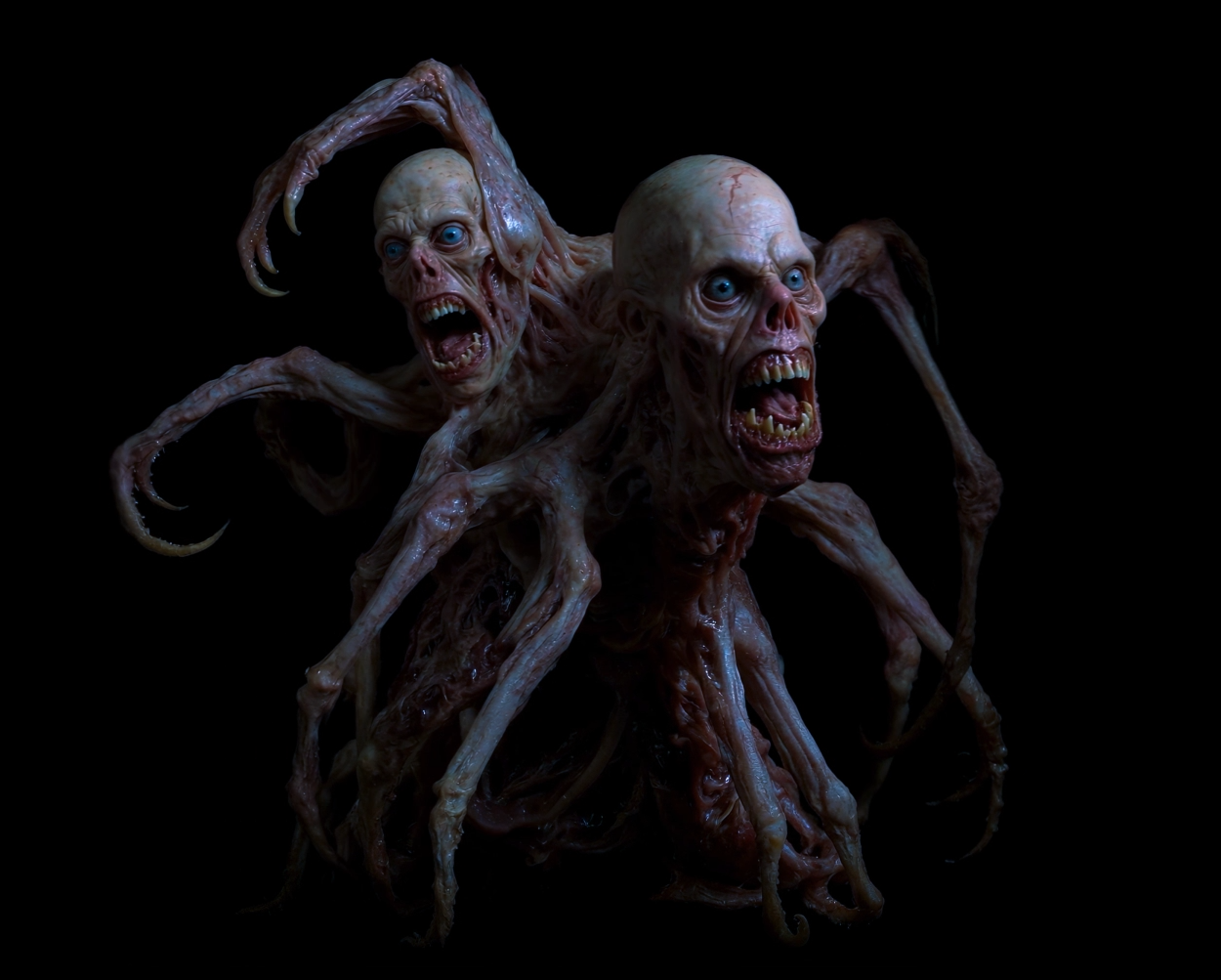
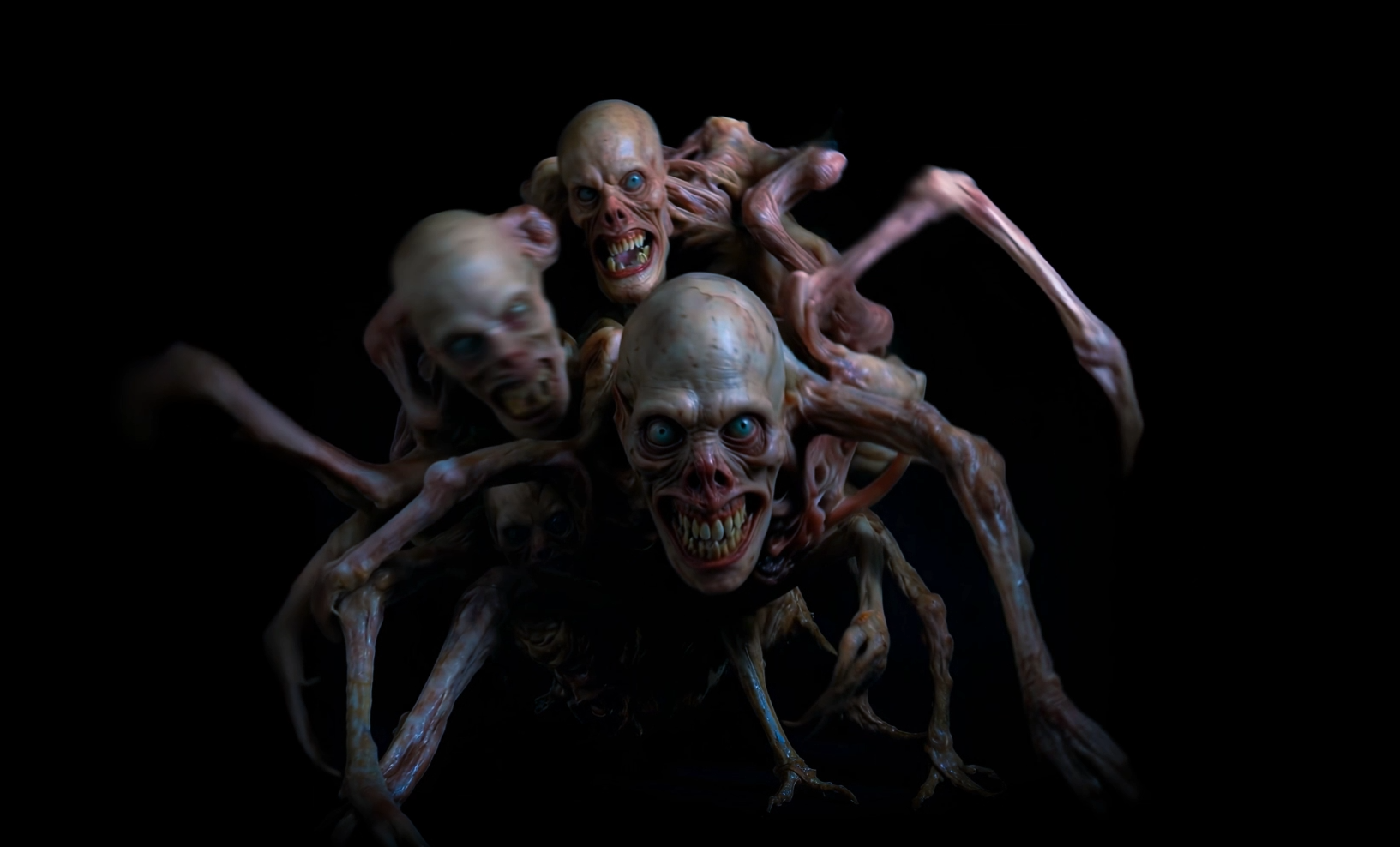
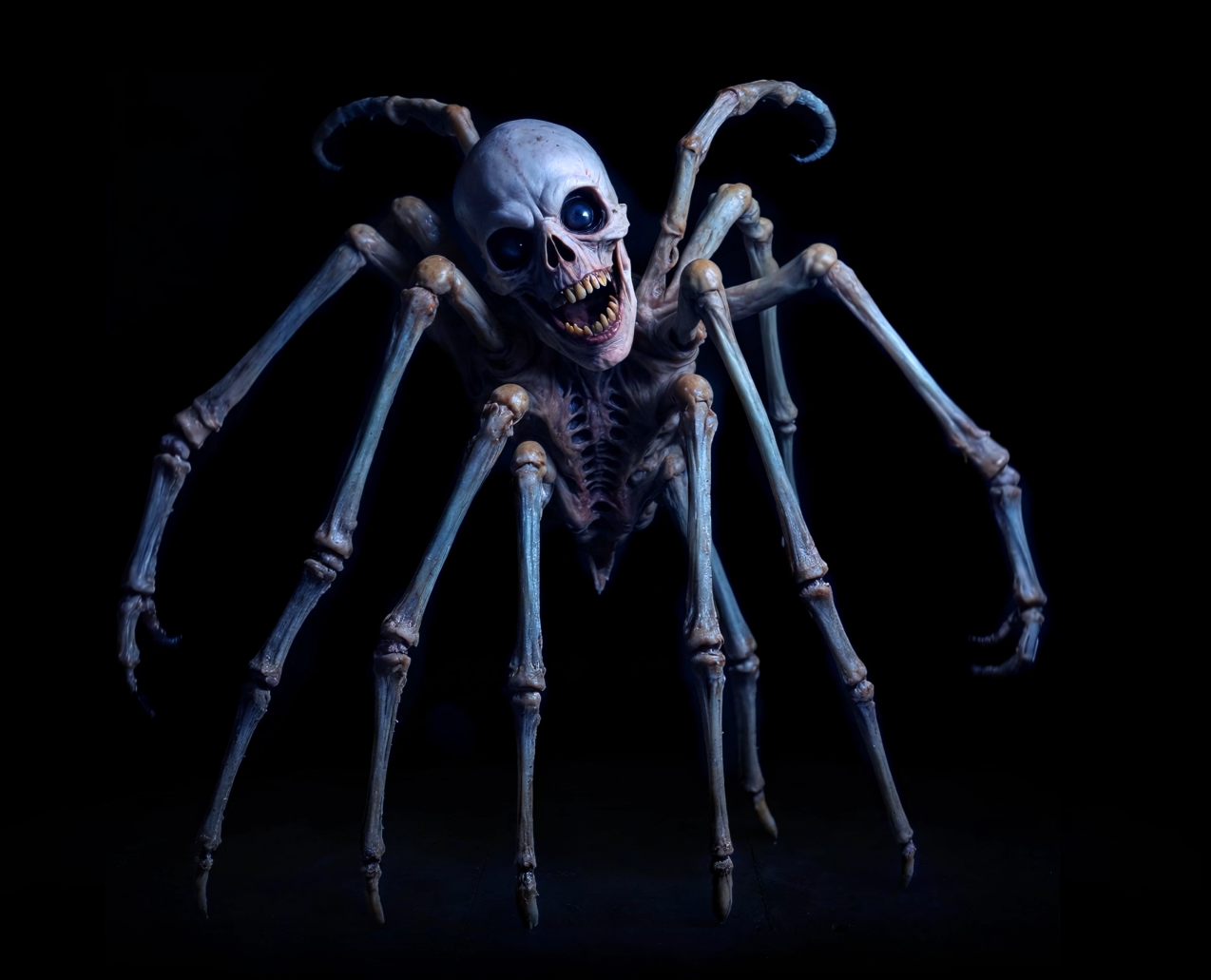
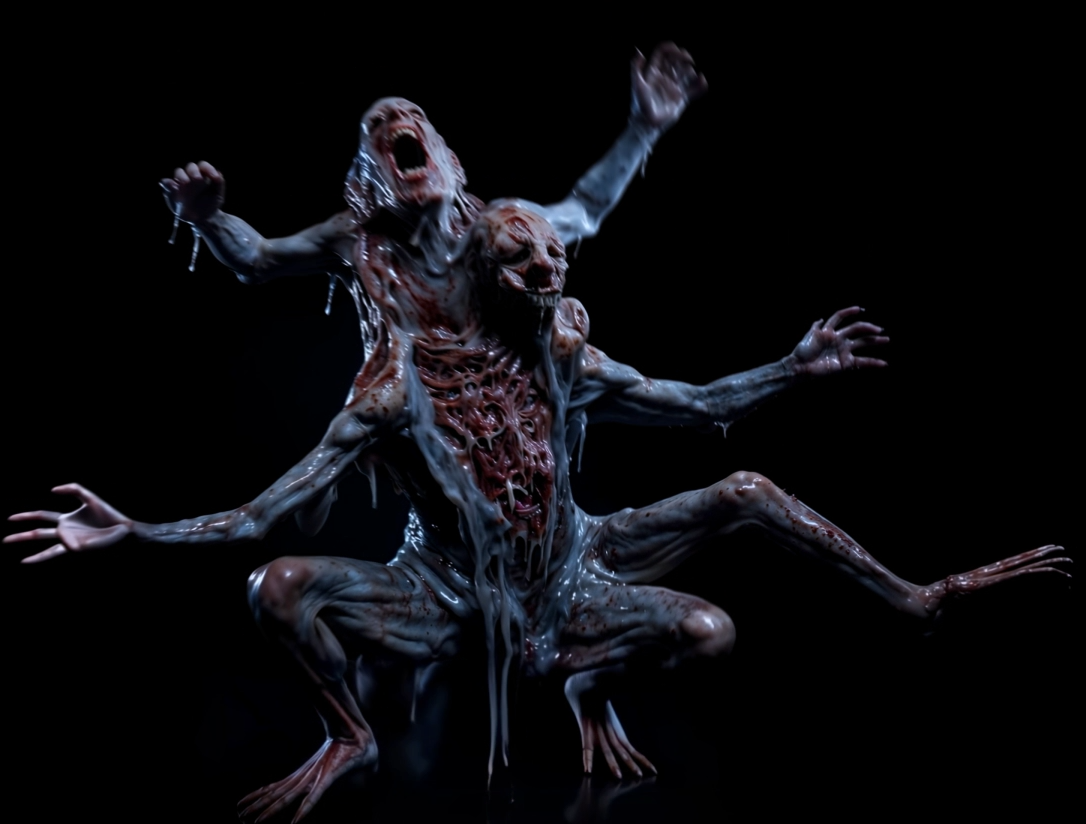
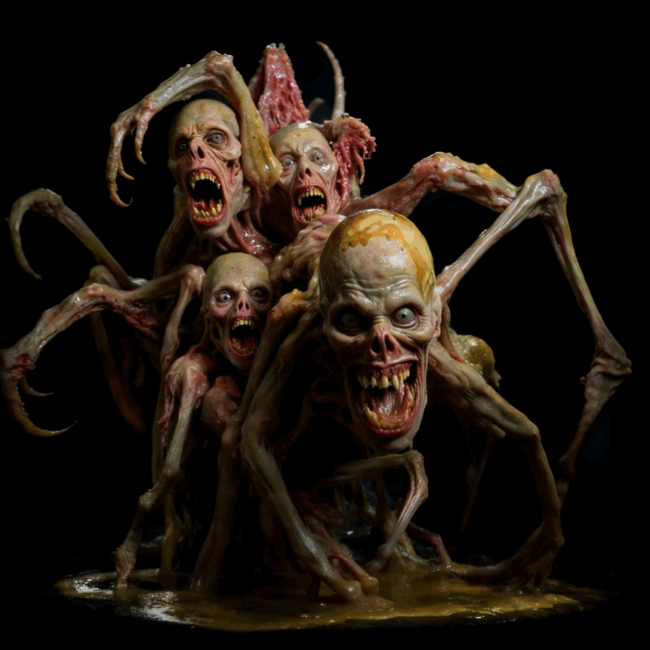
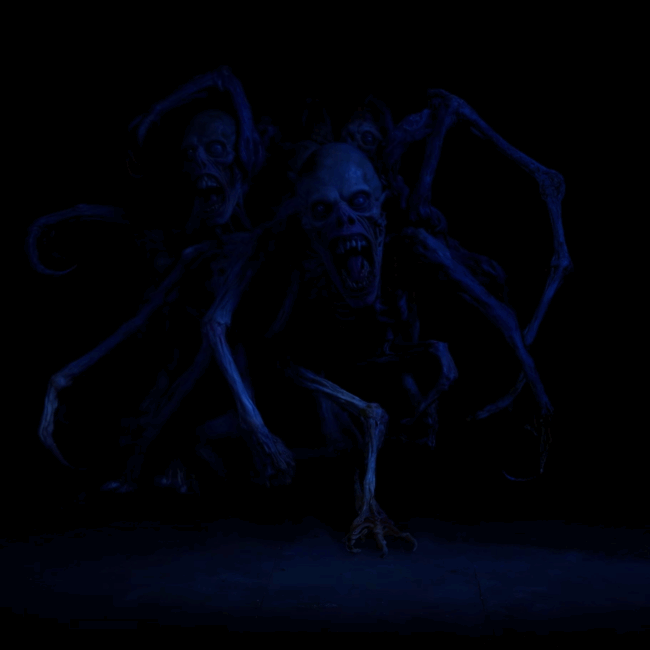
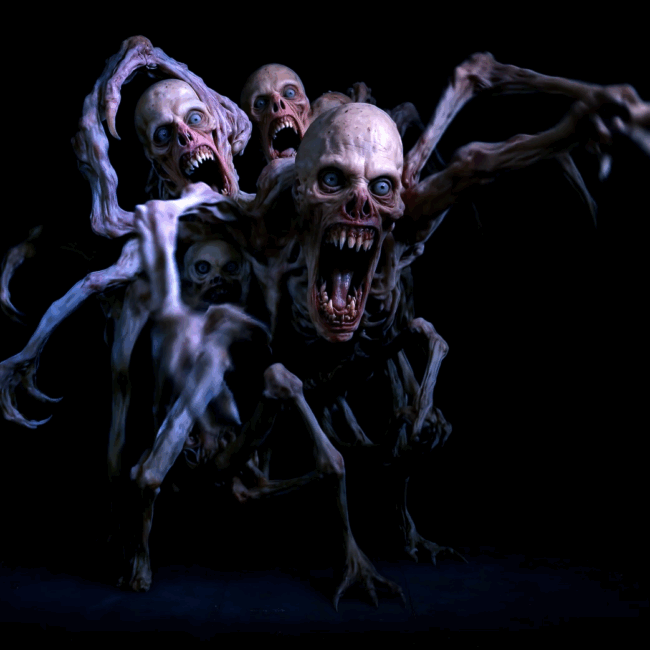
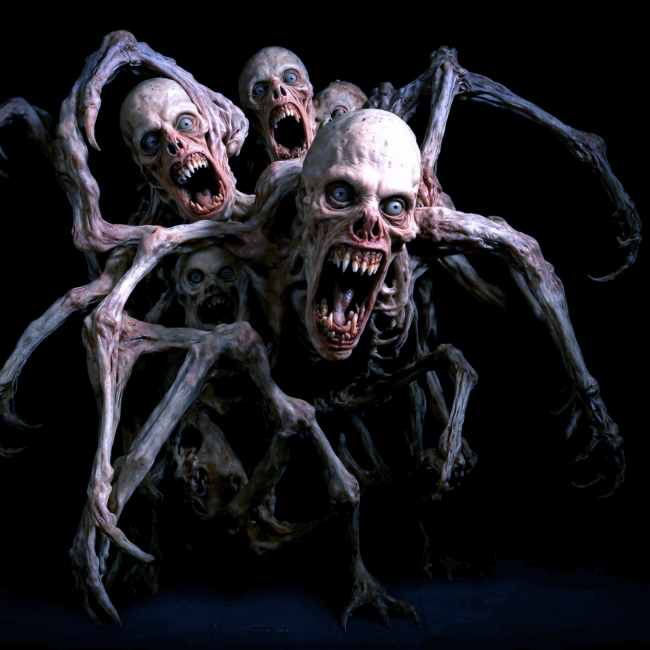
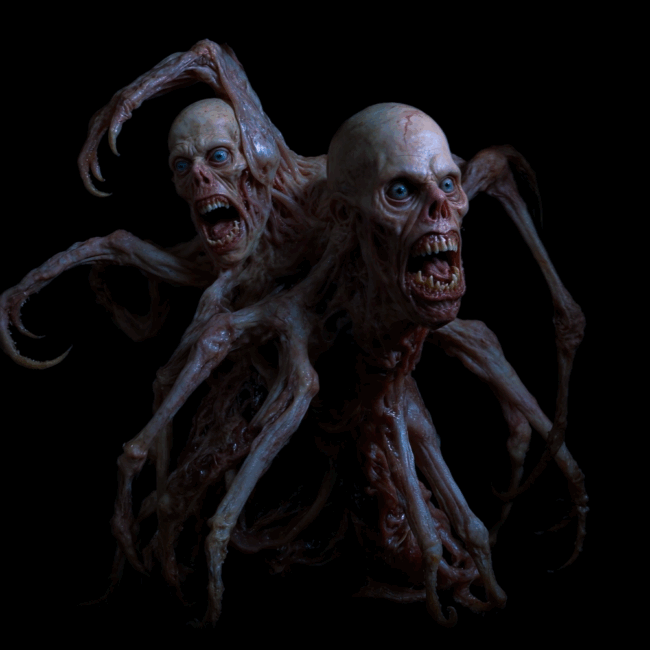
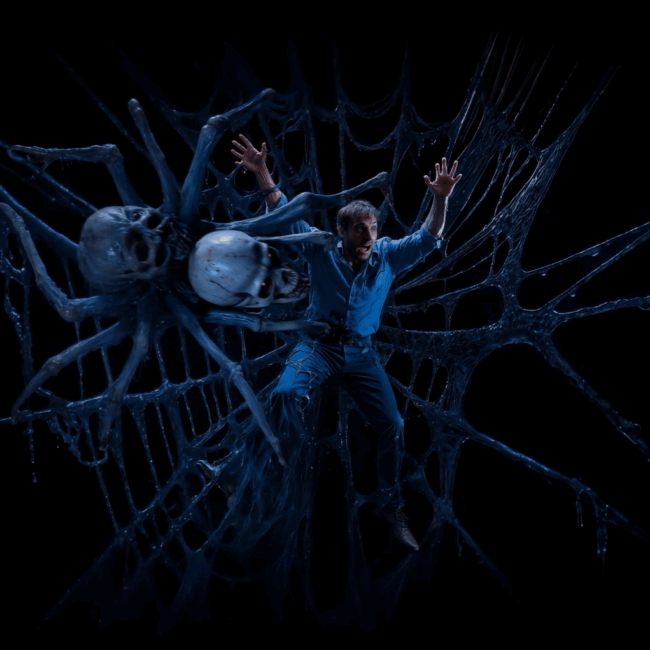
In the second scene, the Abomination takes on a more spider-like form—an unholy fusion of arachnid limbs and grotesque human heads that twitch and grimace with unnatural life. It creeps out from the shadows, bathed in flickering strobe light that enhances the sense of chaos and unpredictability. With no dialogue, the scene relies on guttural growls and chilling ambient noise to heighten the dread, making its sudden approach and retreat all the more jarring. The lighting and animation work are exceptional, especially considering the AI-generated origin of the visuals, which feel organic and fluid throughout.
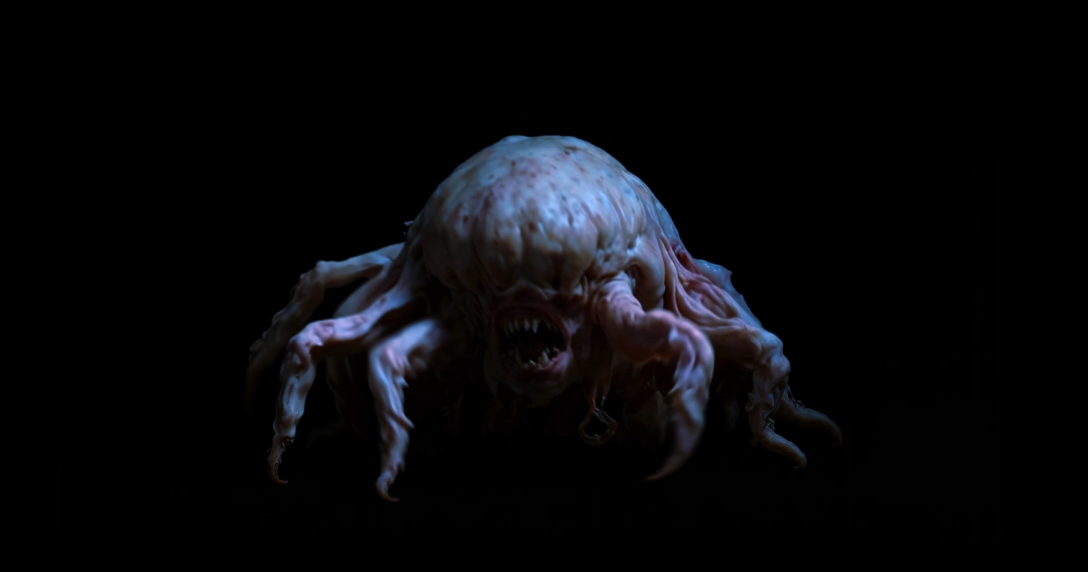
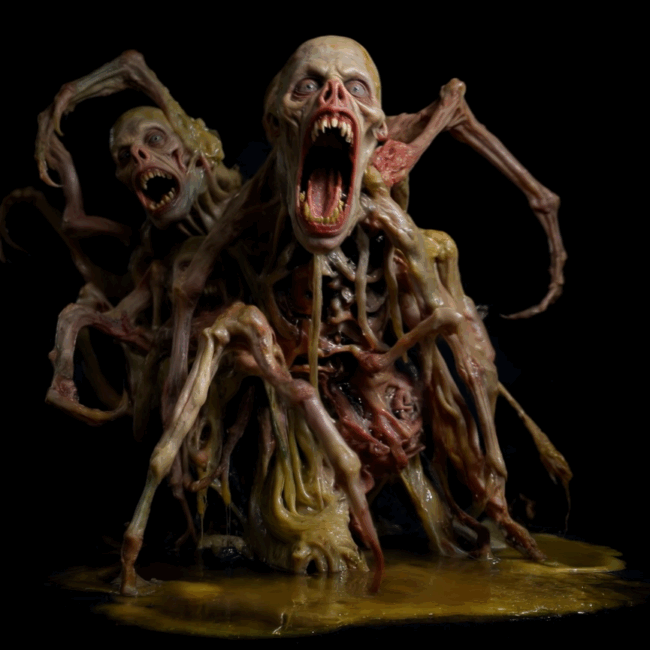
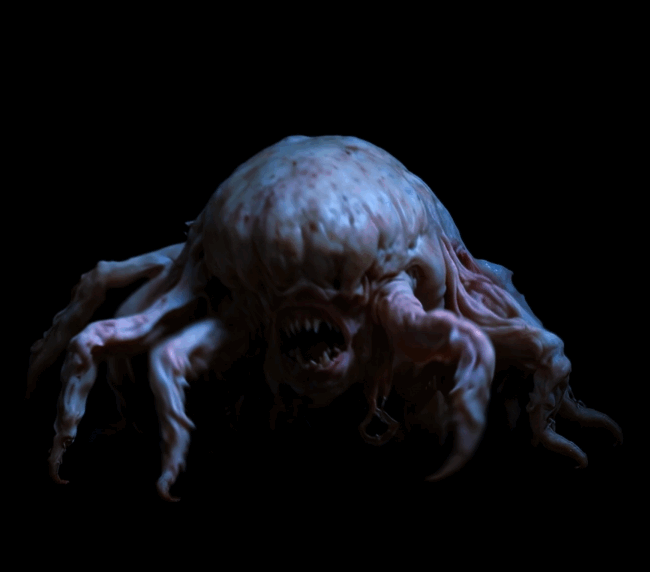
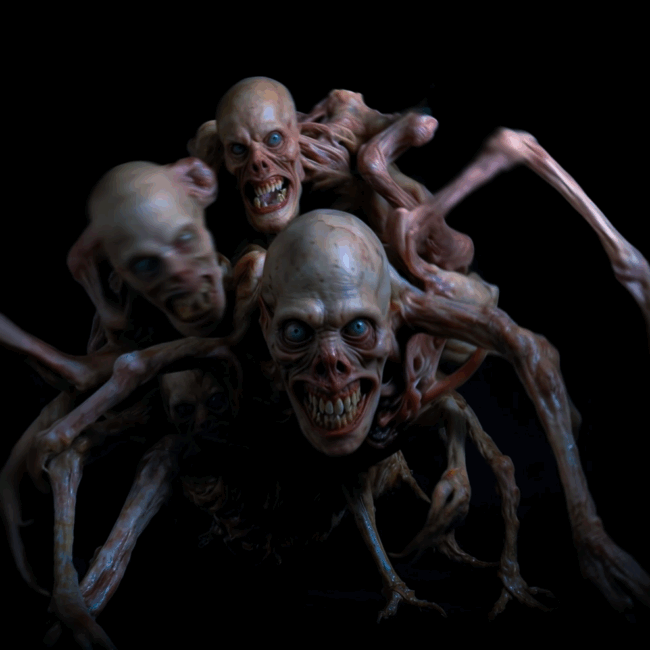
The final scene introduces a smaller, crab-like variant of the creature, skittering unnaturally before morphing back into the spider-hybrid form seen earlier. The transformation is smooth and deeply unsettling, as faces and limbs contort and reform in ways that defy anatomy. A blend of eerie atmospheric music and harsh, gurgling sound effects give the sequence a nightmarish rhythm, reinforcing the unsettling power of the visuals. Like the other Abomination scenes, this one isn’t meant for kids—but for older teens and adult haunters, it’s a masterclass in modern digital horror.
- Nightmares - Bone Spider
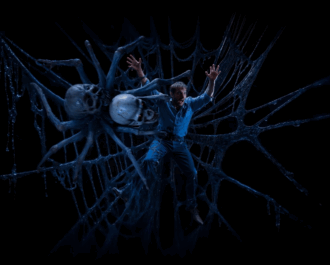
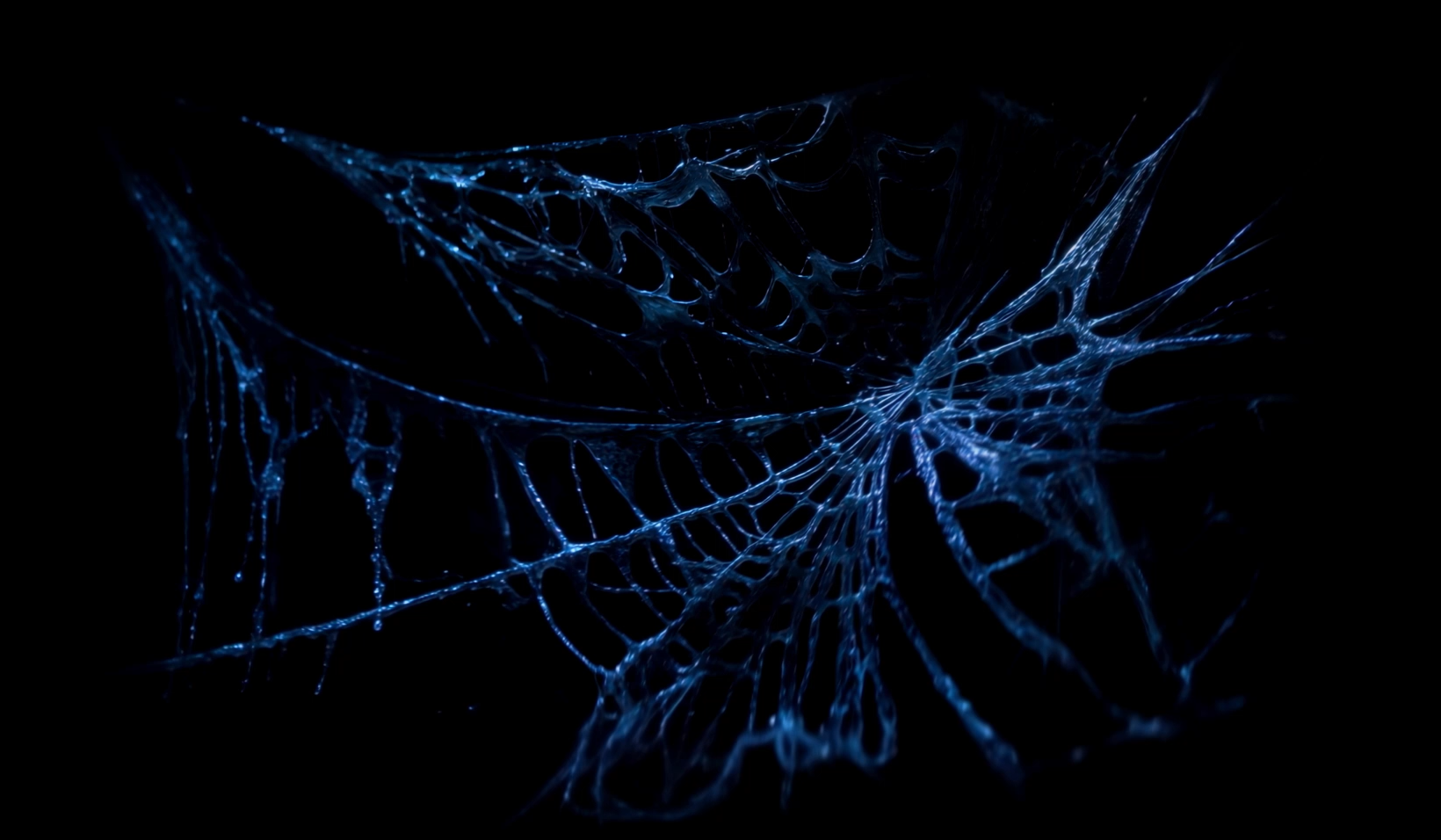
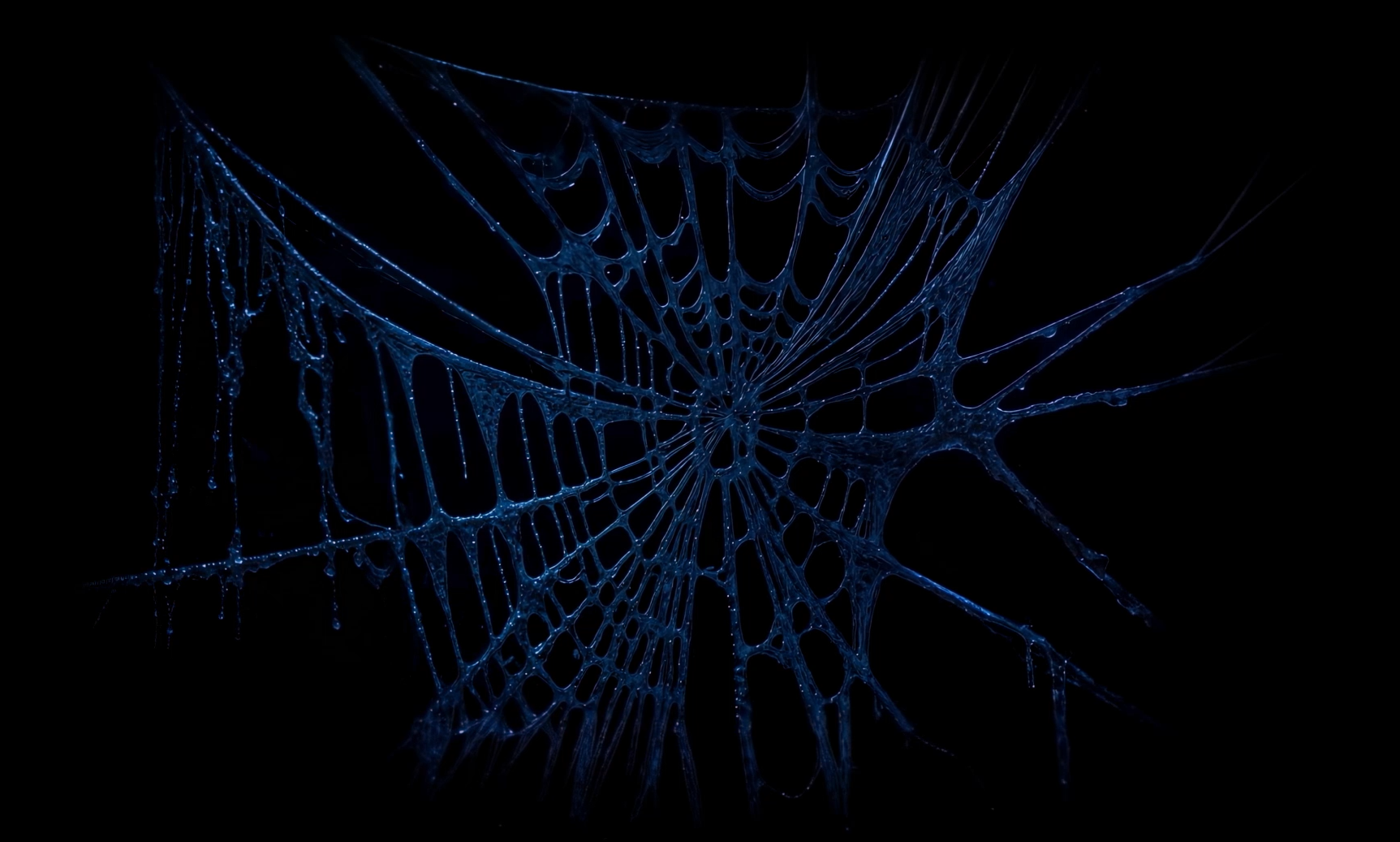
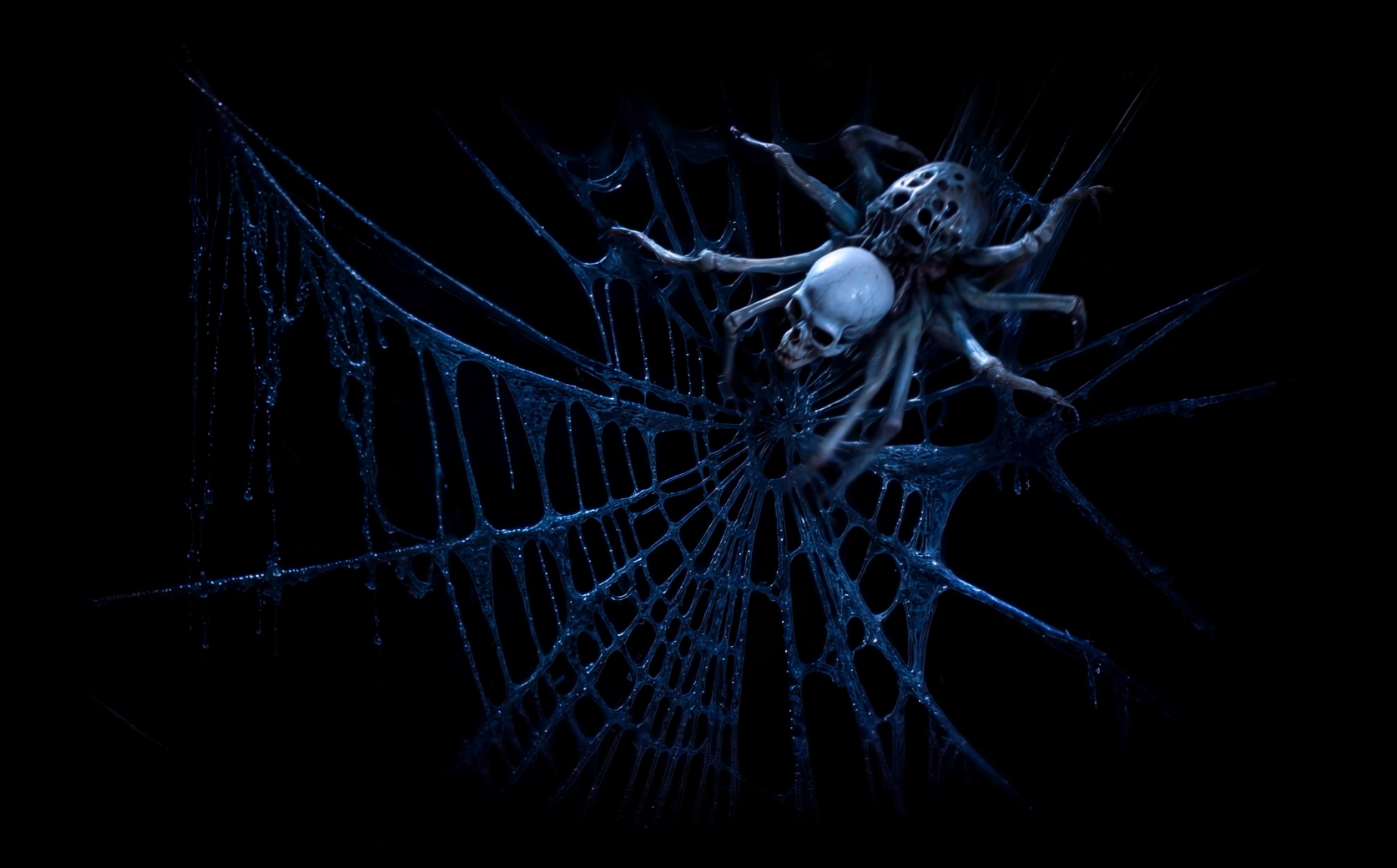
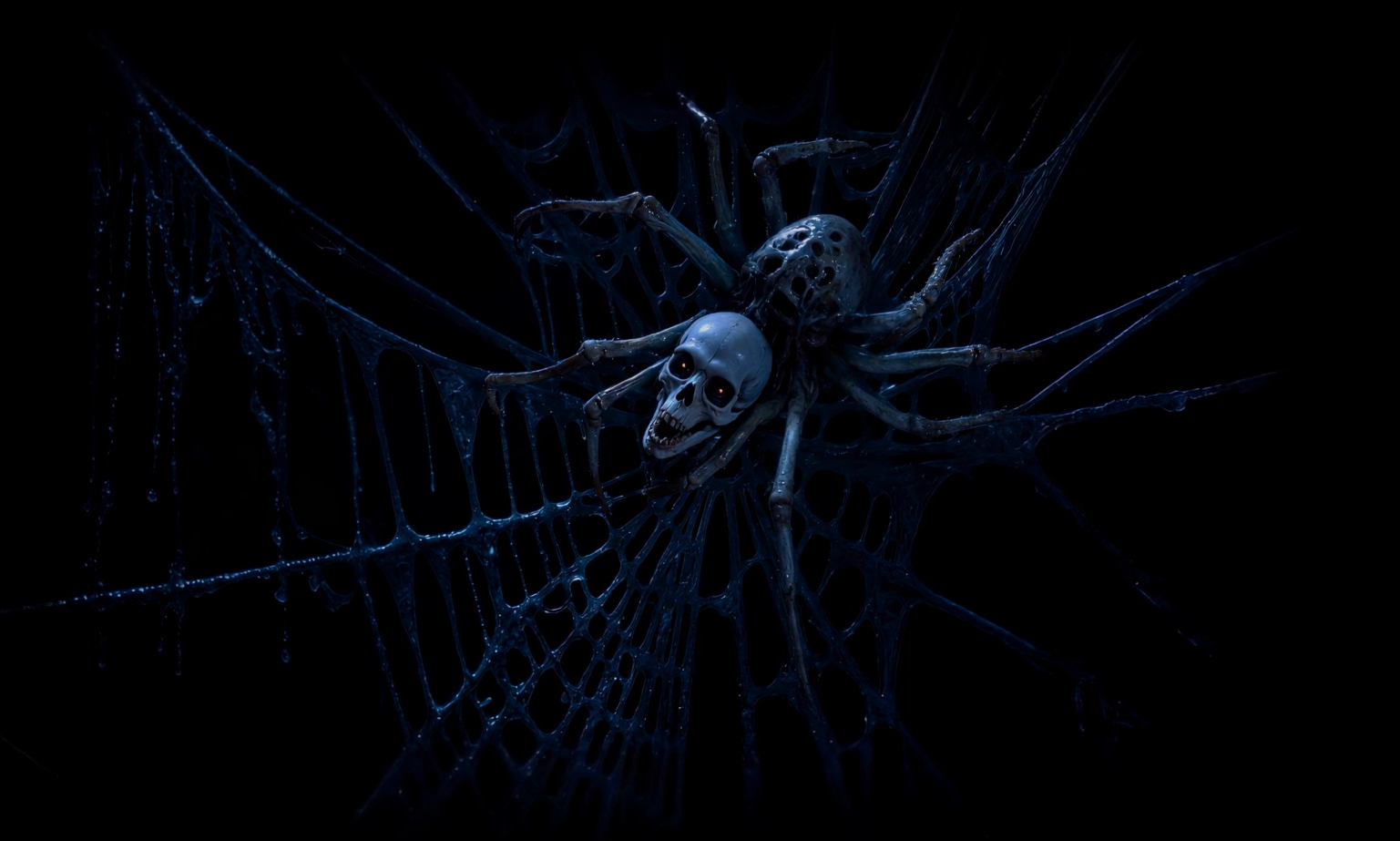
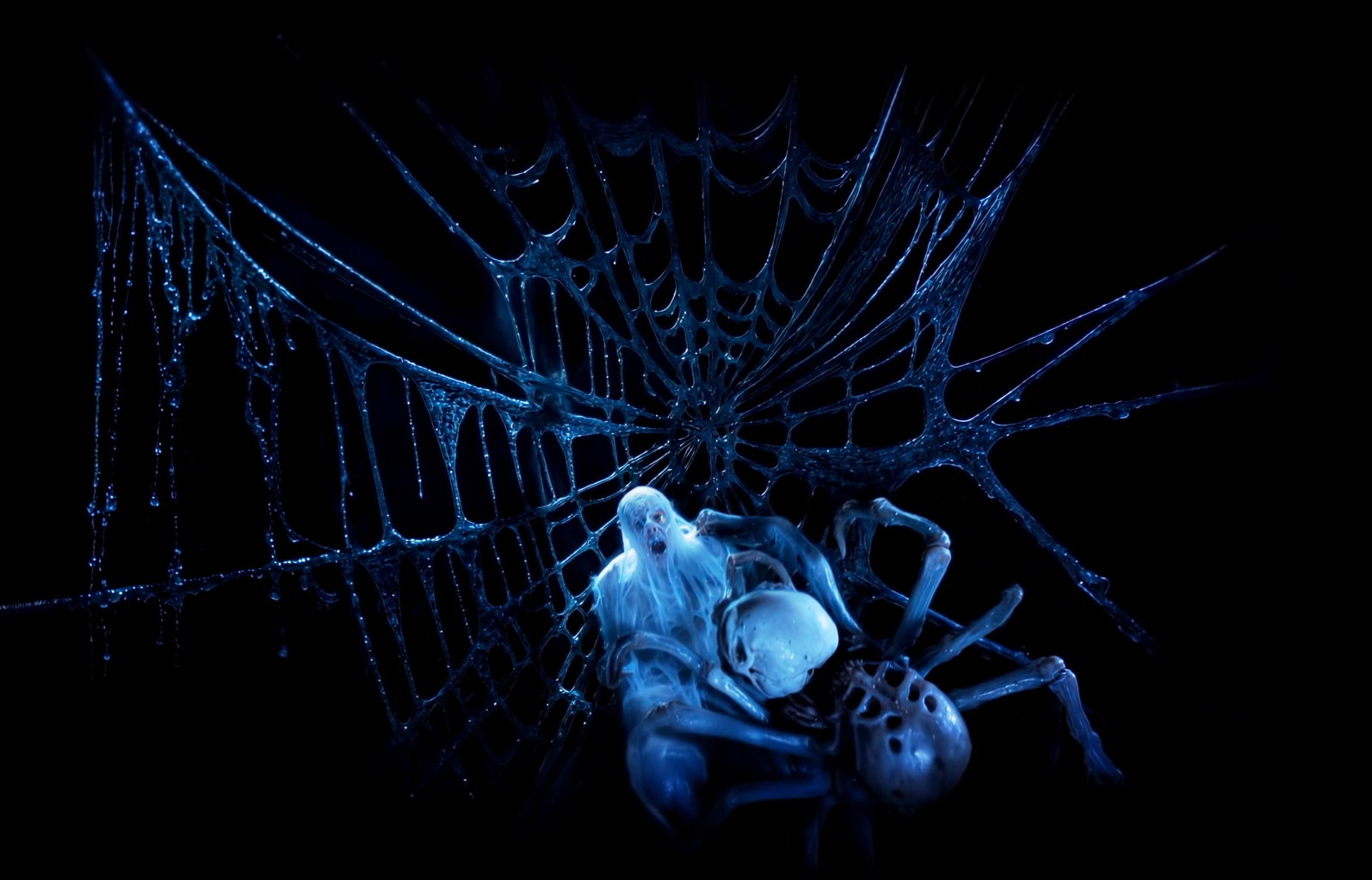
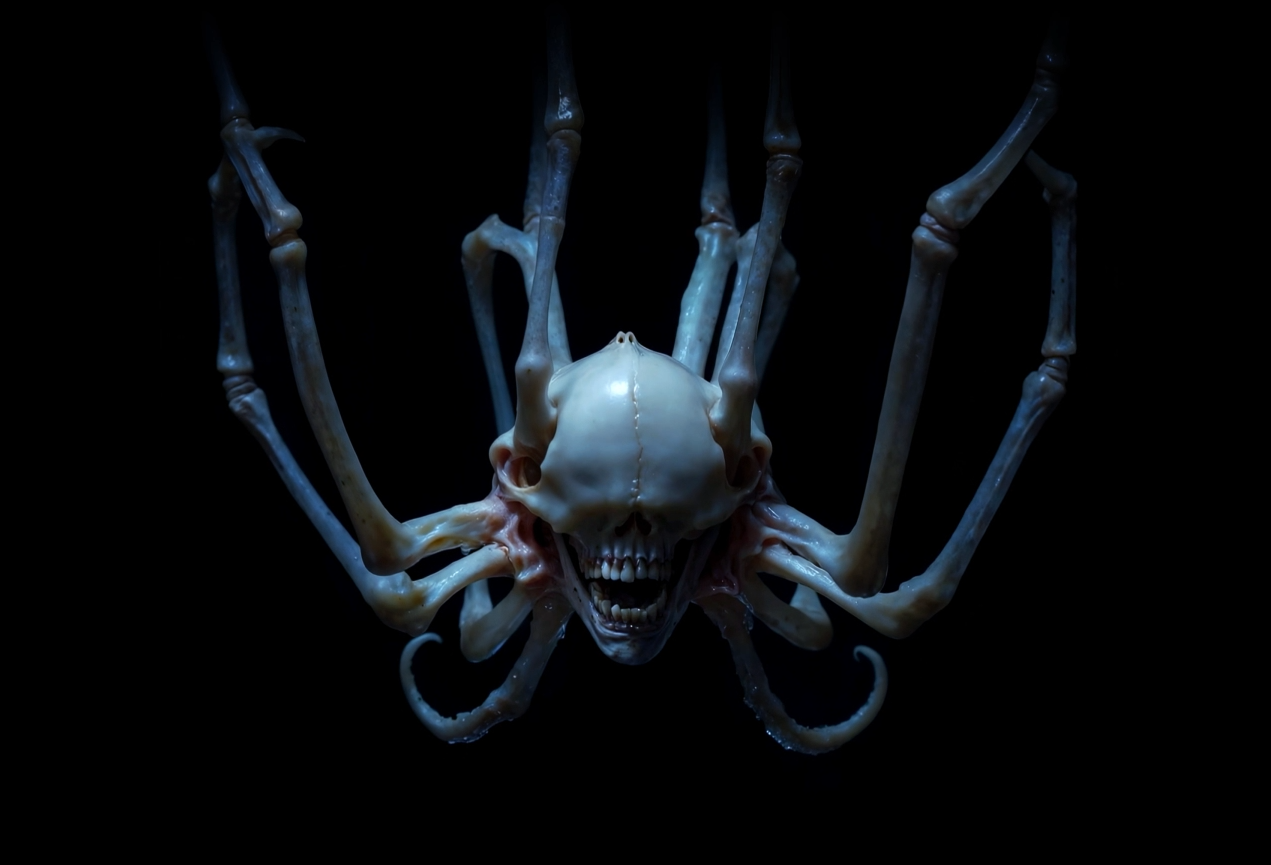
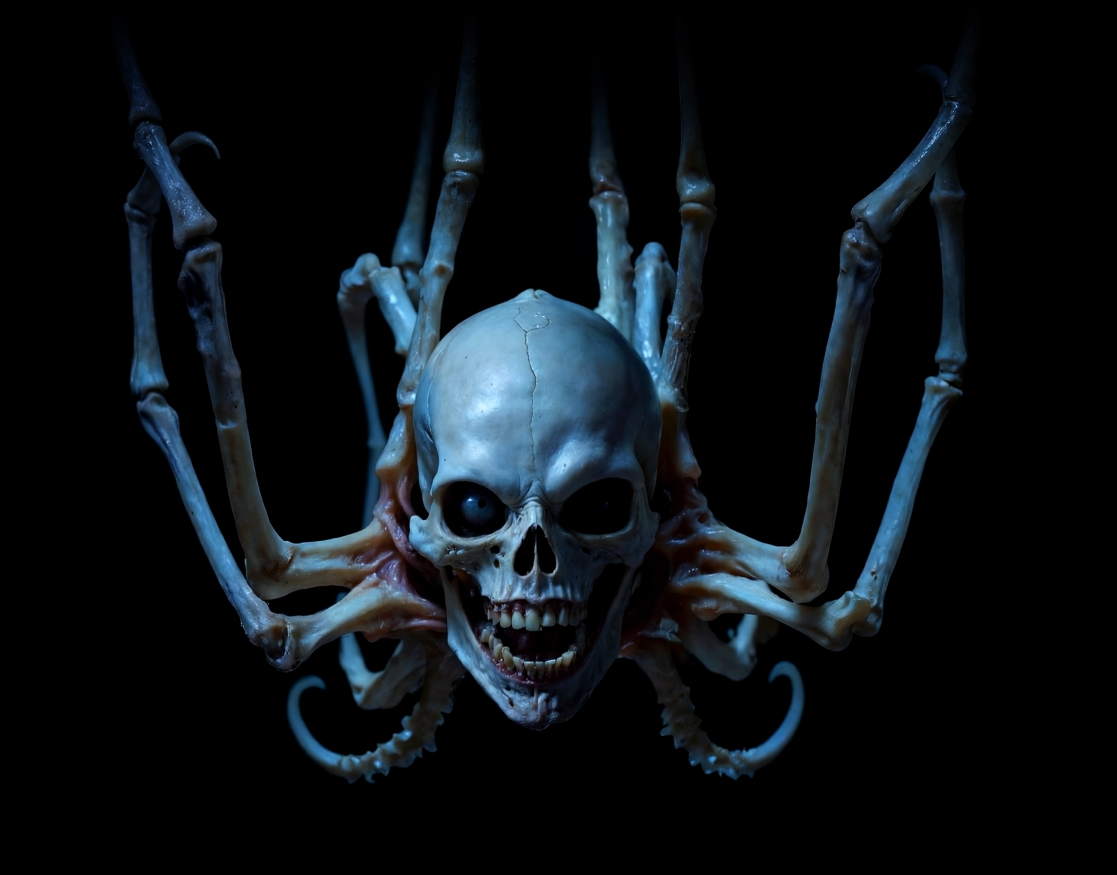
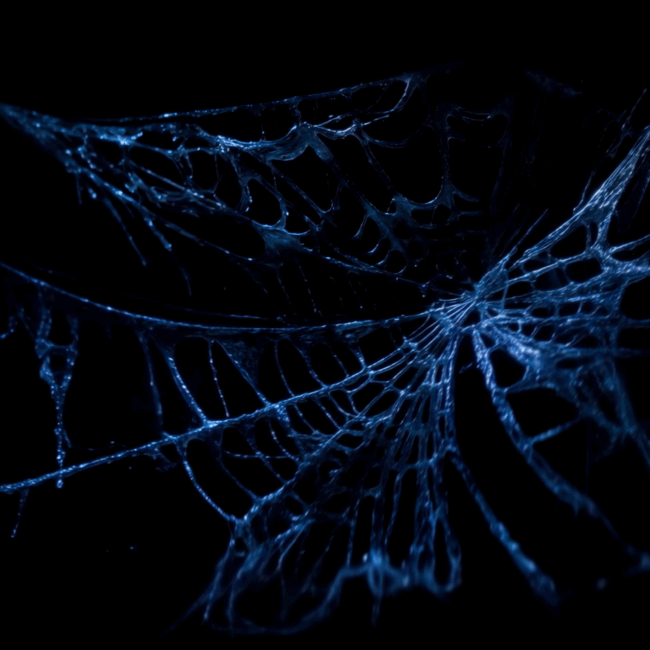
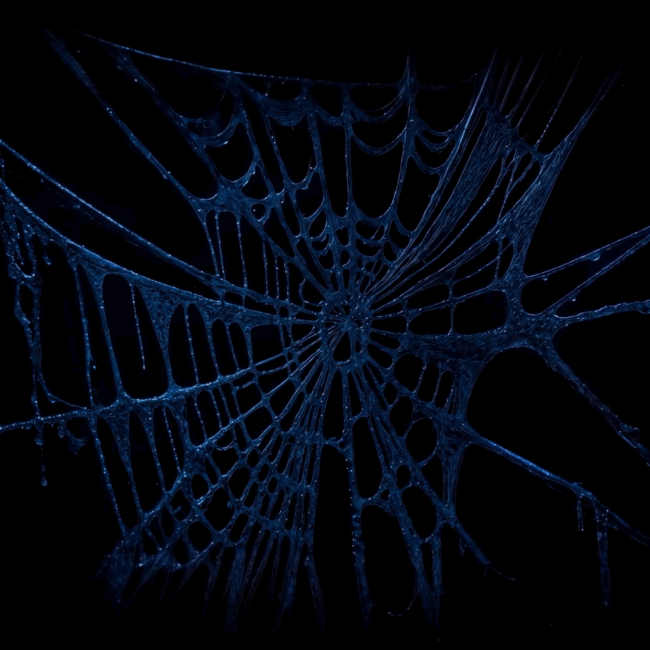
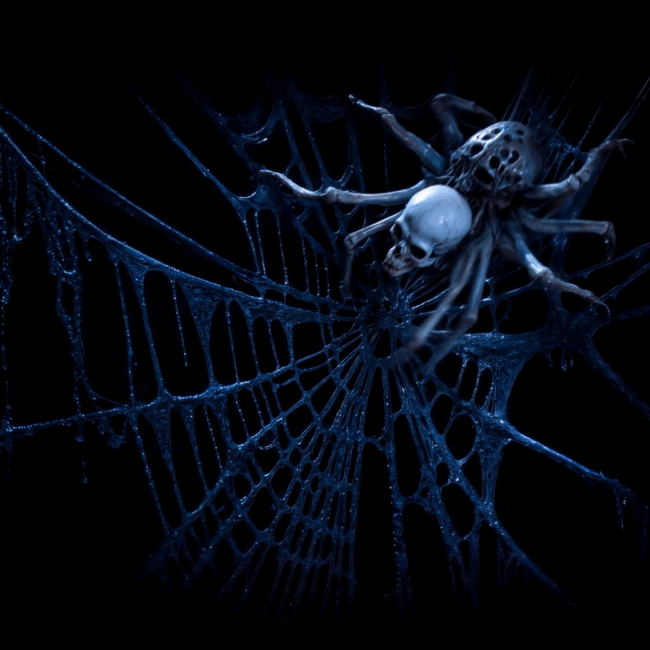
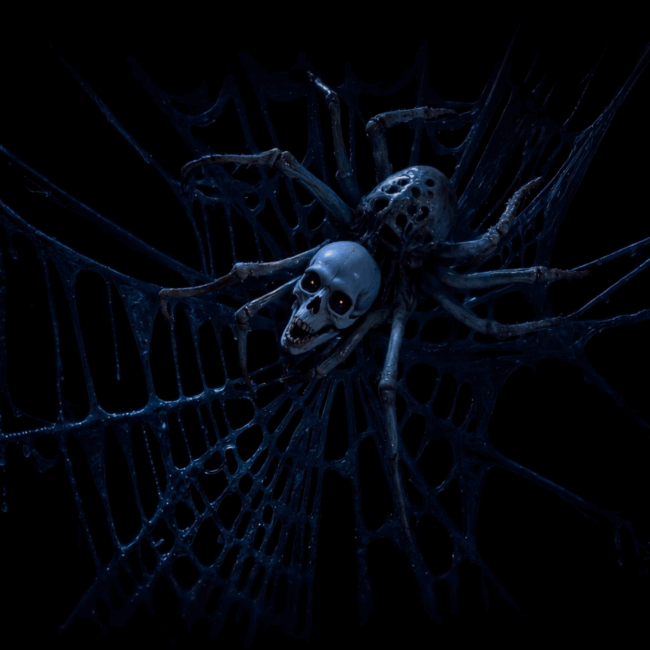
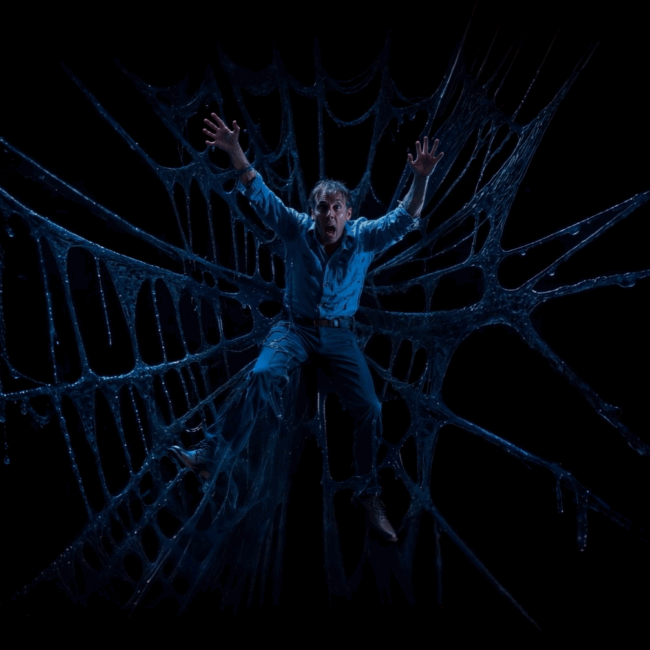
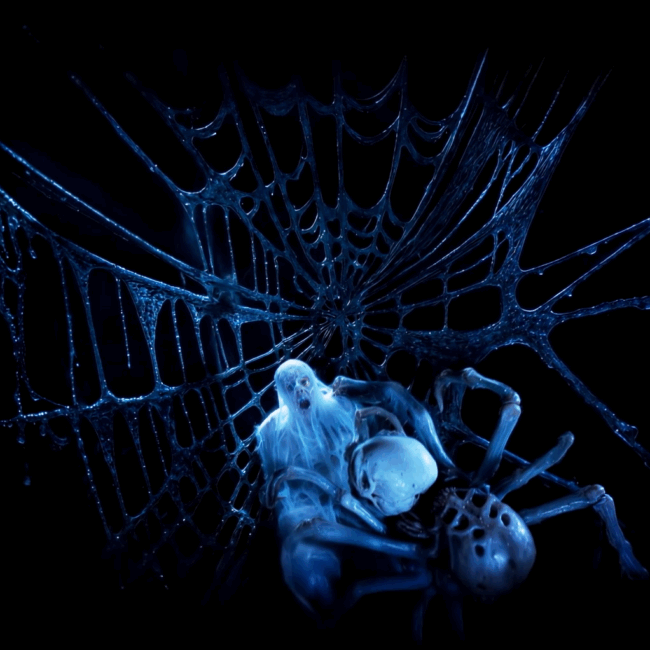
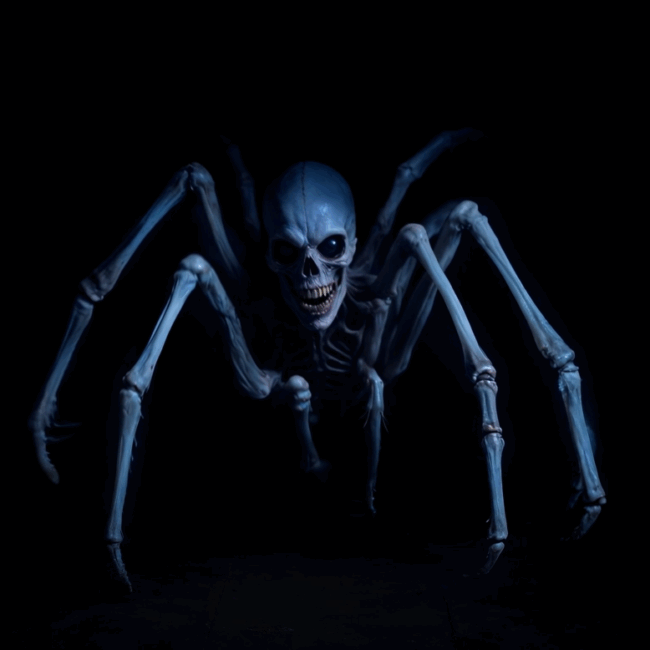
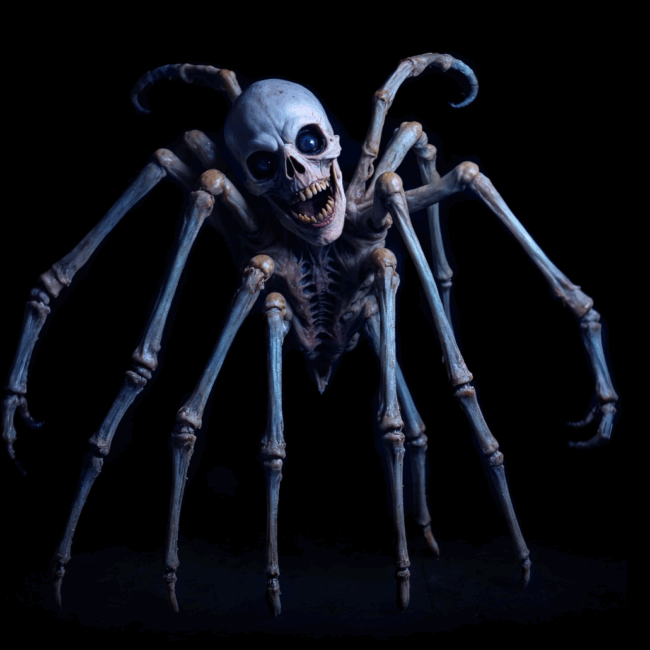
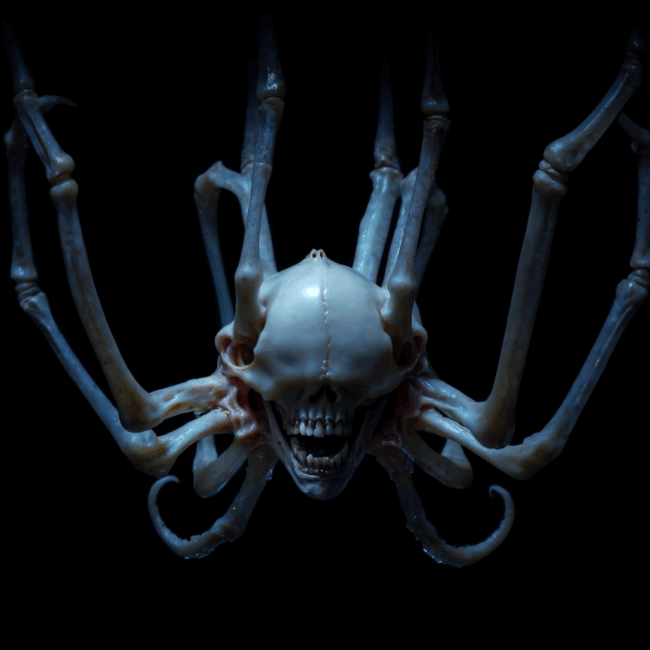
The first Bone Spider scene begins with a shadowy, pulsating spiderweb taking shape—wet, slimy, and swaying in a ghostly wind. As the strands tighten and solidify, a skeletal spider with a human-like skull descends from the web. The creature's eerie, bone-white head tilts upward toward the viewer before it silently retreats to the other side of the web, leaving only an ominous silence in its wake. The fluid animation and attention to detail in this sequence are outstanding, turning a simple entrance into a quietly unsettling introduction that sets the tone for what’s to come.
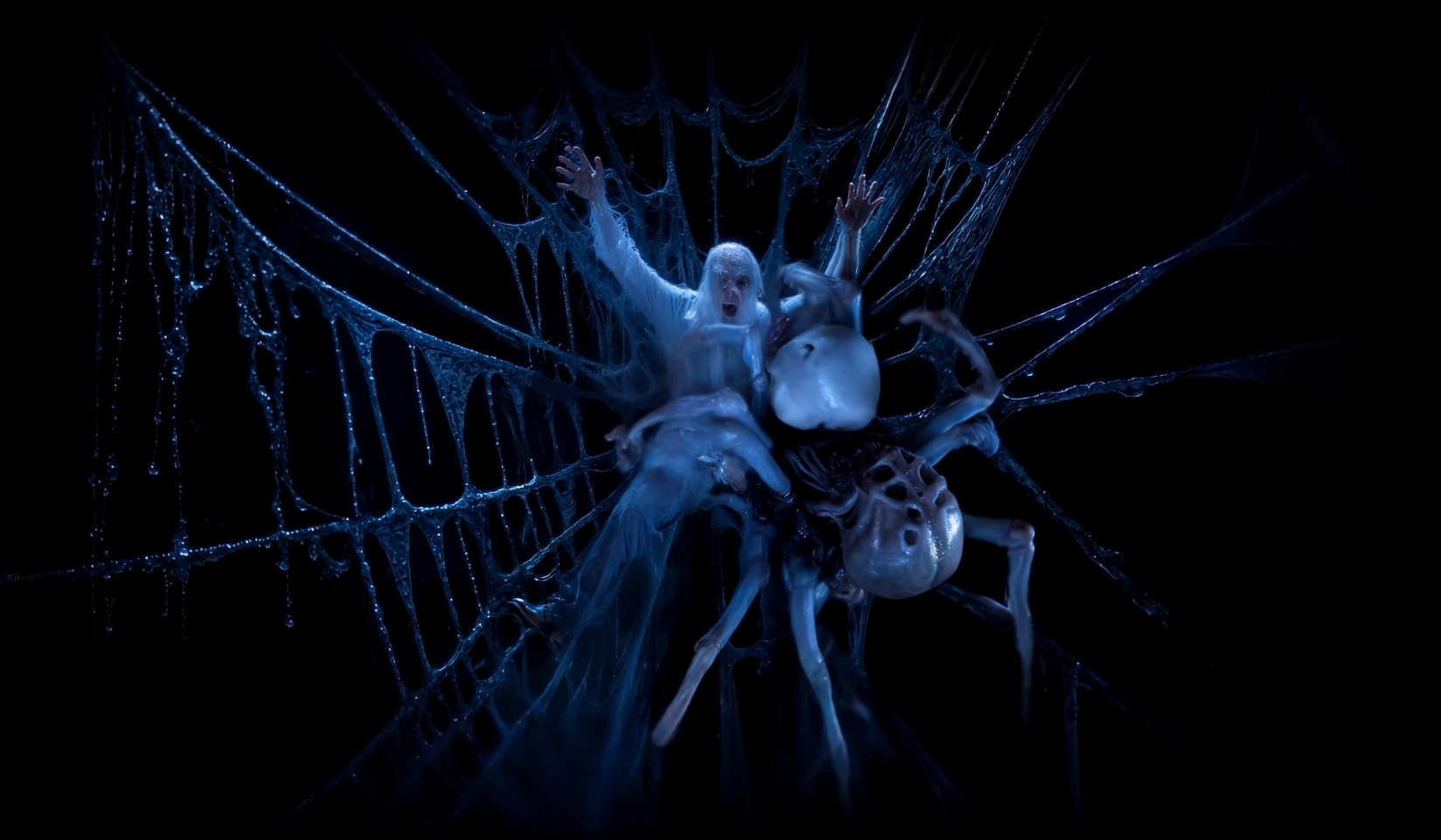
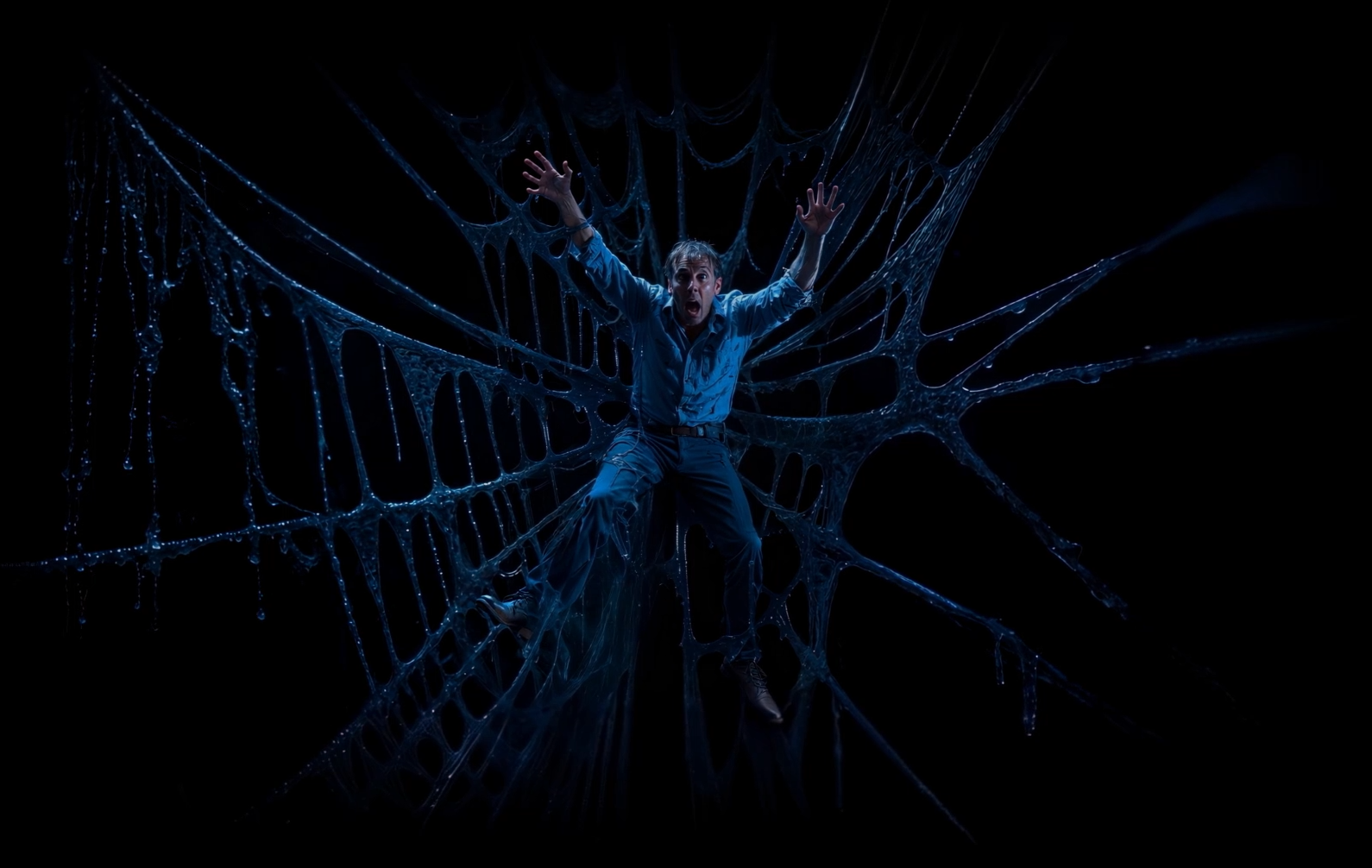
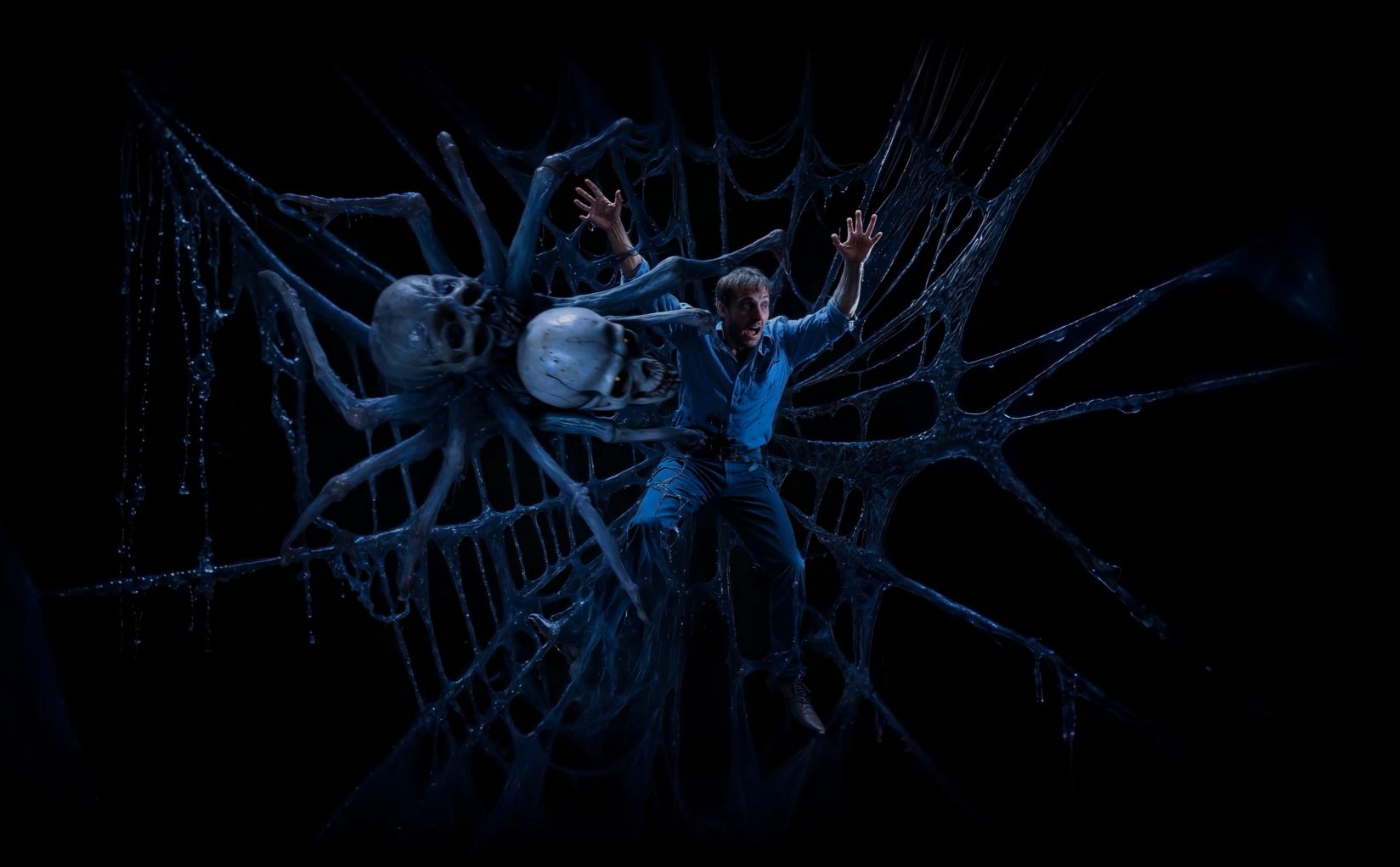
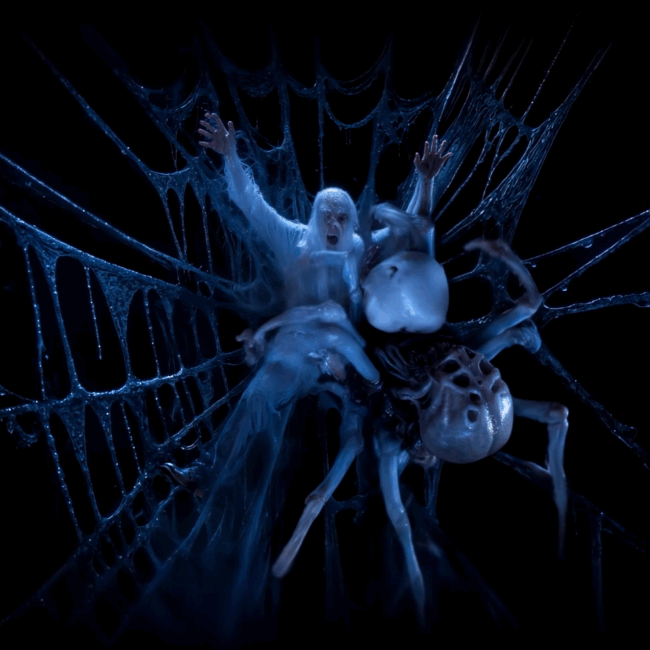
In the second, longer scene, the horror intensifies. A human figure becomes ensnared in the sticky, glistening web—and before long, the Bone Spider re-emerges. With grotesque precision, it wraps the struggling victim into the webbing, slowly cocooning them as their limbs twitch and disappear beneath the silk. The scene blends subtle morphing effects with physical realism, showing off the AI animation's capacity to handle complex sequences. The spider then drags the body out of frame, leaving behind an empty, swaying web. It’s a full minute of slow-building dread that would make a perfect feature display for a walkthrough or garage projection.
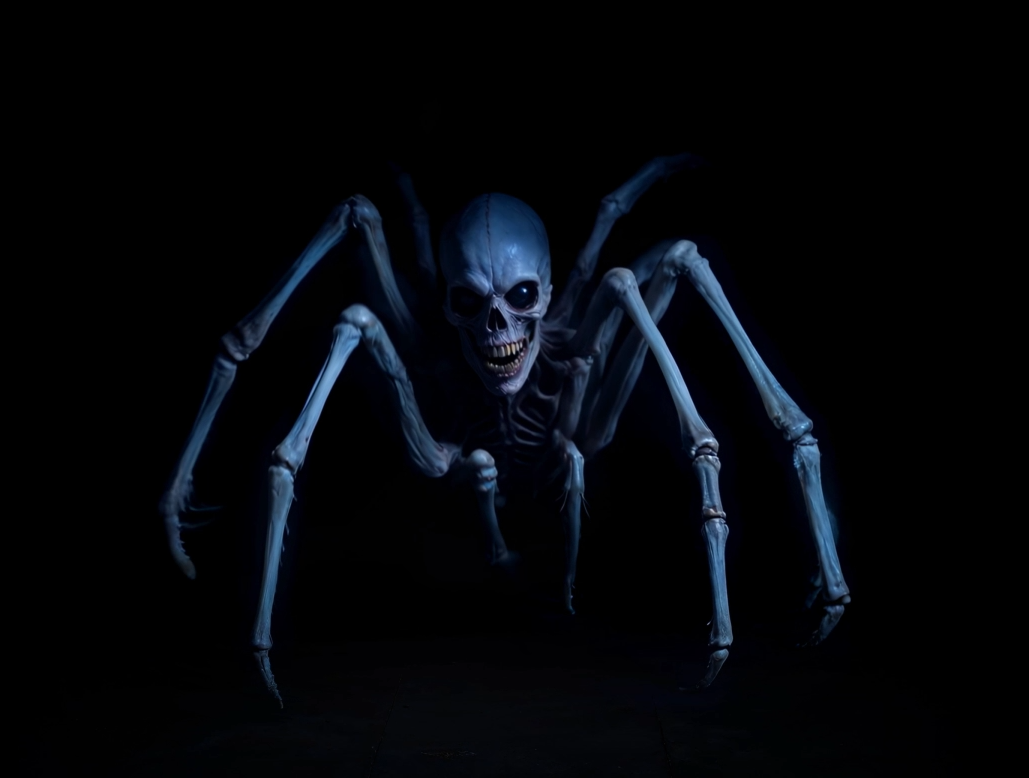
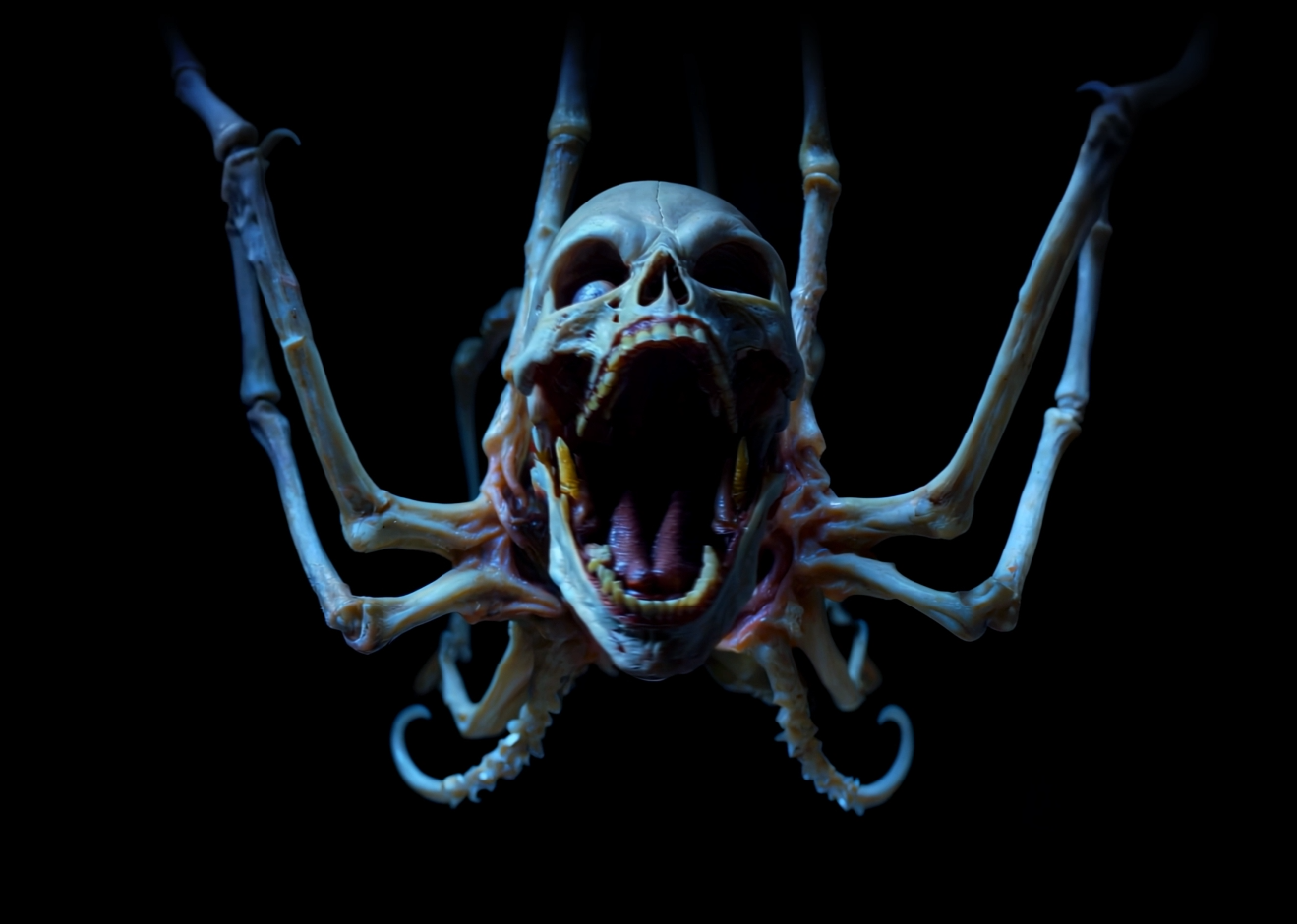
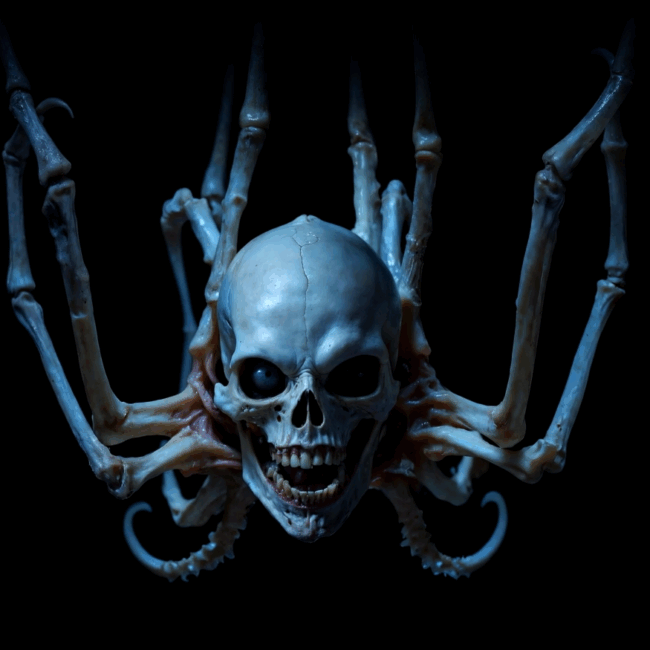
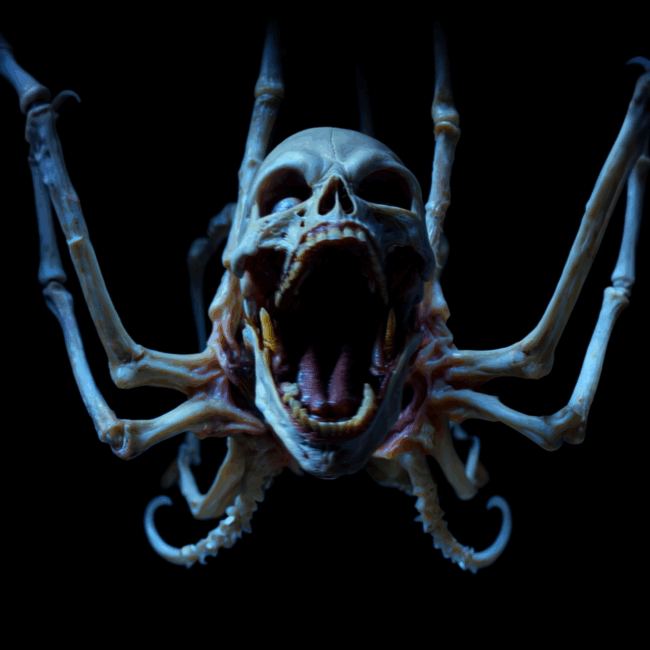
The third and fourth scenes are shorter but no less unnerving. One features the spider creeping into view before unleashing a sudden, guttural scream at the viewer—a classic jumpscare moment enhanced by strobe-like lighting and sharp sound design. In the final scene, the spider drops from above, faceless at first, with only a smooth, pale skull for a head. As tension builds, the blank shape slowly warps into a menacing skeletal visage before letting out a chilling growl. These quick hits of horror are excellent for looped background displays, especially when projected onto doors, windows, or even a homemade webbed surface. Bone Spider is an ideal filler scare—creepy, versatile, and deeply unsettling.
- Nightmares - Doll Face
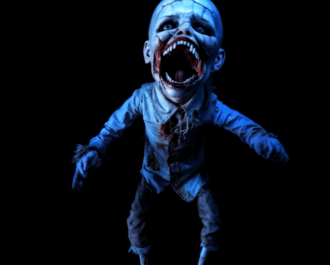
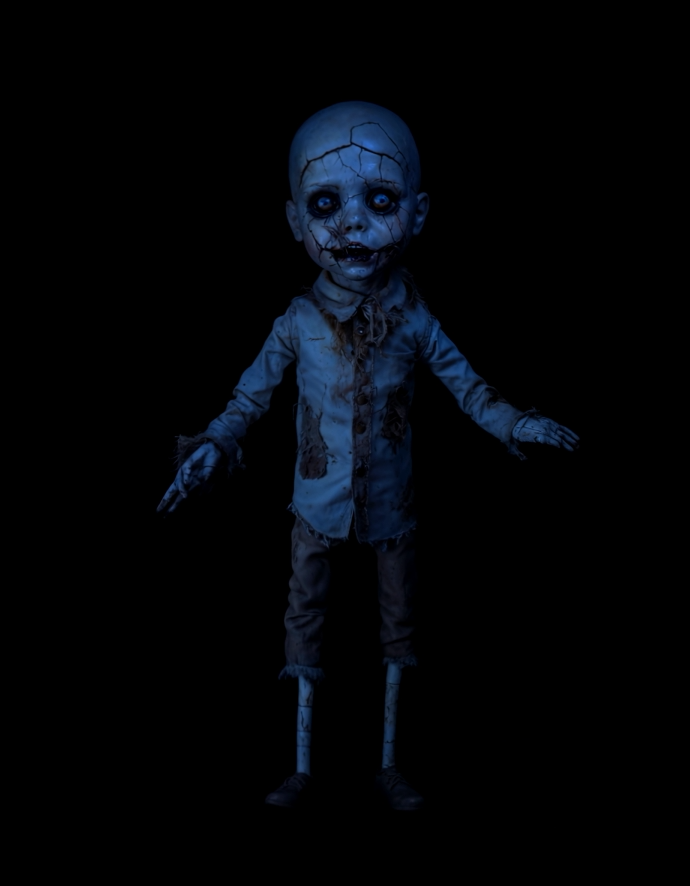
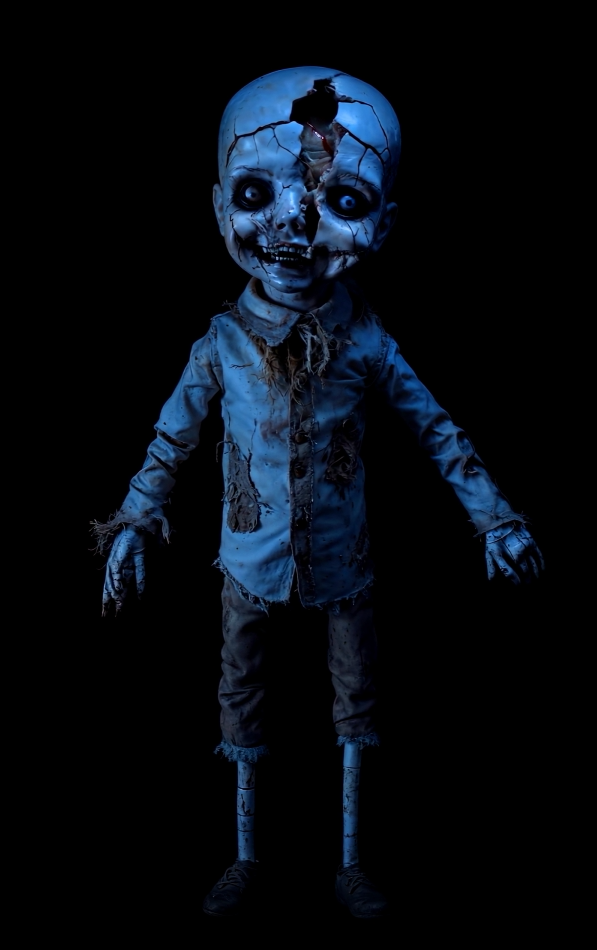
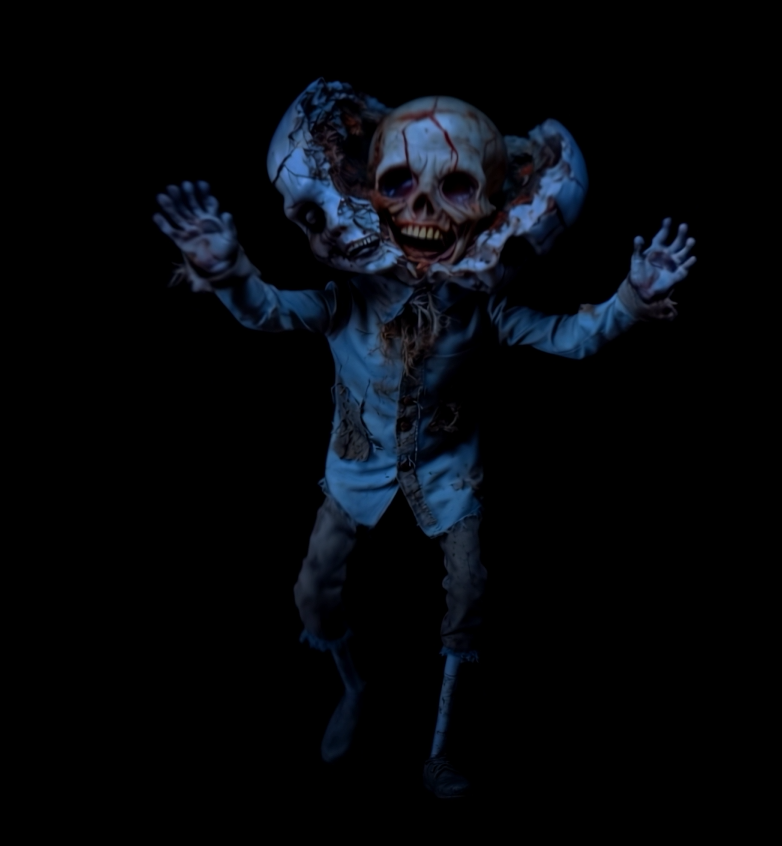
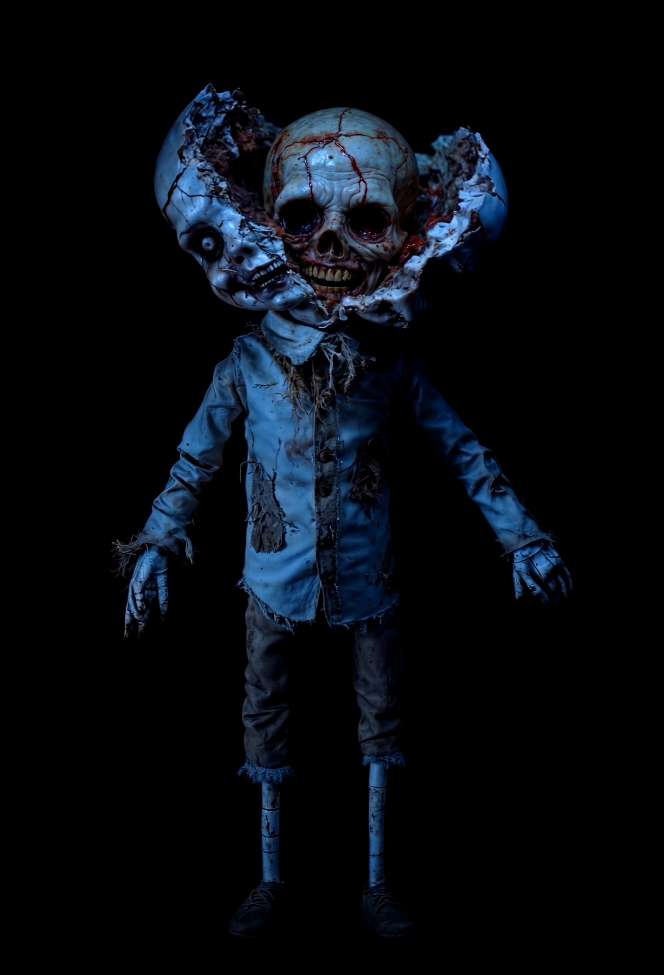
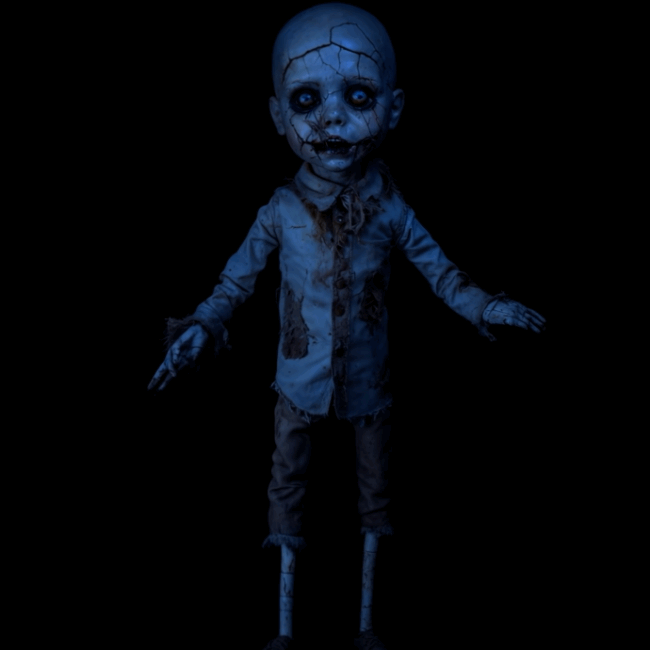
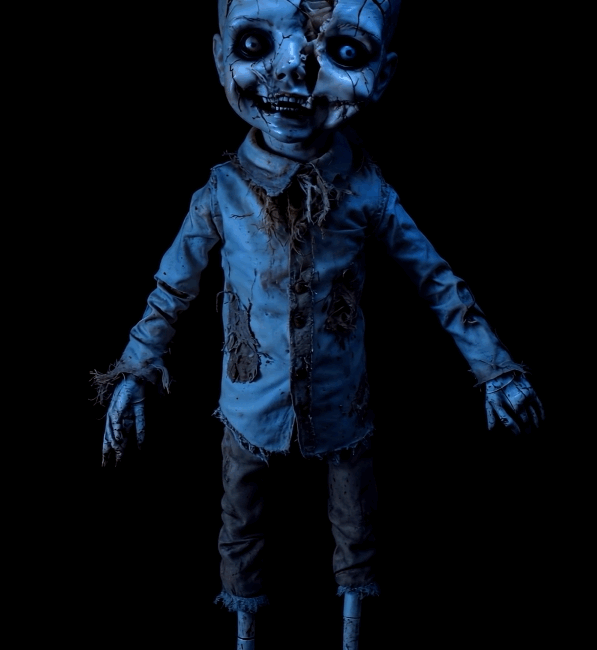
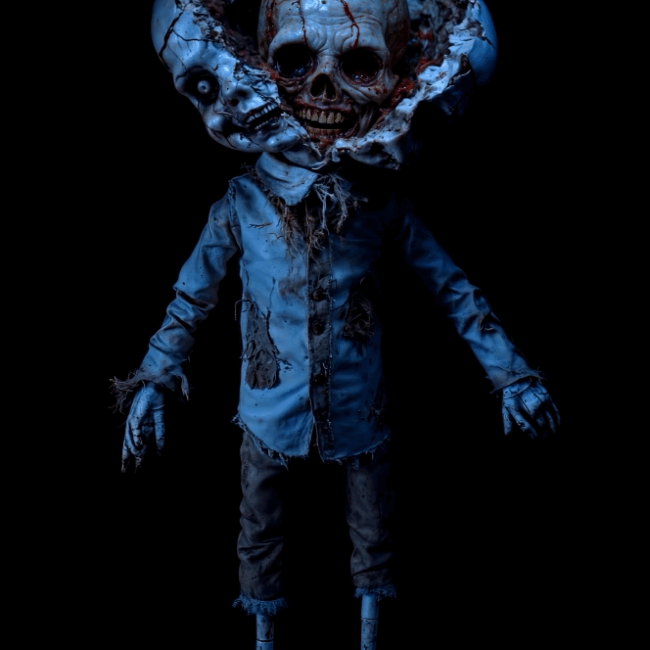
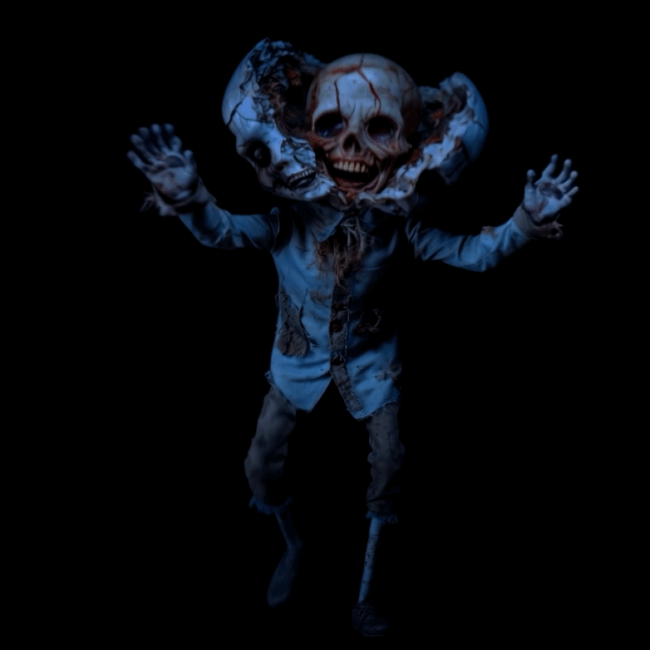
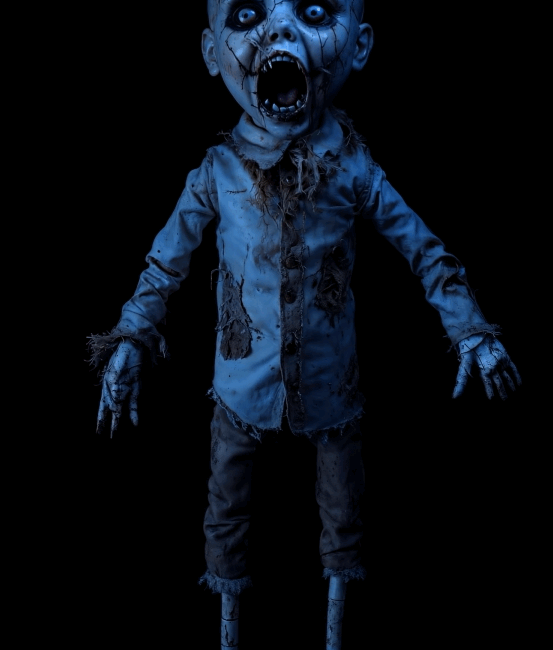
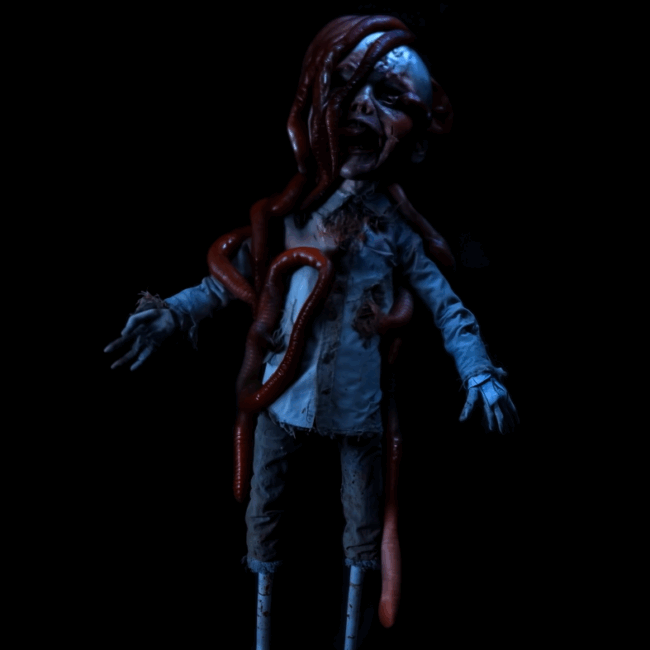
The Night Doll is one of the most unsettling characters in the Nightmares set, and its first scene delivers instant unease. It begins with the cracked porcelain figure slowly walking into view before splitting its fractured doll head in half, revealing a decaying, rotting skull underneath. The sudden reveal is amplified by sinister laughter, echoing tones reminiscent of AtmosFX’s Twins—but with even more malice. The combination of creaking ceramic, tearing flesh, and bone-chilling giggles gives this 25-second sequence a visceral, nightmarish tone. The doll’s twisted laugh lingers as it backs out of frame, leaving behind an eerie silence.
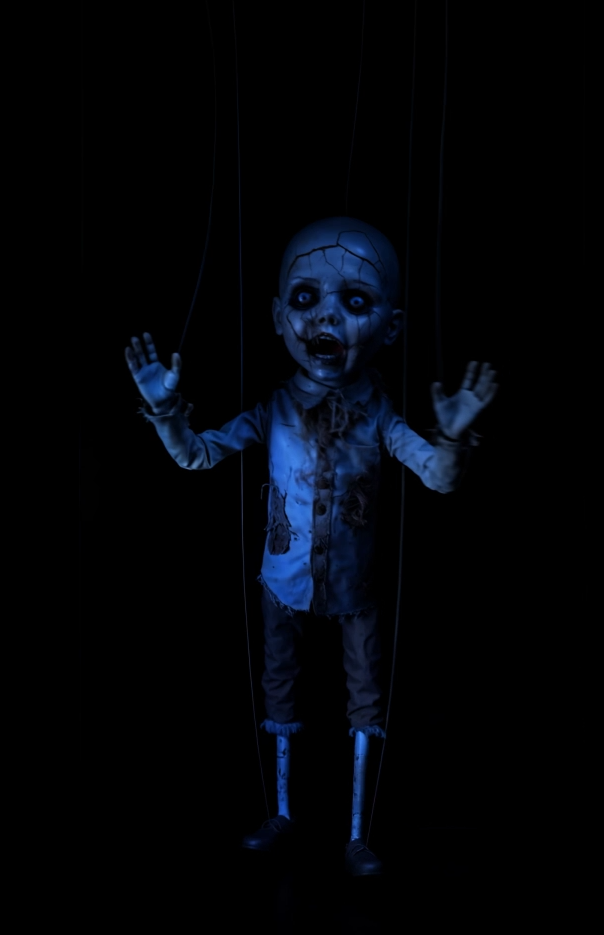
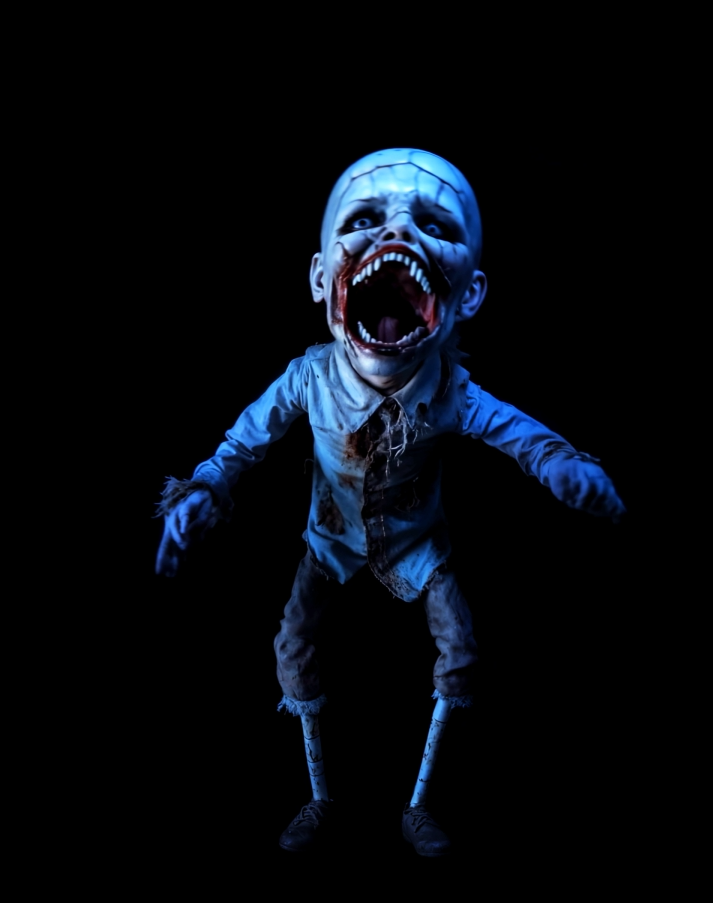
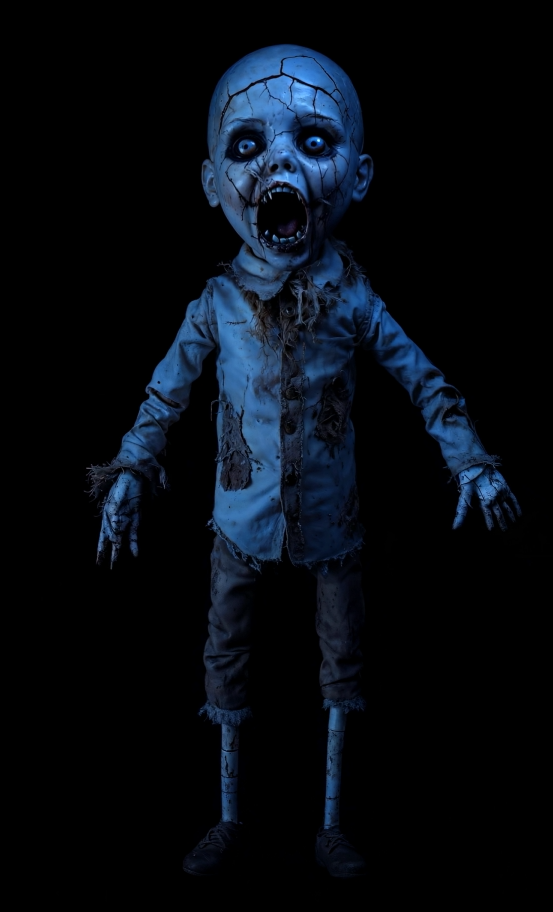
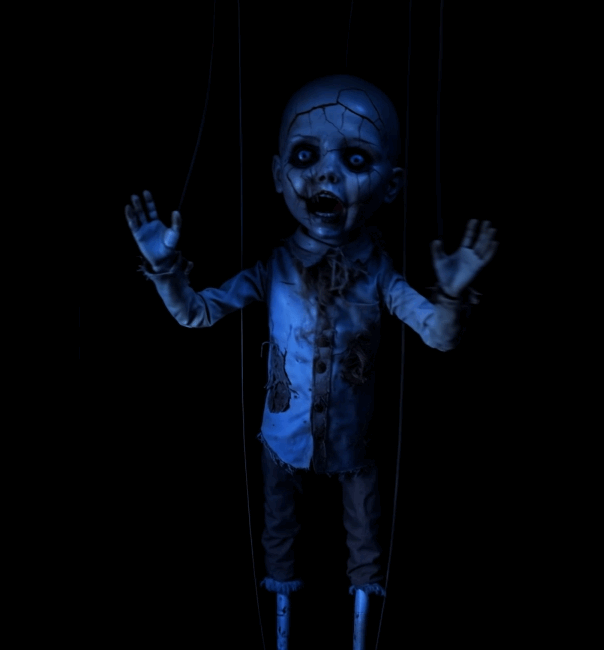
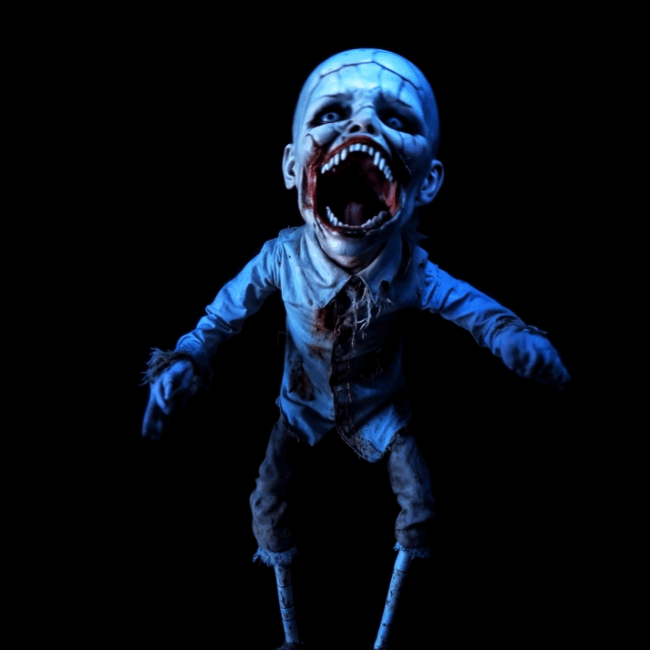
The second scene delivers a quick and effective scare. This time, the Night Doll appears as if controlled by invisible marionette strings, jerking and wobbling forward with unnatural, puppet-like motion. Suddenly, the strings snap—and the doll lunges forward, its mouth stretching unnaturally wide as it screams at the viewer. The moment is brief, just 15 seconds, but expertly timed for a jolt of terror. It’s a fantastic jump-scare moment that would work well on repeat at key access points like doors, walkways, or interior windows.
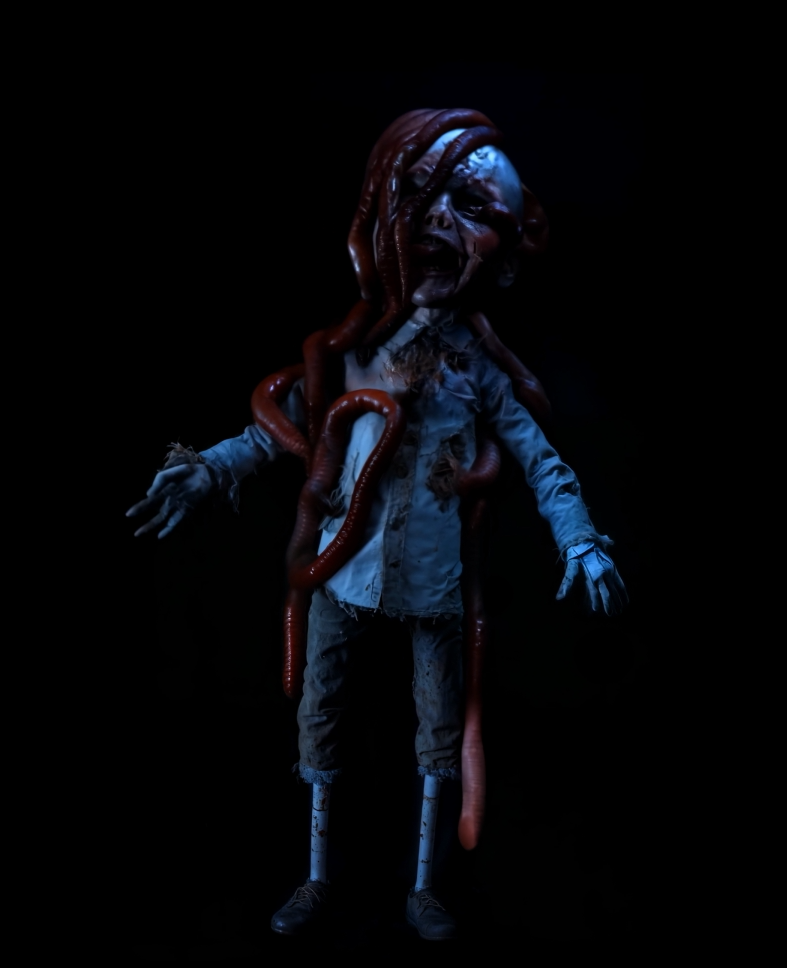
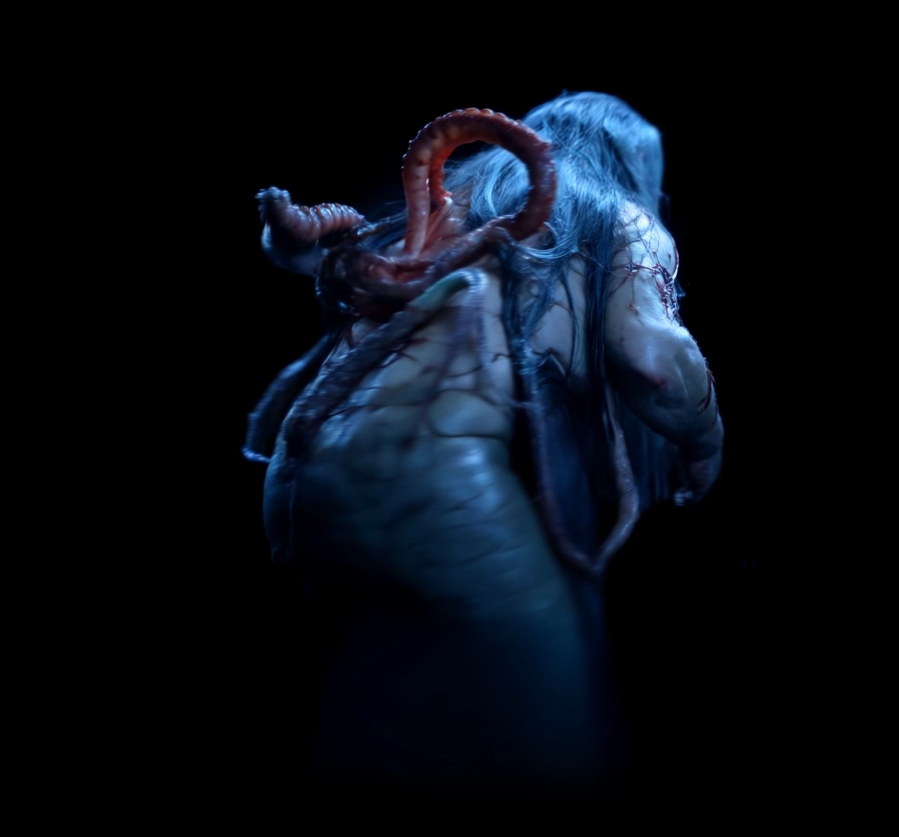
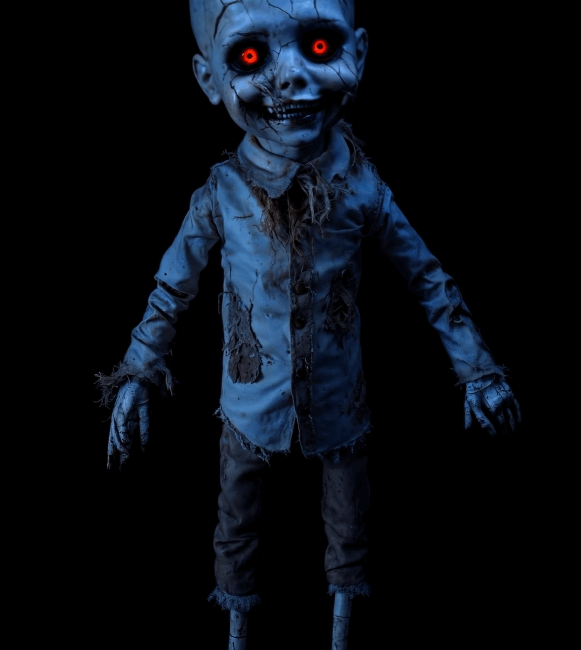
The third and final scene is perhaps the most disturbing of the set. The doll crawls unnaturally into view, its movement low and twitchy before rising upright. As the background music shifts to an eerie, atmospheric hum, its eyes glow an intense, demonic red—reminiscent of Penny the Clown. Just when you think it’s over, the doll opens its mouth and ejects a long, slug-like tentacle creature that coils around its own face and body. Instead of terror, the doll reacts with gleeful laughter, slowly receding into the shadows as its grotesque companion slithers along its form. It’s an unforgettable finish to a truly horrifying set of scenes, and a highlight of the Nightmares collection for fans of creepy dolls and possession-style horror.
- Nightmares - Homunculus
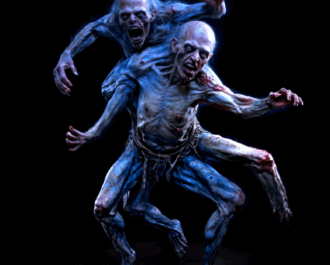
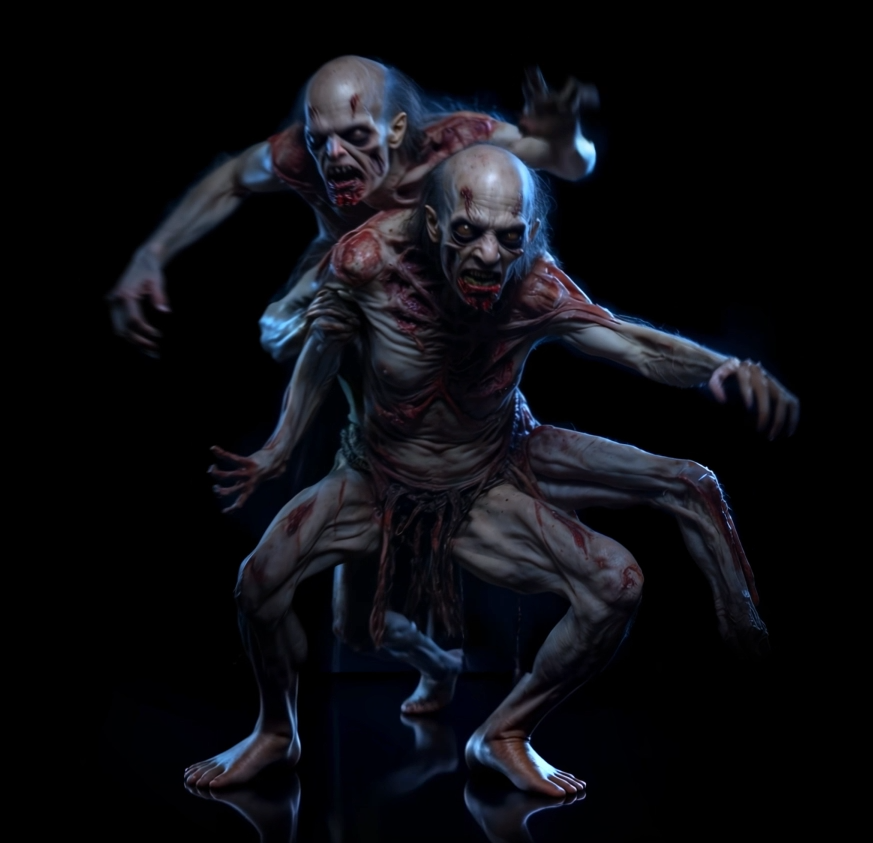
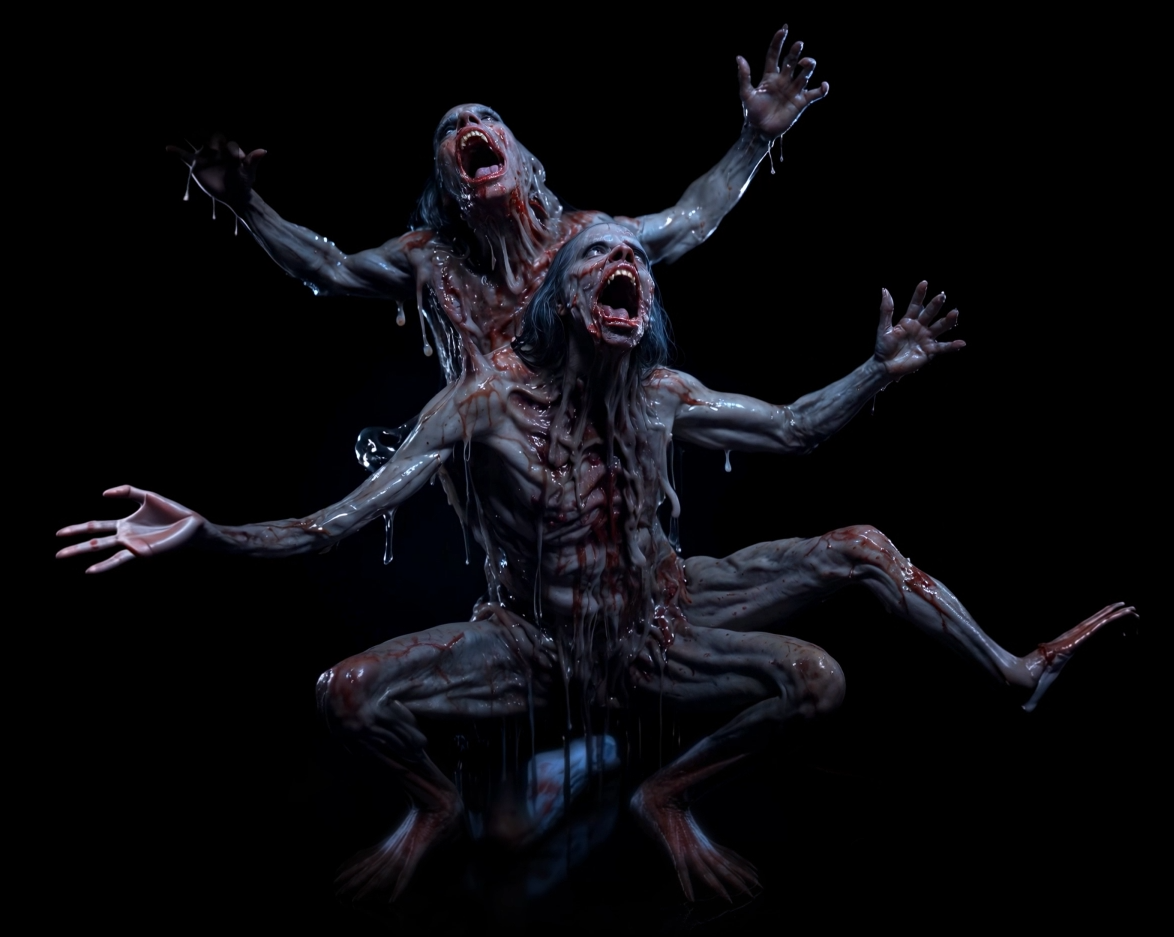
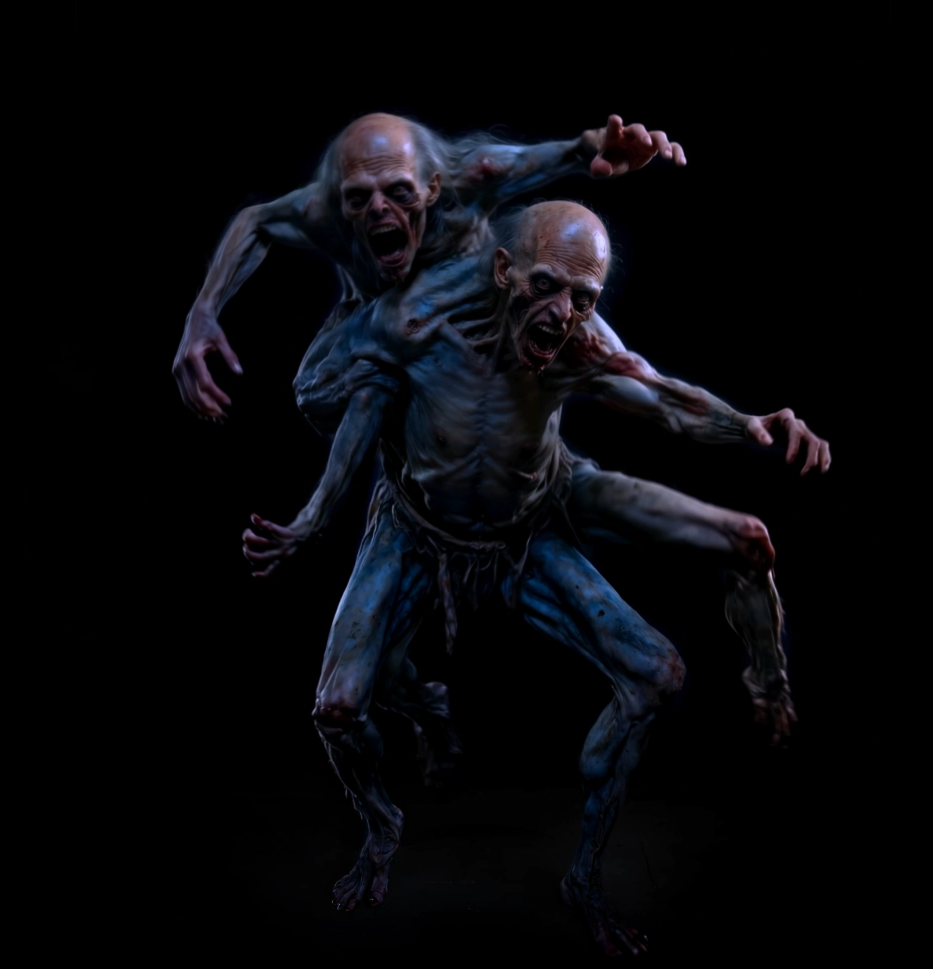
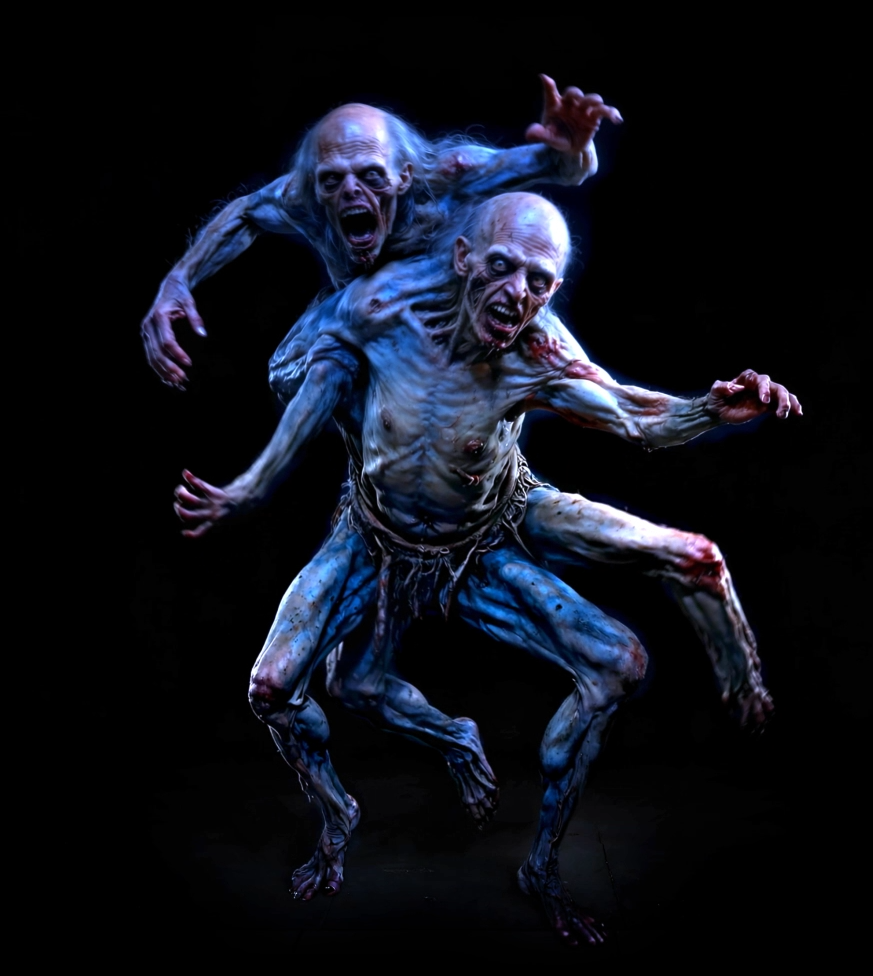
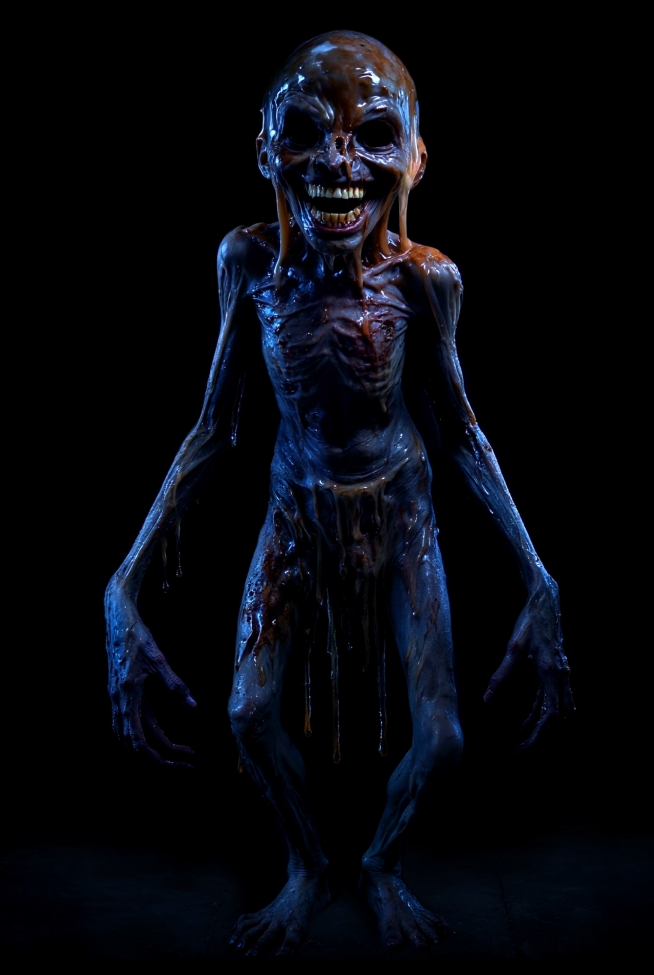
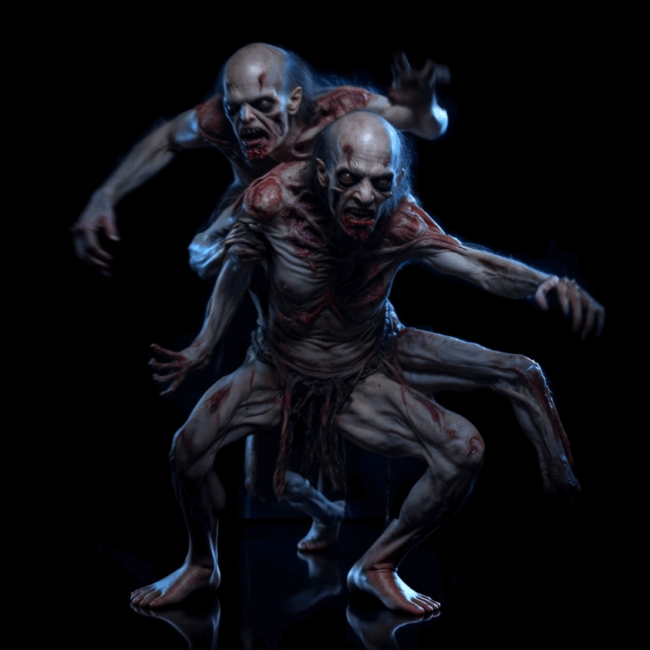
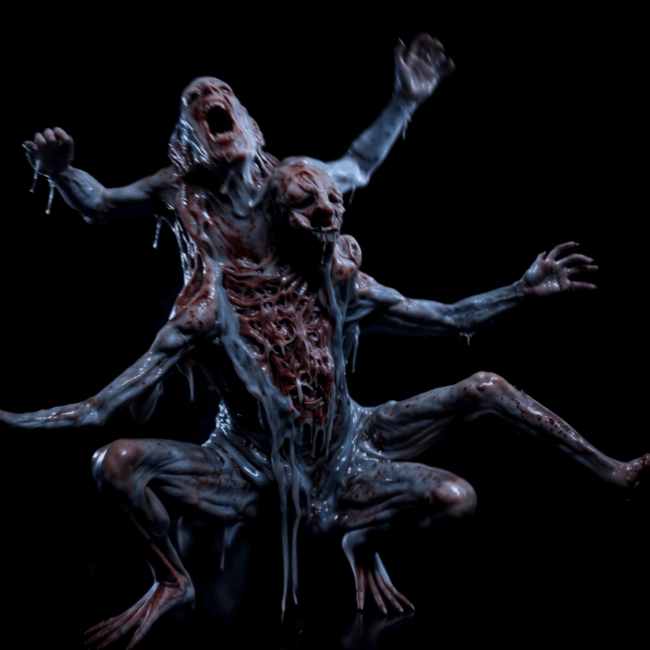
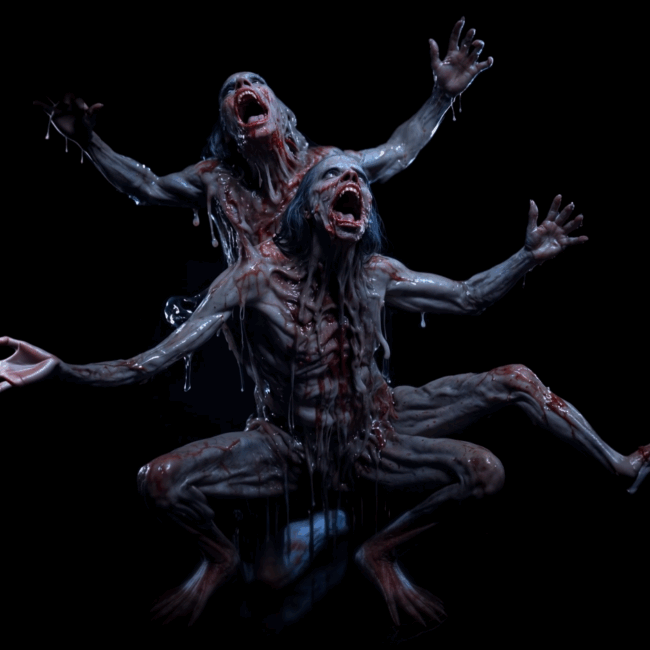
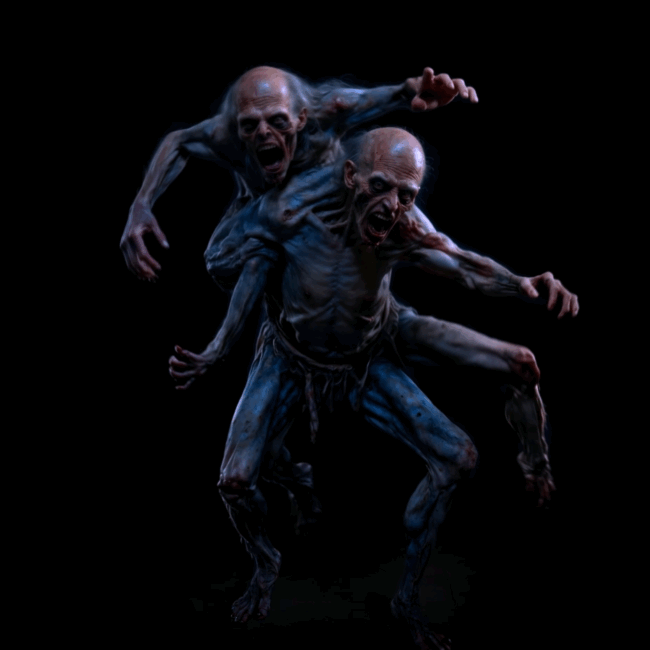
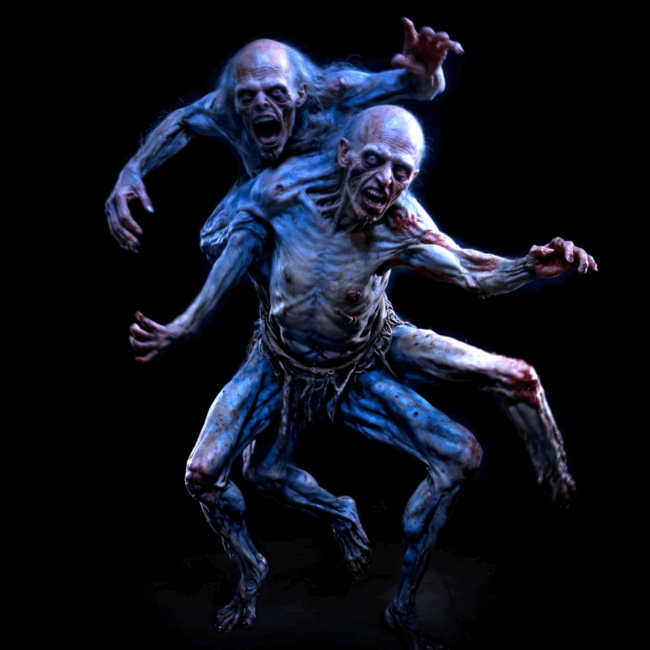
The Homunculus is one of the most viscerally disturbing entries in the Nightmares collection—a grotesque fusion of two tormented beings locked in a shared, fleshy prison. The first scene, clocking in at 22 seconds, introduces the conjoined figures as they lurch into view, snarling and writhing with rage. Their bodies begin to melt and fuse even further, skin liquefying and folding into each other in a nauseating display of morphing horror. The effect works surprisingly well with the AI animation style, where natural blurring and deformation enhance the nightmarish quality. This is a sharp, startling visual that functions as both a jump scare and a showcase of AI horror at its most abstract.
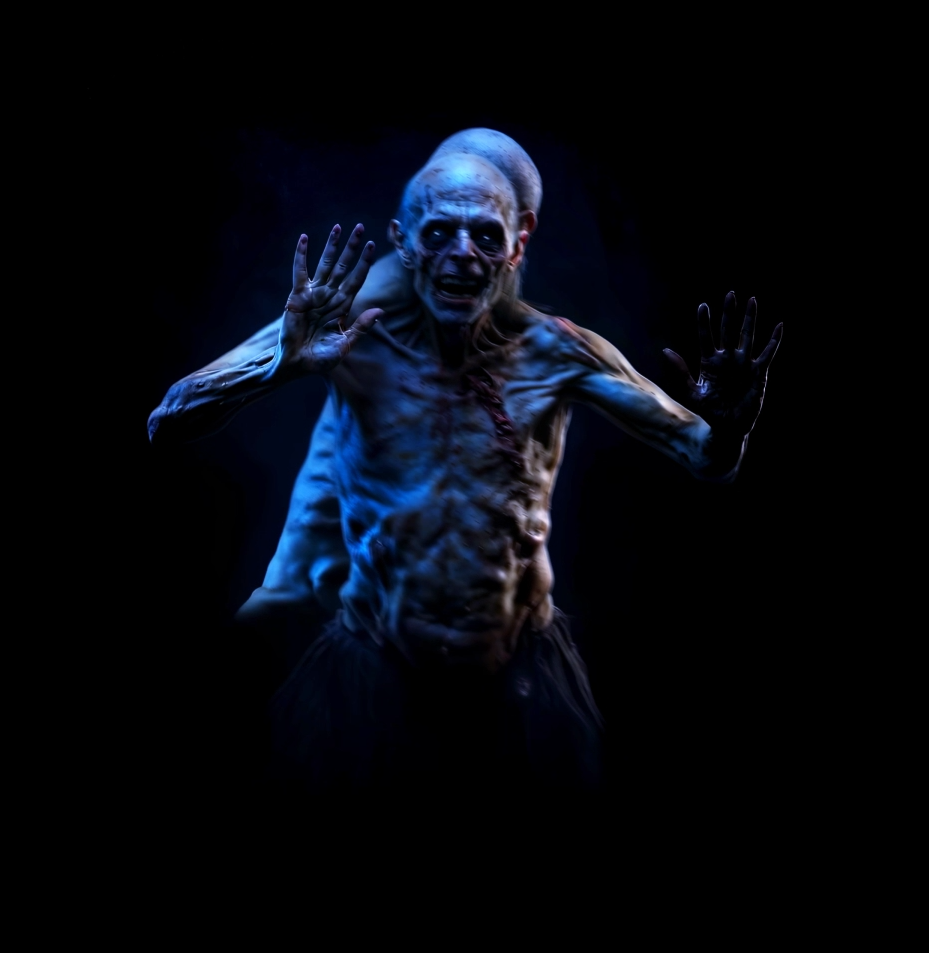
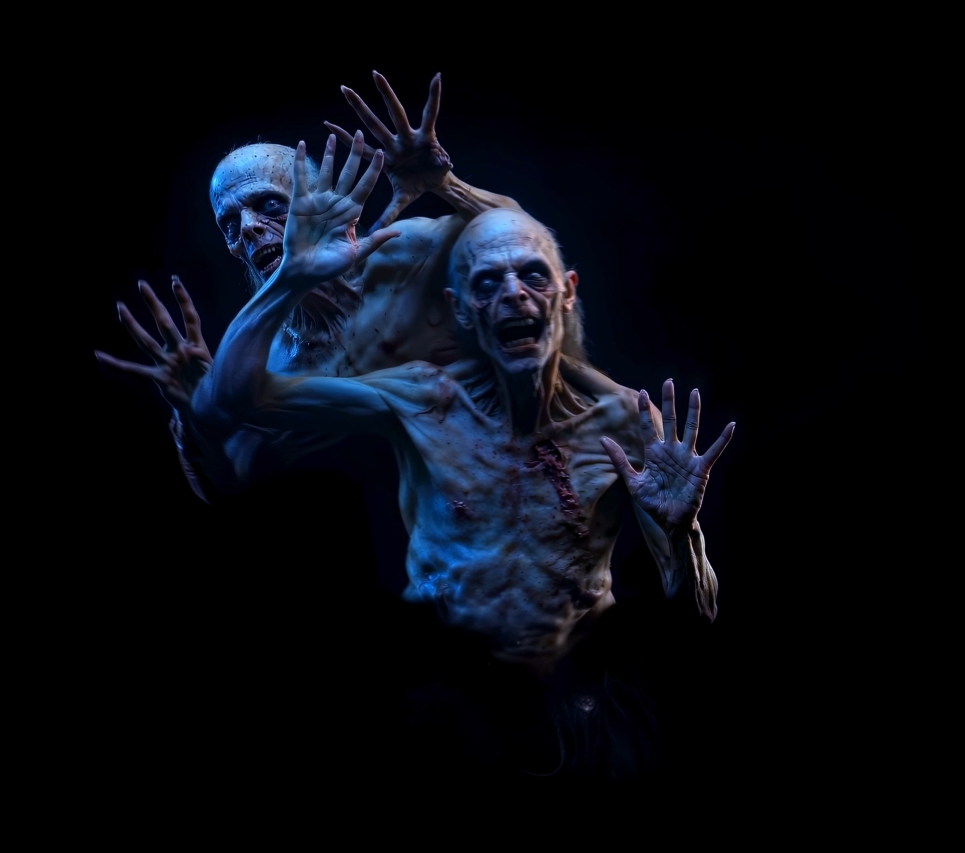
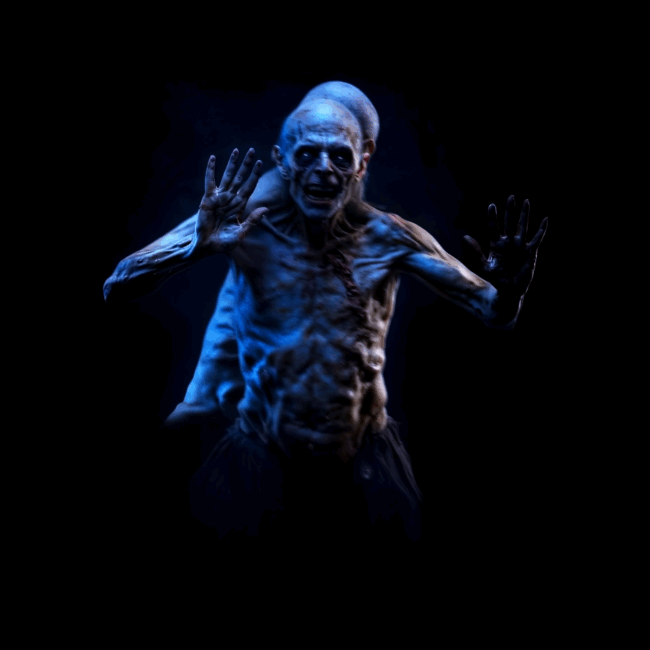
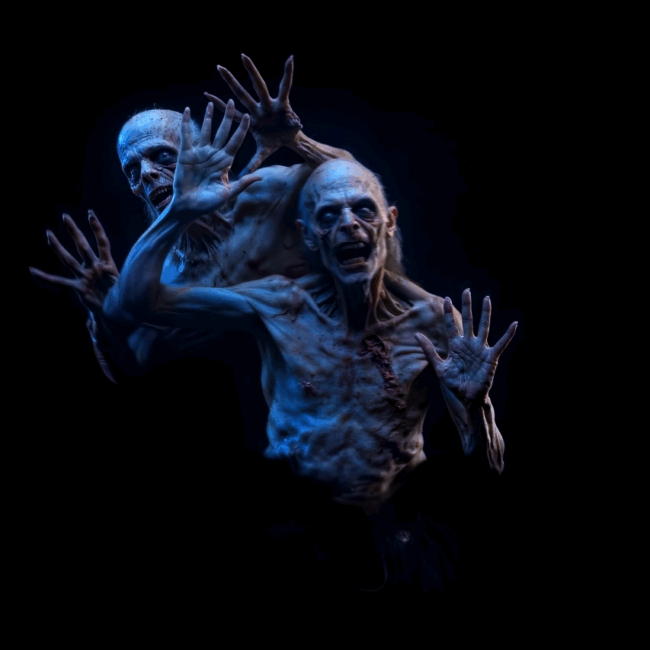
The second scene is short but sharply effective. Lasting just 14 seconds, the Homunculus duo appears slamming violently against what looks like a glass wall or window, their bloodied faces and flailing limbs thudding with bone-rattling impact. The sound design is key here—the thumps and scraping against the virtual surface make it ideal for window projections, where the illusion of something trying to break through becomes unsettlingly real. This moment is brief, but highly rewatchable and perfect as a looping scare element near entryways.
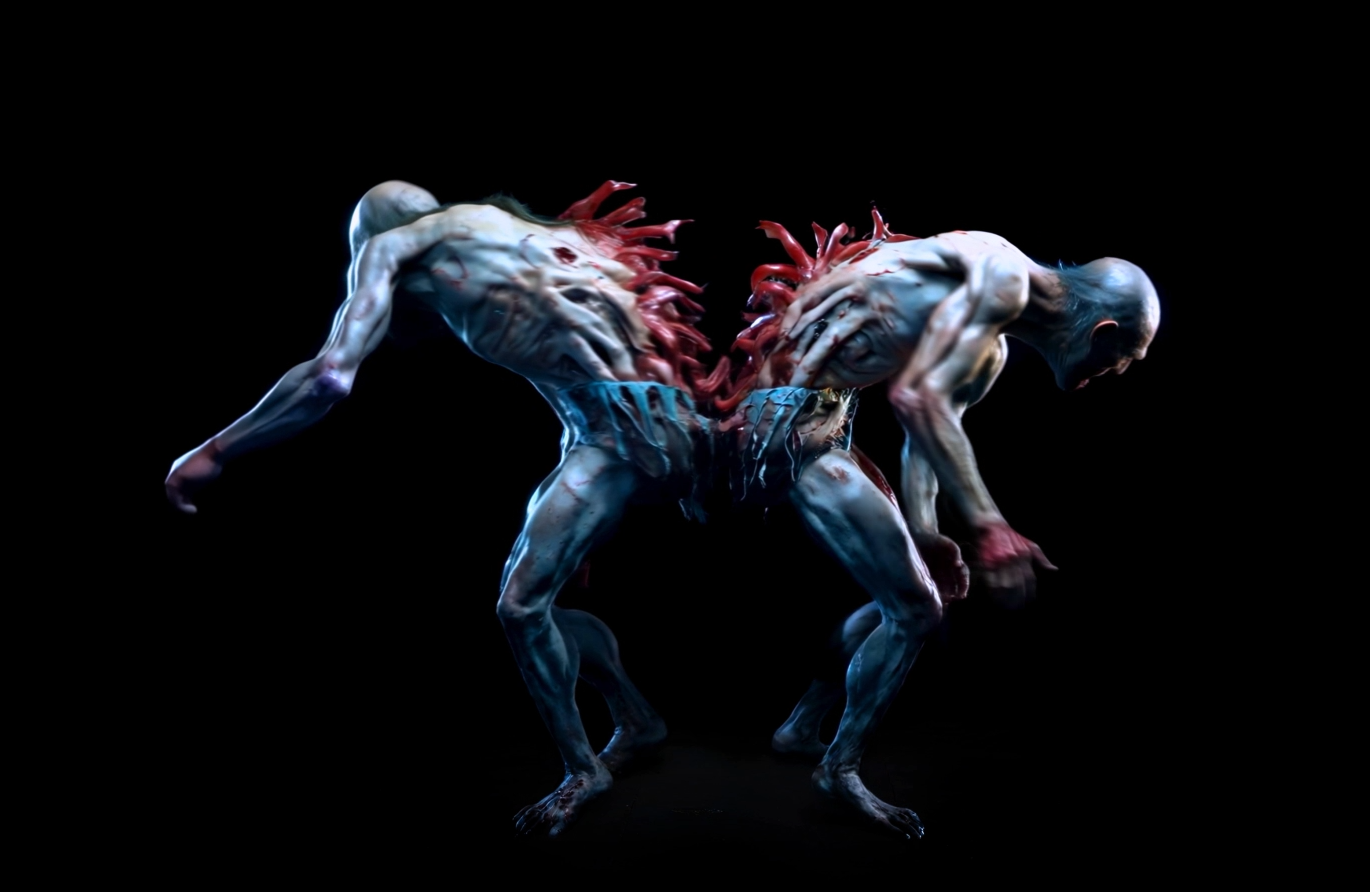
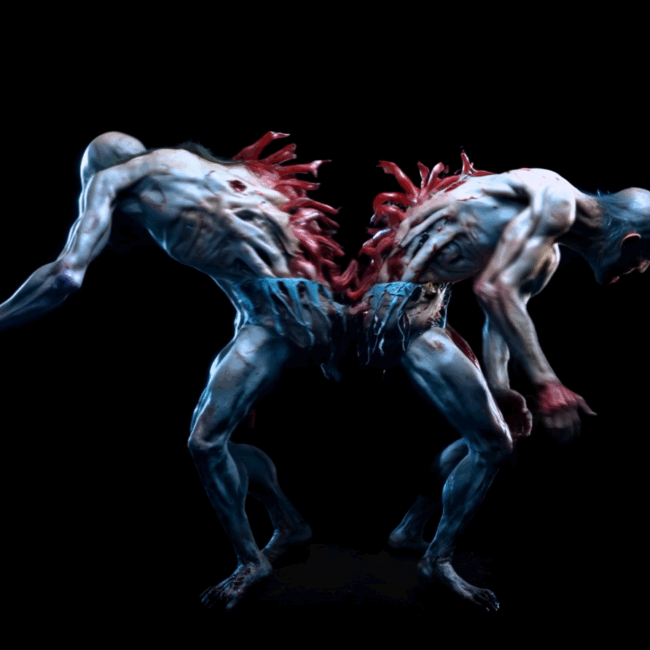
The final scene escalates the horror further. The two beings charge forward from the shadows, not just growling at the viewer, but at each other. What follows is a gruesome separation as they claw and tear themselves apart, their fused bodies splitting down the center in a spray of blood and exposed tissue. After finally achieving separation, the now-independent entities snarl once more before darting off in opposite directions—one left, one right—ending the scene with chaotic energy and a sense of unnatural release. It’s a climactic and gory payoff that will leave viewers horrified and captivated. Homunculus is a perfect pick for haunters who want psychological horror mixed with raw, body-based gore.
- Nightmares - Necromancer
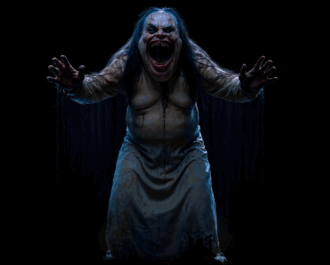
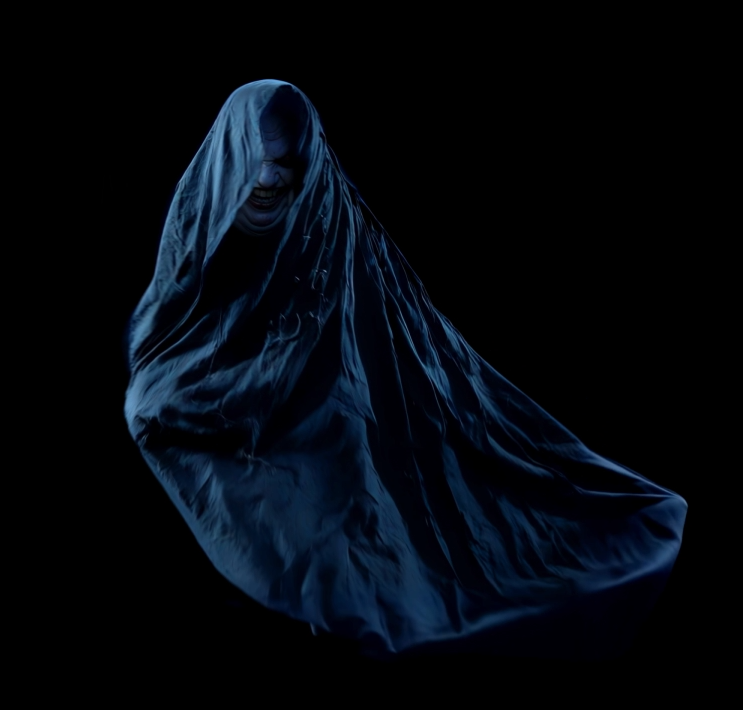
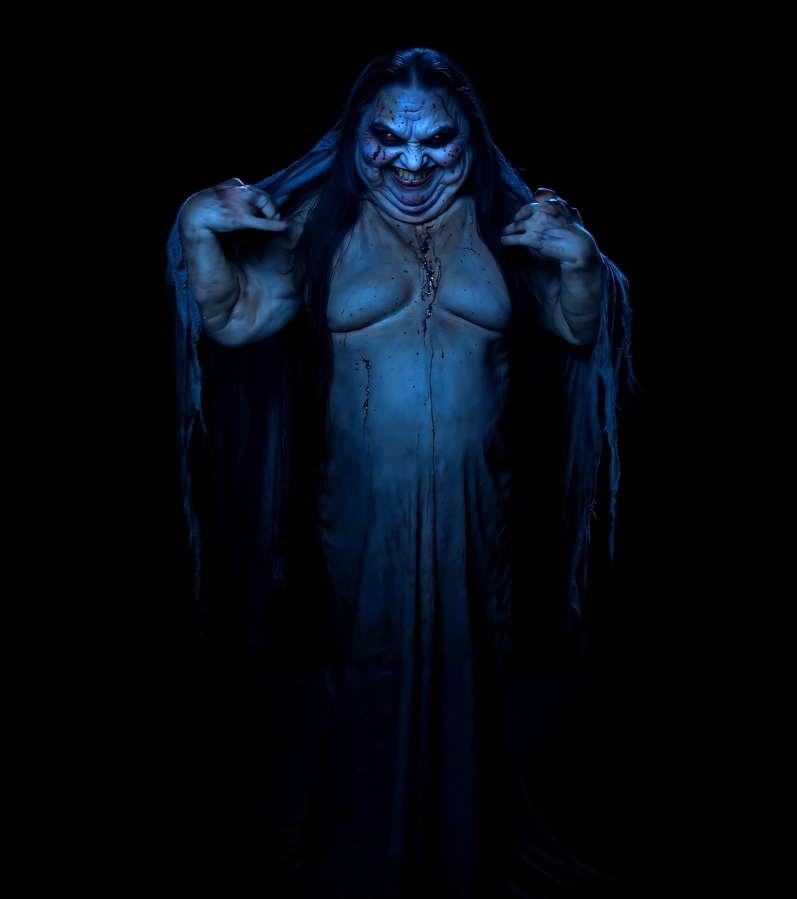
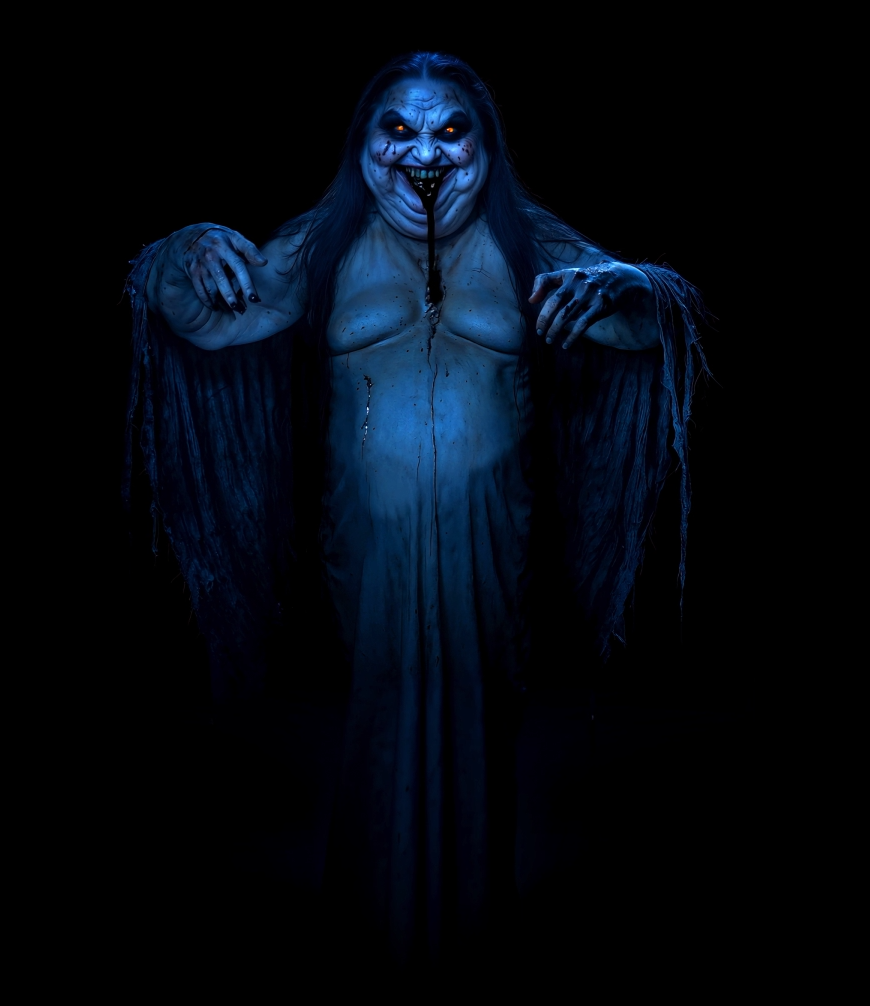
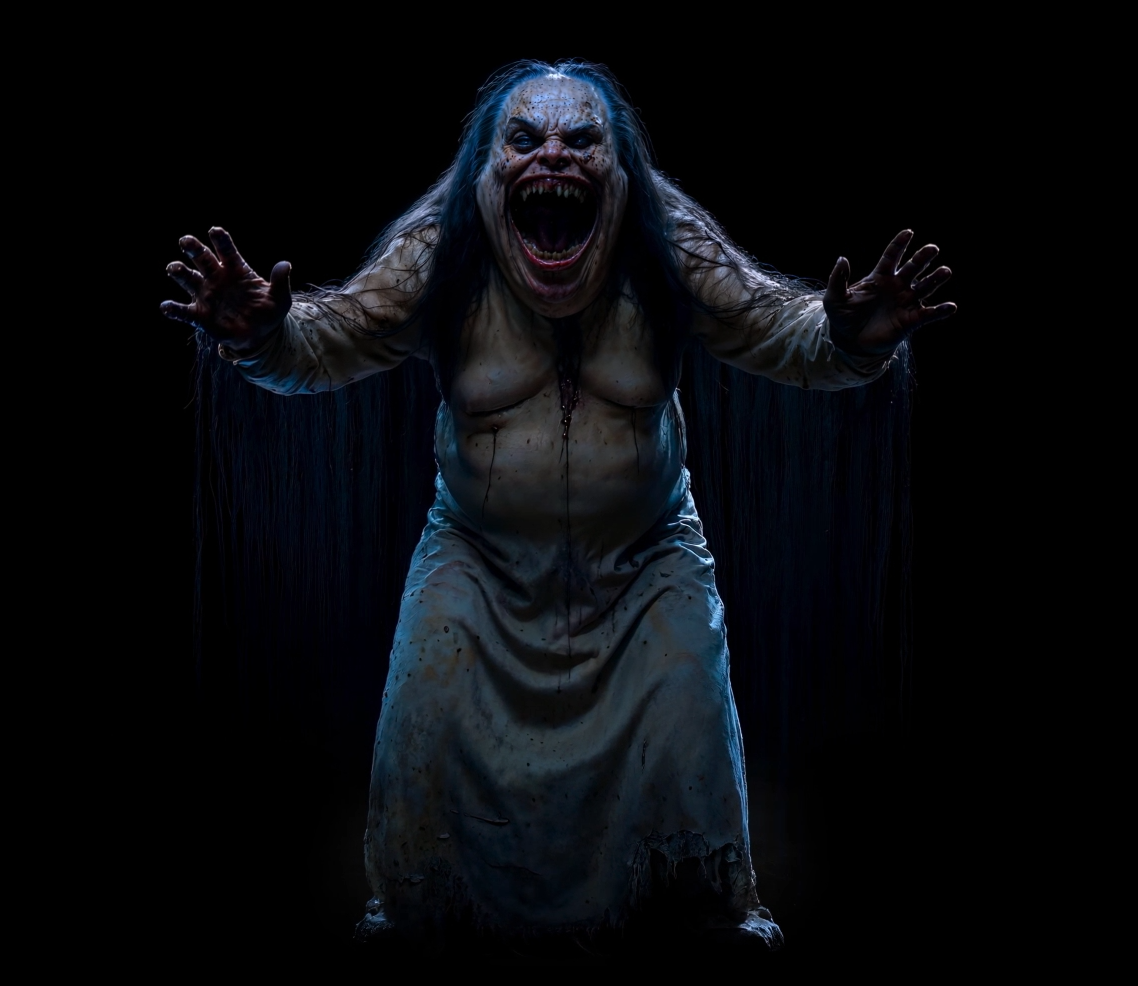
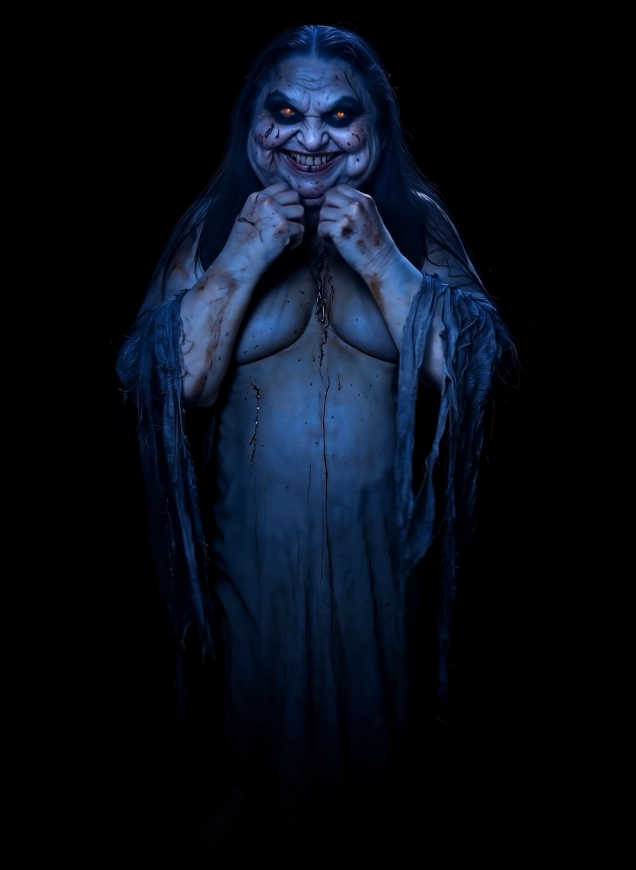
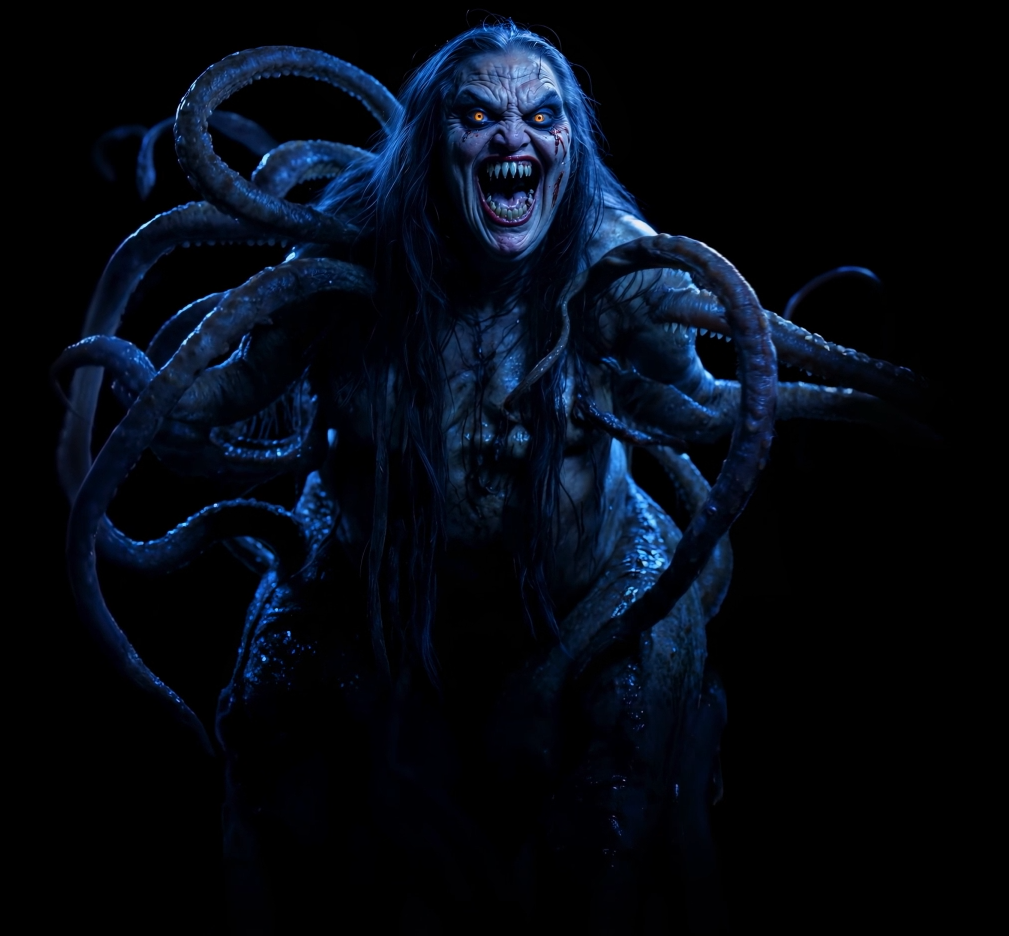
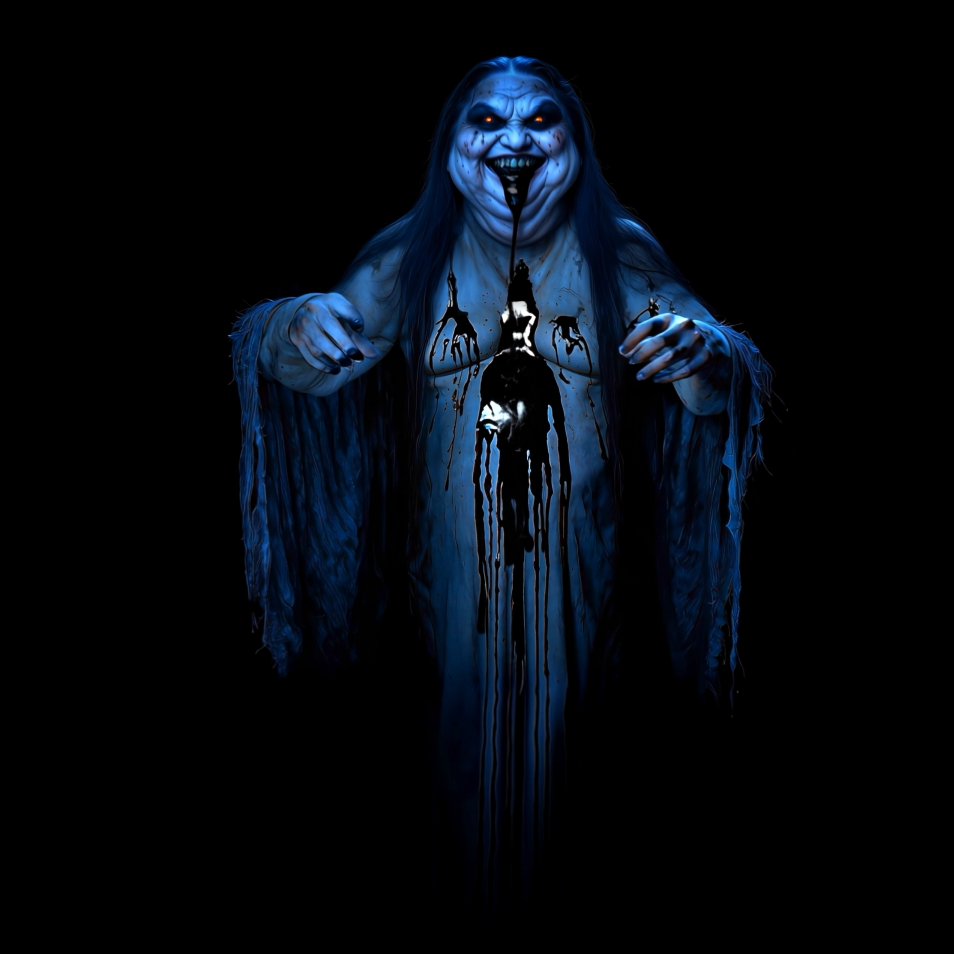
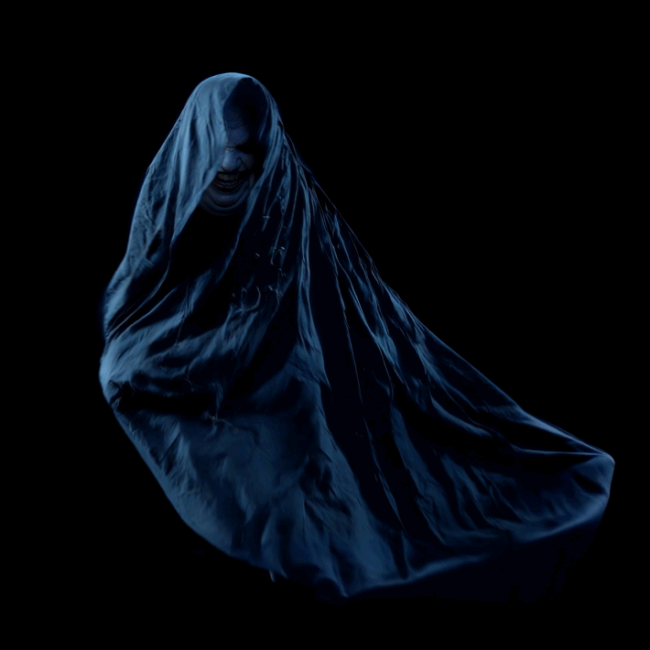
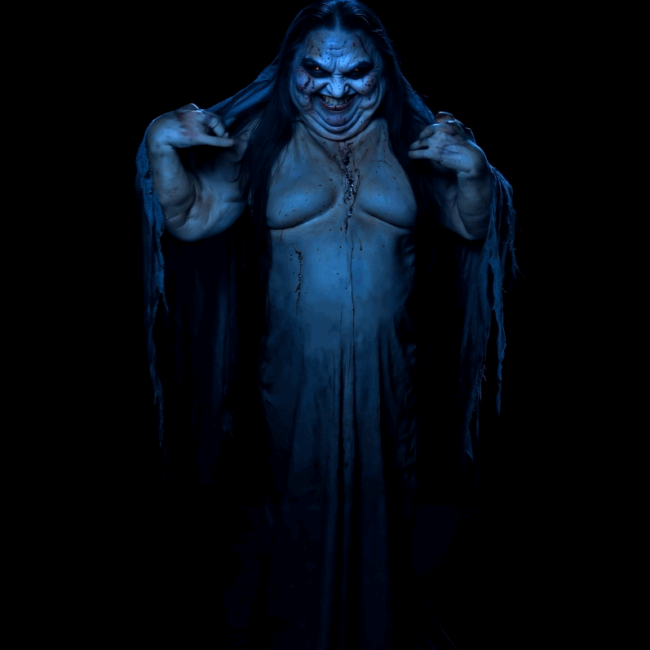
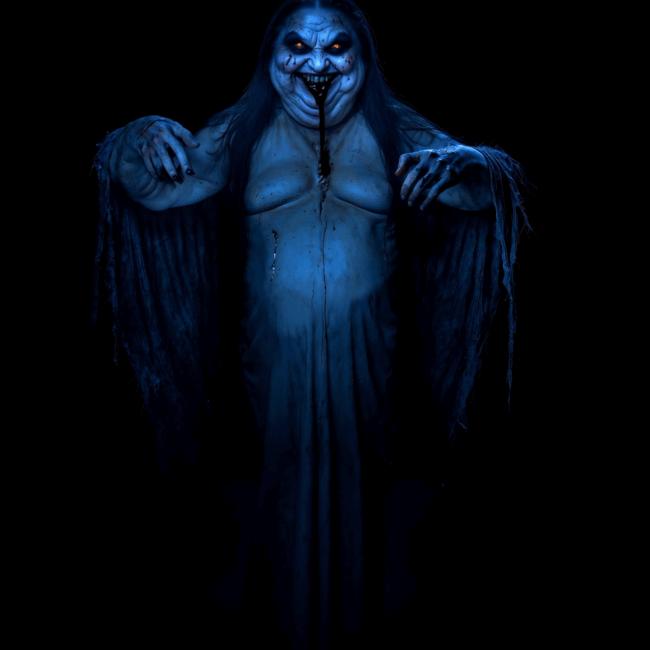
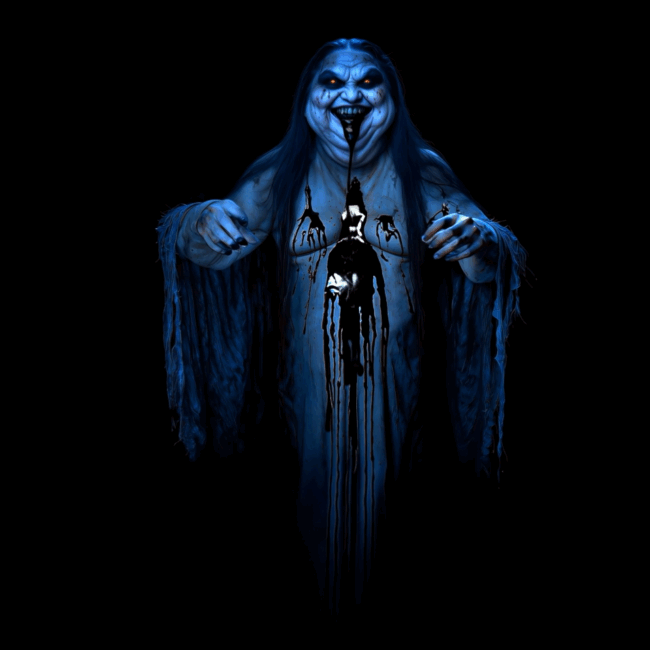
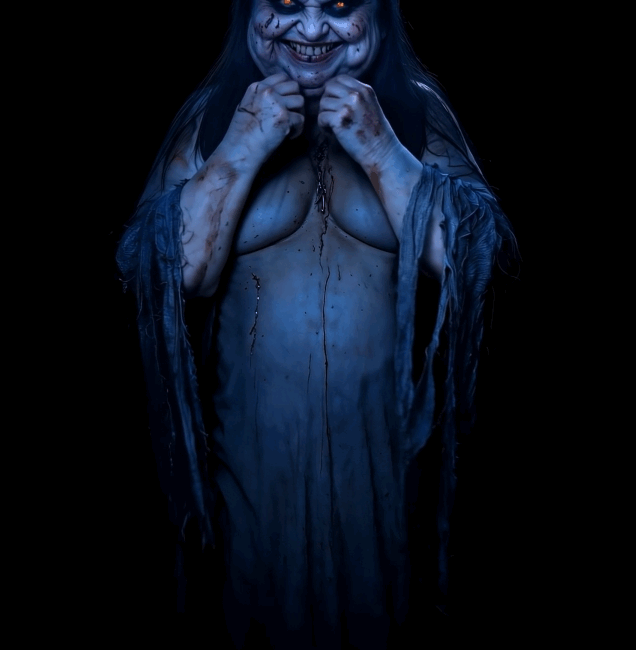
The Necromancer is one of the most visually grotesque and unapologetically disturbing figures in AtmosFX’s Nightmares lineup. The first scene opens with an eerie, floating cloak drifting in the wind—empty and ethereal—before the witch’s bloated face suddenly appears within the cowl. Her full body materializes slowly, revealing a vile, oversized figure with glowing orange eyes and a cruel, leering grin. Without warning, blood begins to pour from her mouth in thick streams, soaking her chest and pooling at her feet as she cackles maniacally. Just when it seems she can’t get any more revolting, she lets out a bone-chilling scream and begins to dissolve into the very blood she’s spilled. It’s the most gore-drenched sequence AtmosFX has ever created, and it’s as mesmerizing as it is horrifying.
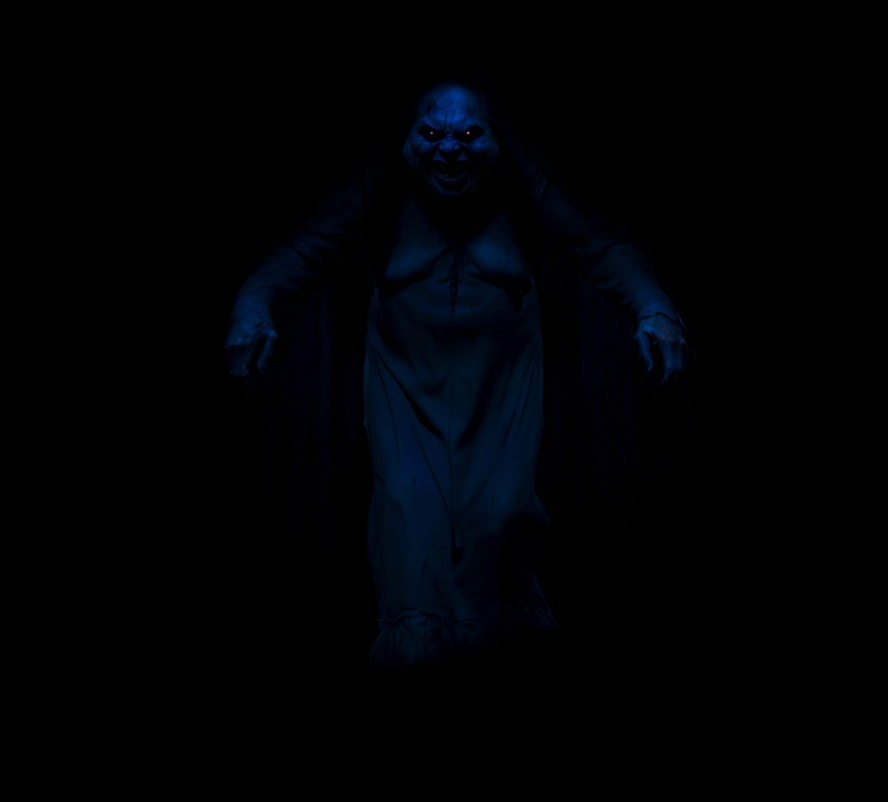
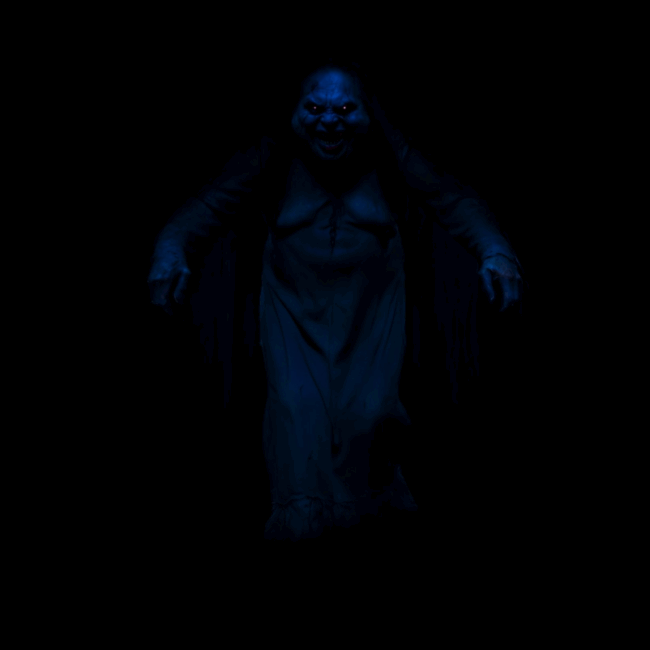
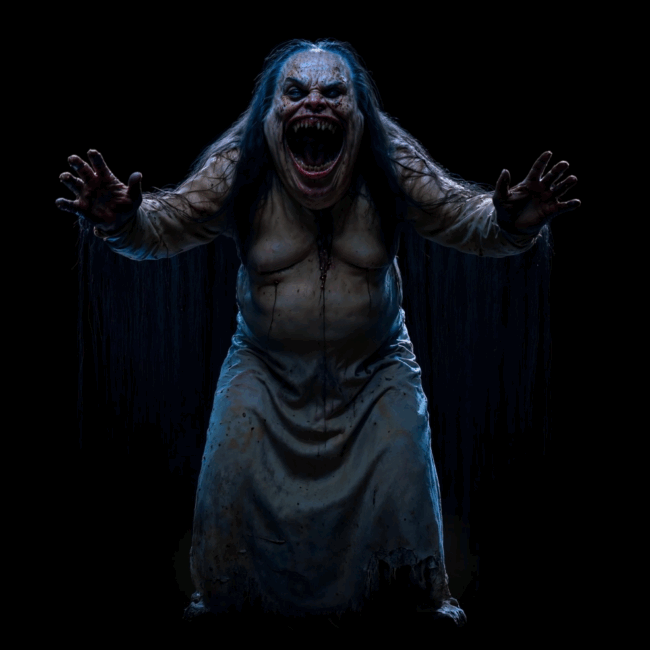
The second scene leans more into psychological dread than shock value. The Necromancer slowly creeps into view, her heavy form swaying with sick purpose as she scans the room with her burning eyes. Her movements are calculated, almost predatory, and her grotesque features—accentuated by excellent AI detailing—evoke a primal discomfort. Then, with no warning, her mouth contorts unnaturally wide as she unleashes an inhuman howl directly at the viewer. This moment, paired with razor-sharp sound design and eerie ambient noise, is perfect for a sudden, terrifying jump scare.
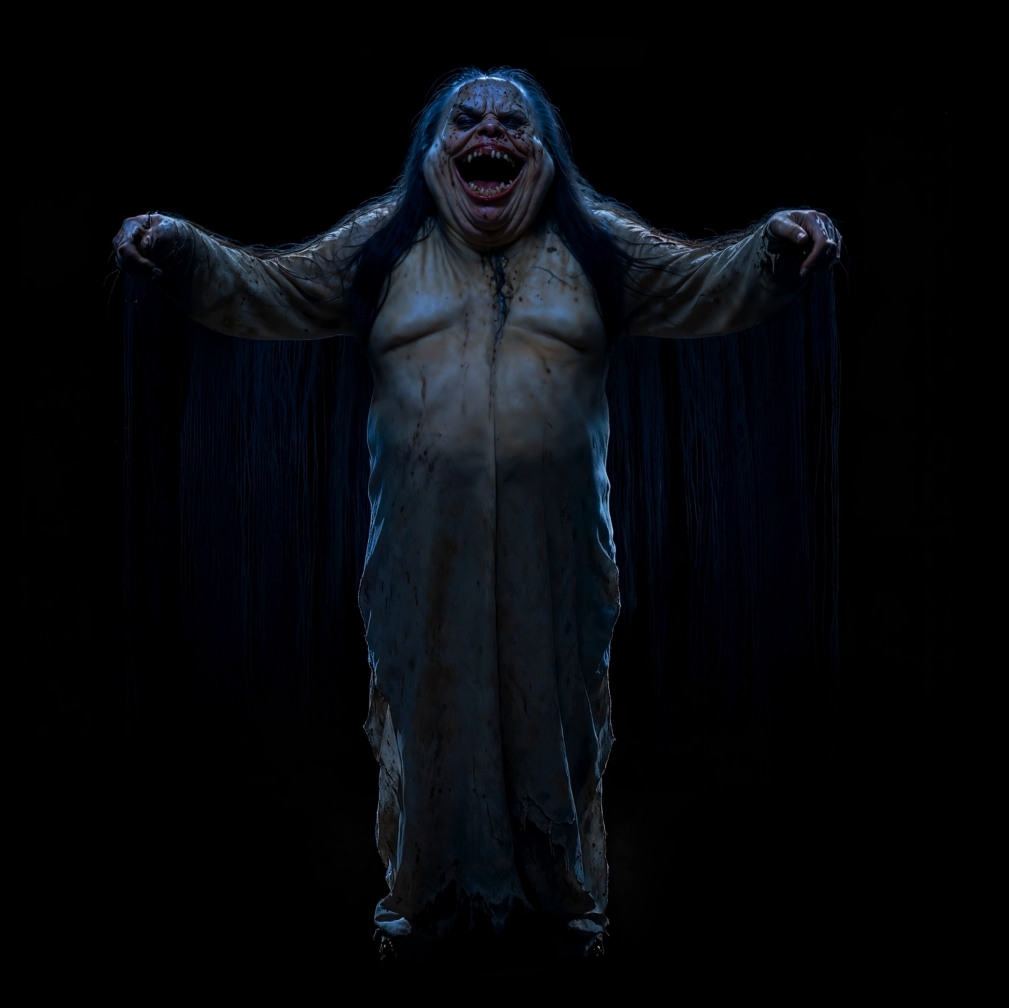
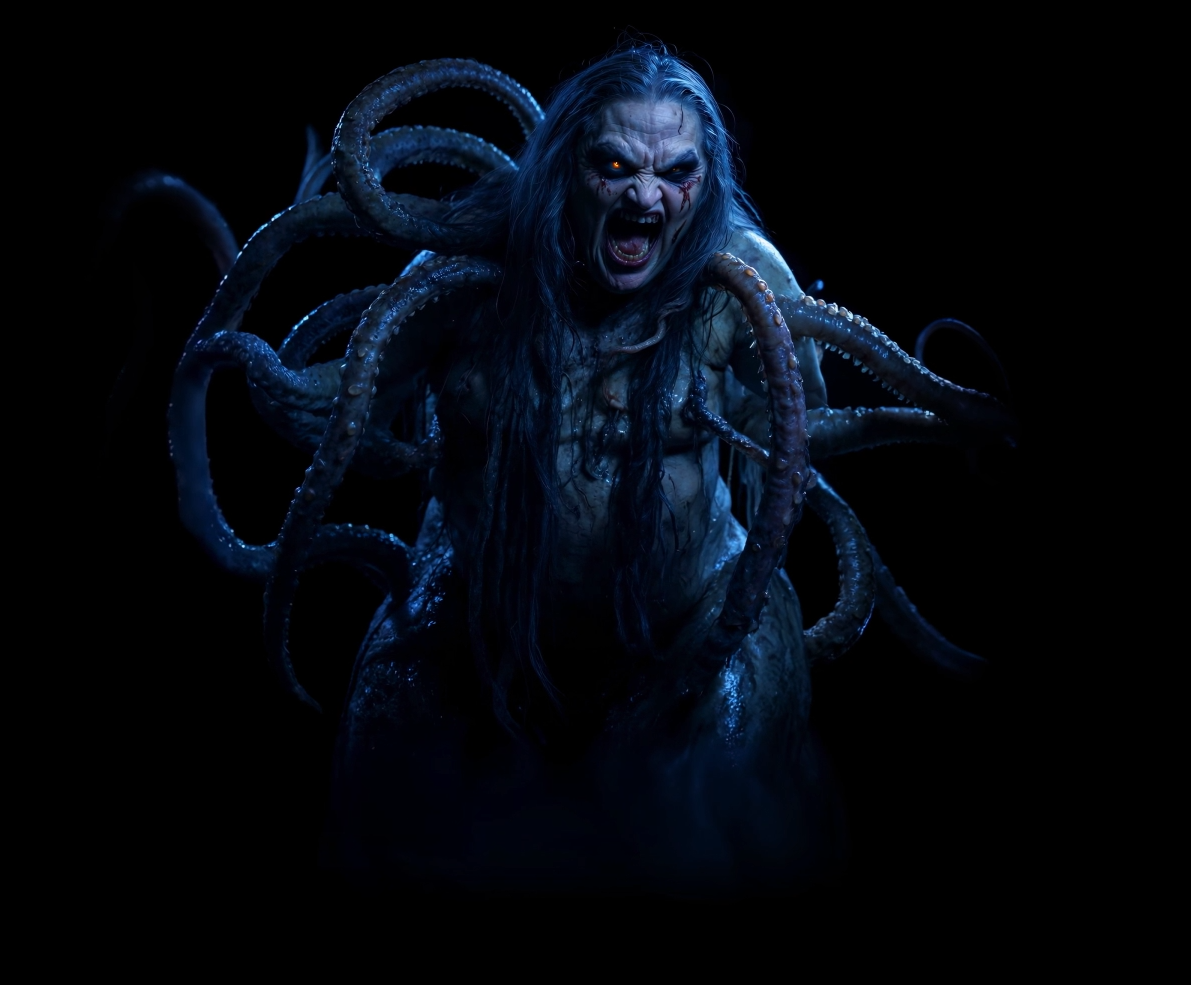
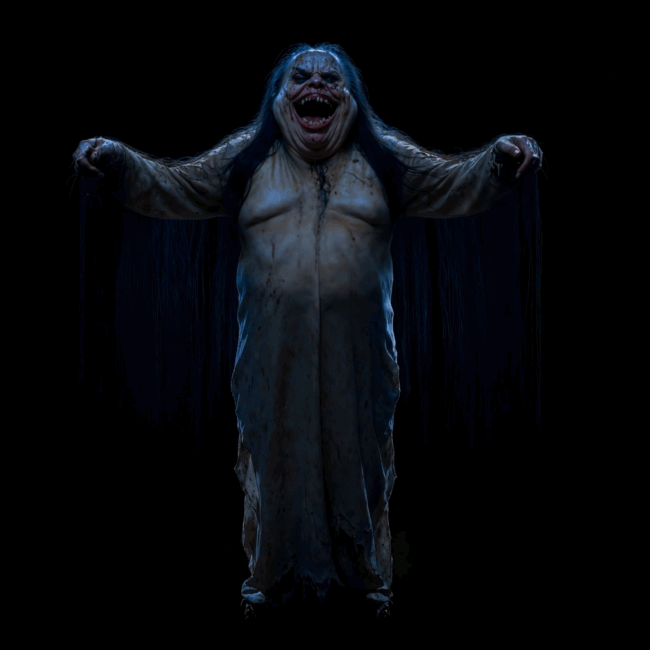
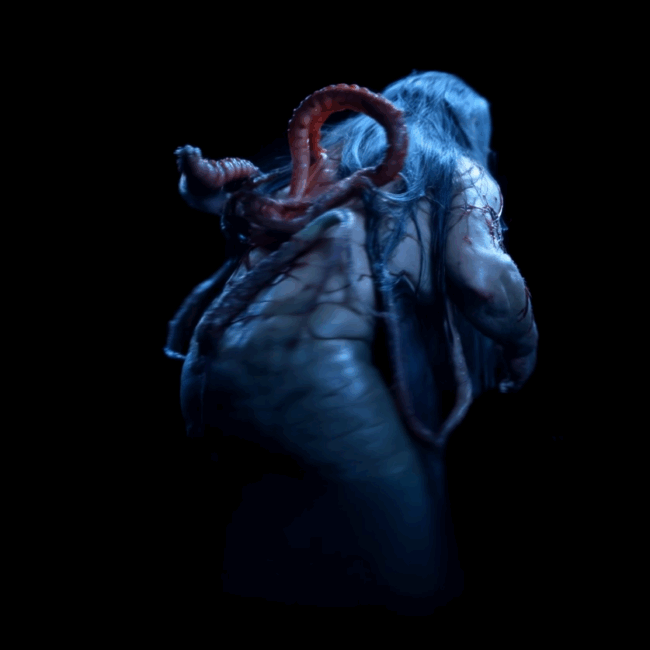
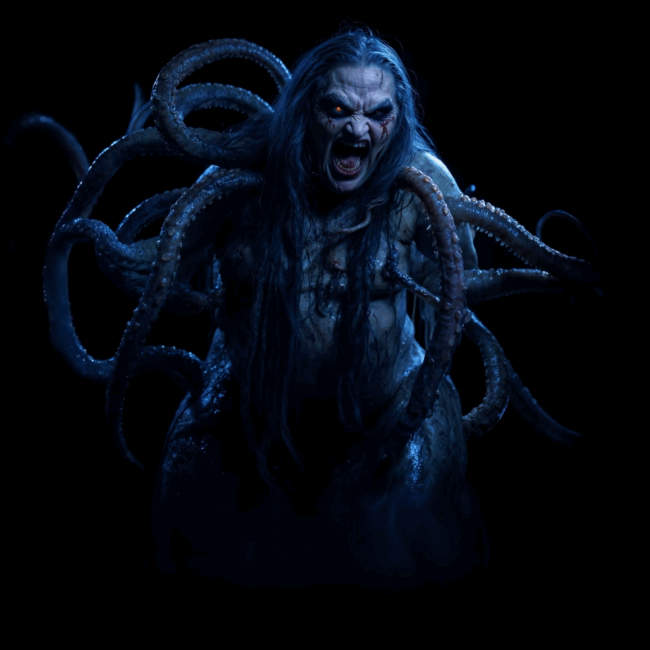
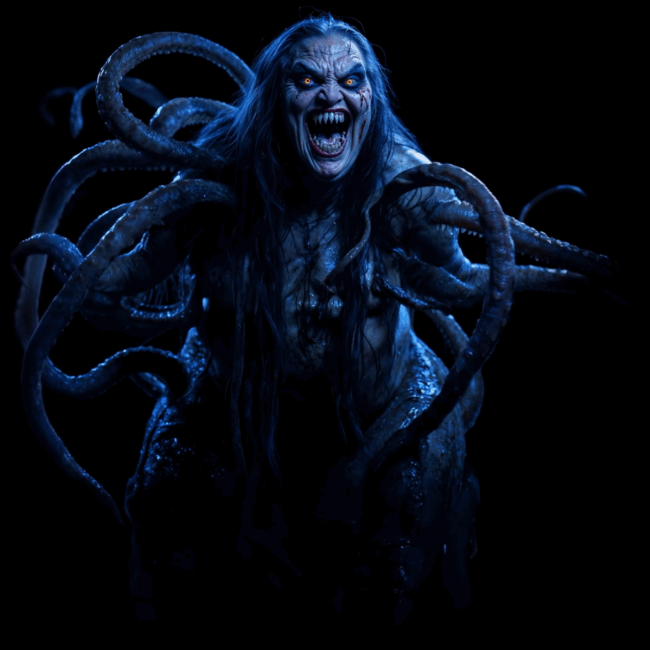
In the third and final scene, the horror reaches monstrous new heights. Ominous music sets the tone as the witch steps into view, laughing darkly with sinister confidence. Suddenly, she hunches forward—and from her back erupt thick, slimy tentacles that writhe and lash in all directions. They begin bursting from her limbs, shoulders, and torso, twisting like living extensions of her rage. As she releases a final, ear-piercing scream, her entire body writhes in unnatural motion. This sequence is pure nightmare fuel, blending body horror with occult terror in a way that’s deeply unsettling. For serious haunters seeking to push boundaries, the Necromancer is a showstopper—but definitely not for the faint of heart or the underage crowd.
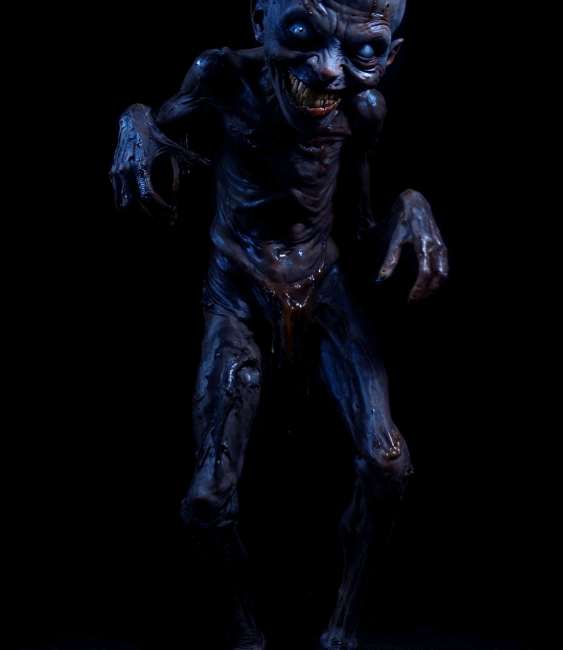
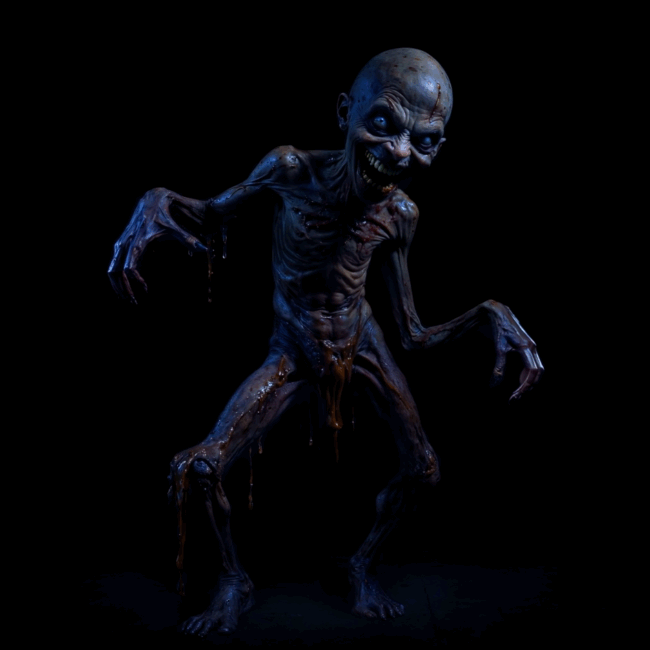
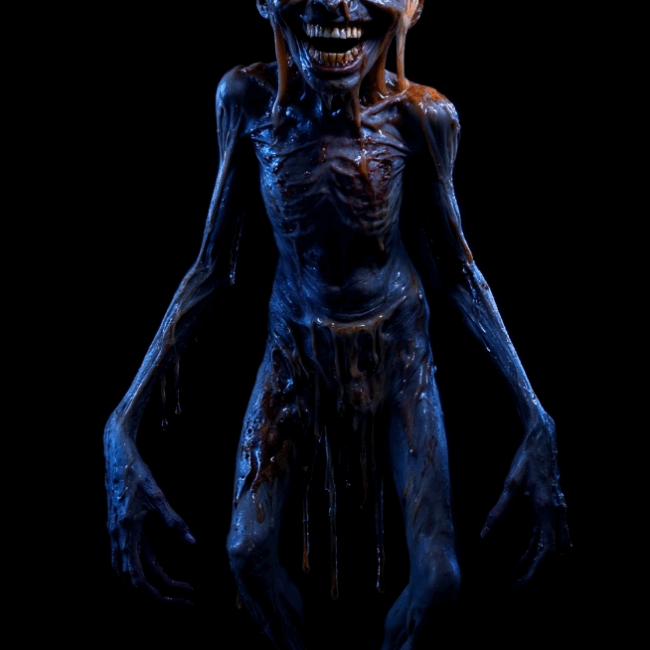
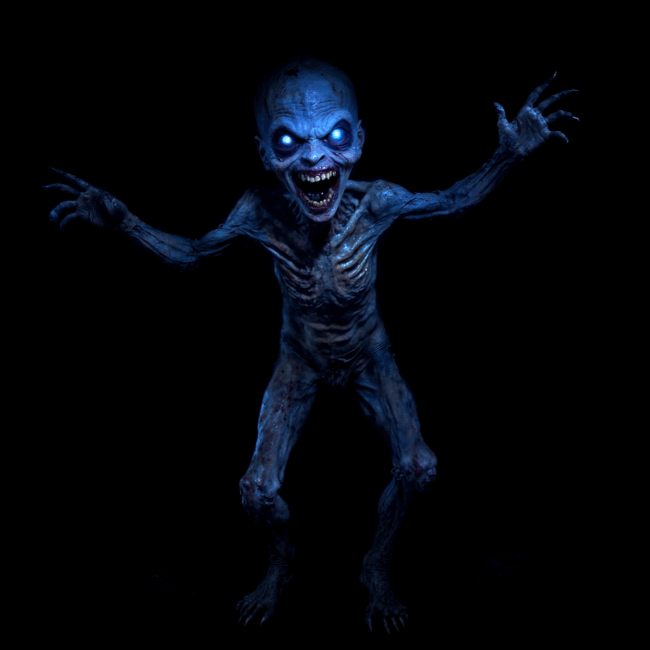
- Nightmares - Smiley
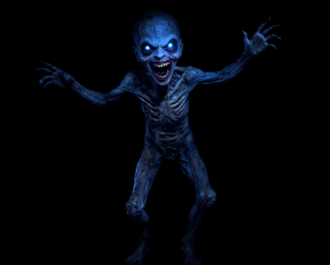
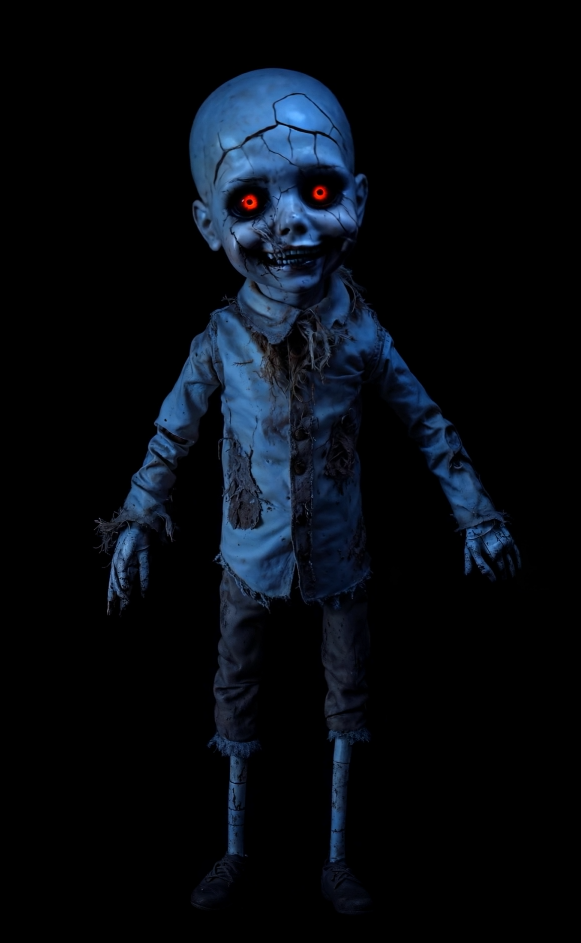
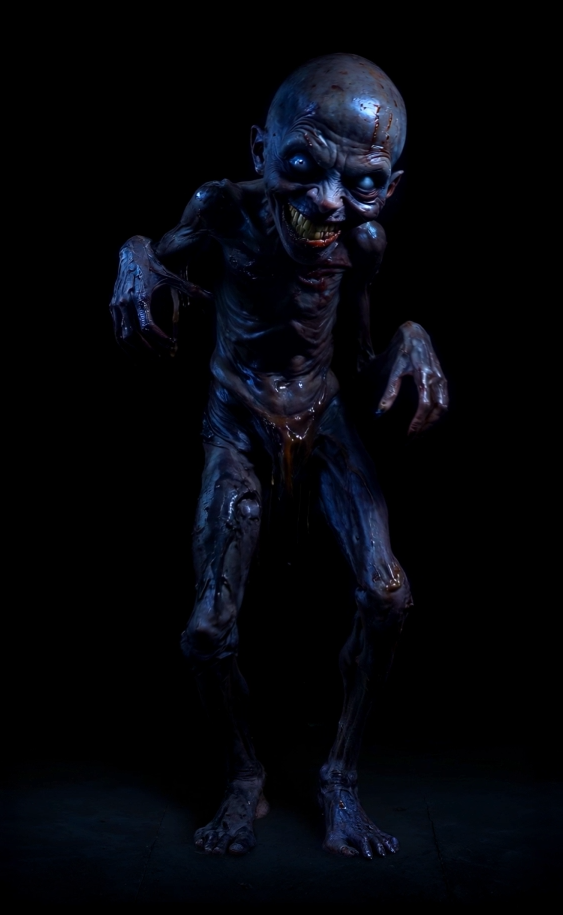
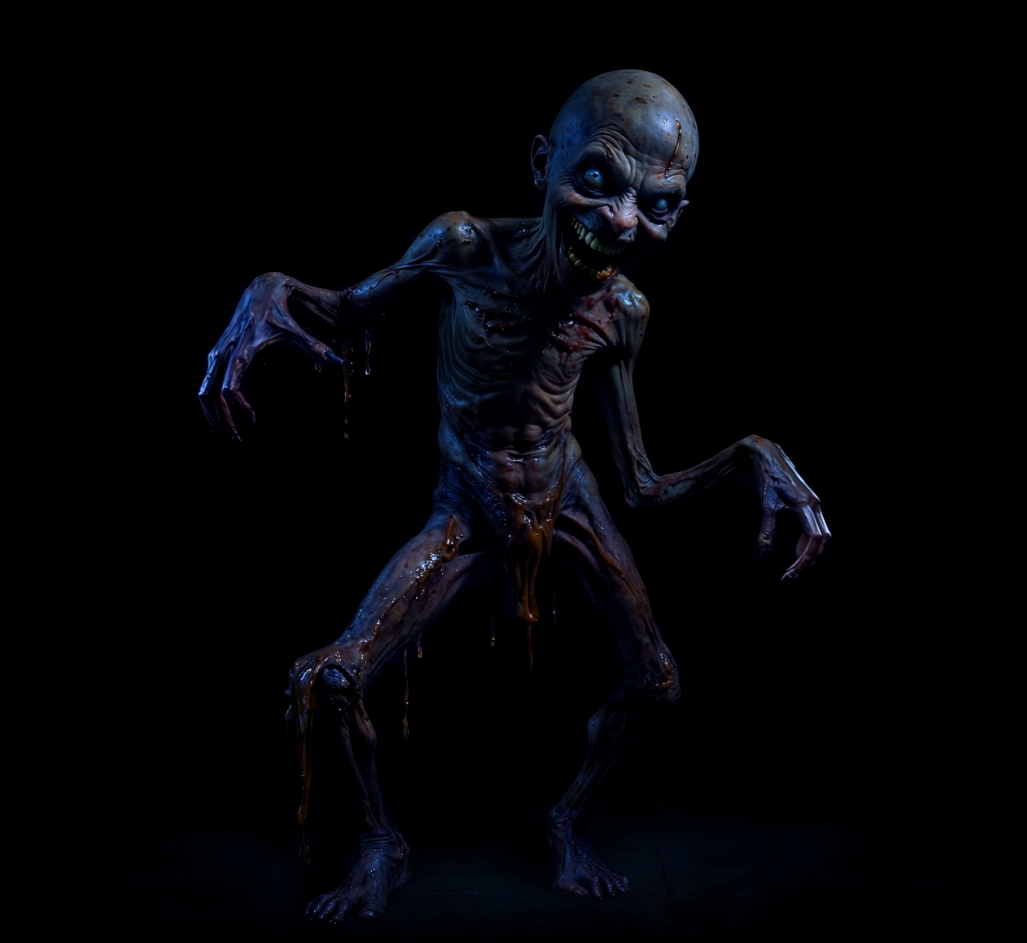
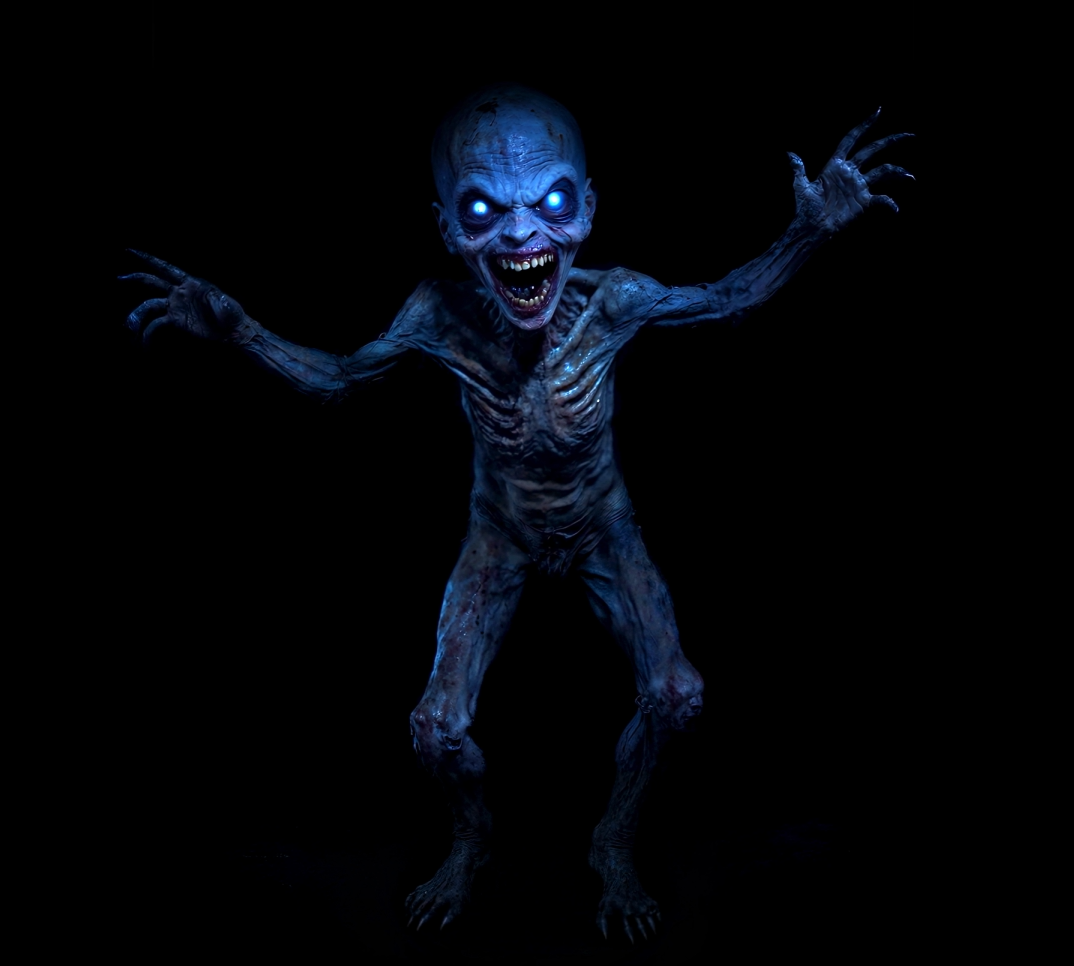
Don’t let Smiley’s small stature and grinning face fool you—this impish creature is packed with pure nightmare fuel. The first scene introduces the viewer to Smiley as he slinks into view, his body slick with dripping ooze and tattered clothing clinging to his form. His mouth is frozen in a wide, unnerving grin while his piercing gaze locks onto the viewer. He cackles softly at first, then the music swells dramatically as his head begins to melt into a puddle of black slime, oozing down his shoulders and pooling at his feet. Still grinning, he slowly backs away and vanishes into the darkness, leaving only the sickening memory of his laugh. The visual decay combined with the audio cues makes this scene deeply unsettling, cementing his name with that ever-present, unnatural smile.
The second scene delivers a short but effective jump scare. Smiley suddenly leaps out from the shadows, screaming at the viewer with wild eyes and a mouth stretched impossibly wide. This 15-second hit is perfect for looping in tight spaces—doorways, small windows, or entryways—where the scare can come fast and unexpected. His high-pitched shriek and manic energy in this moment deliver a quick jolt of terror, especially when paired with sudden sound cues and flickering lights.
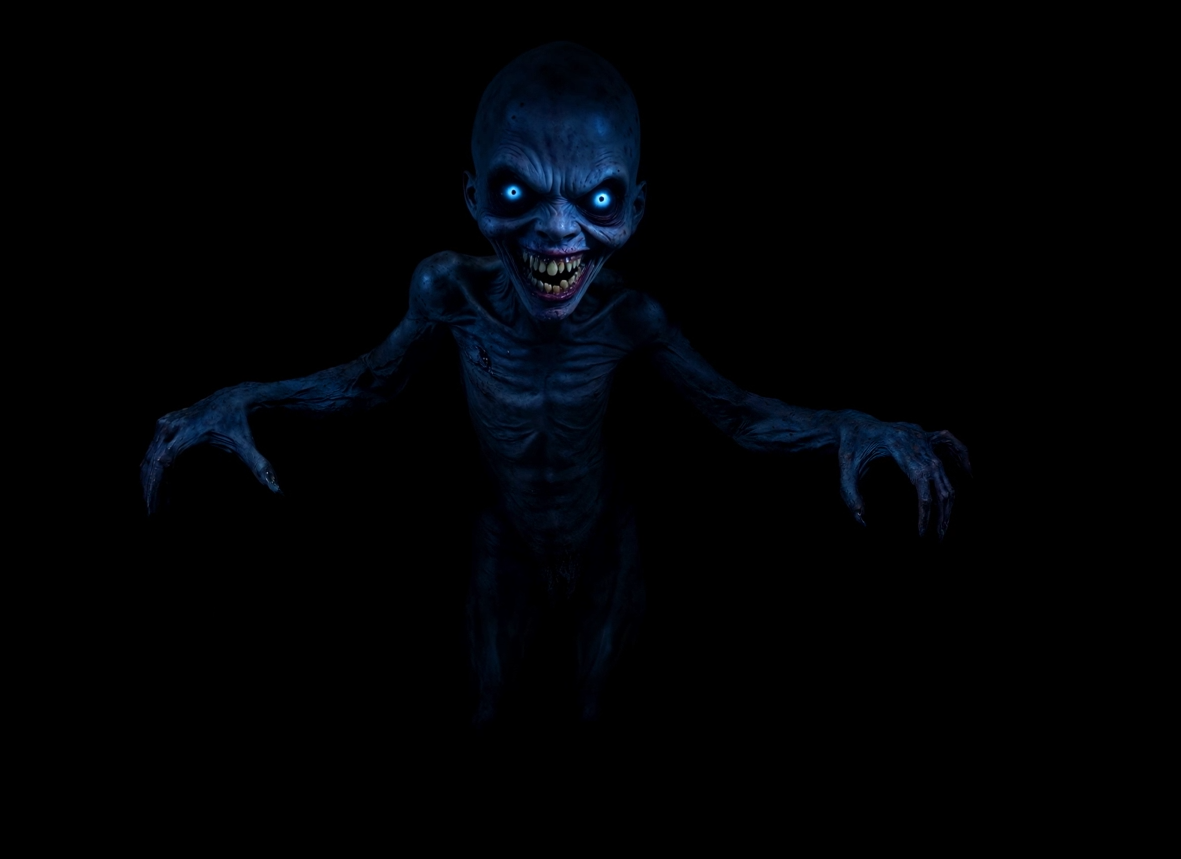
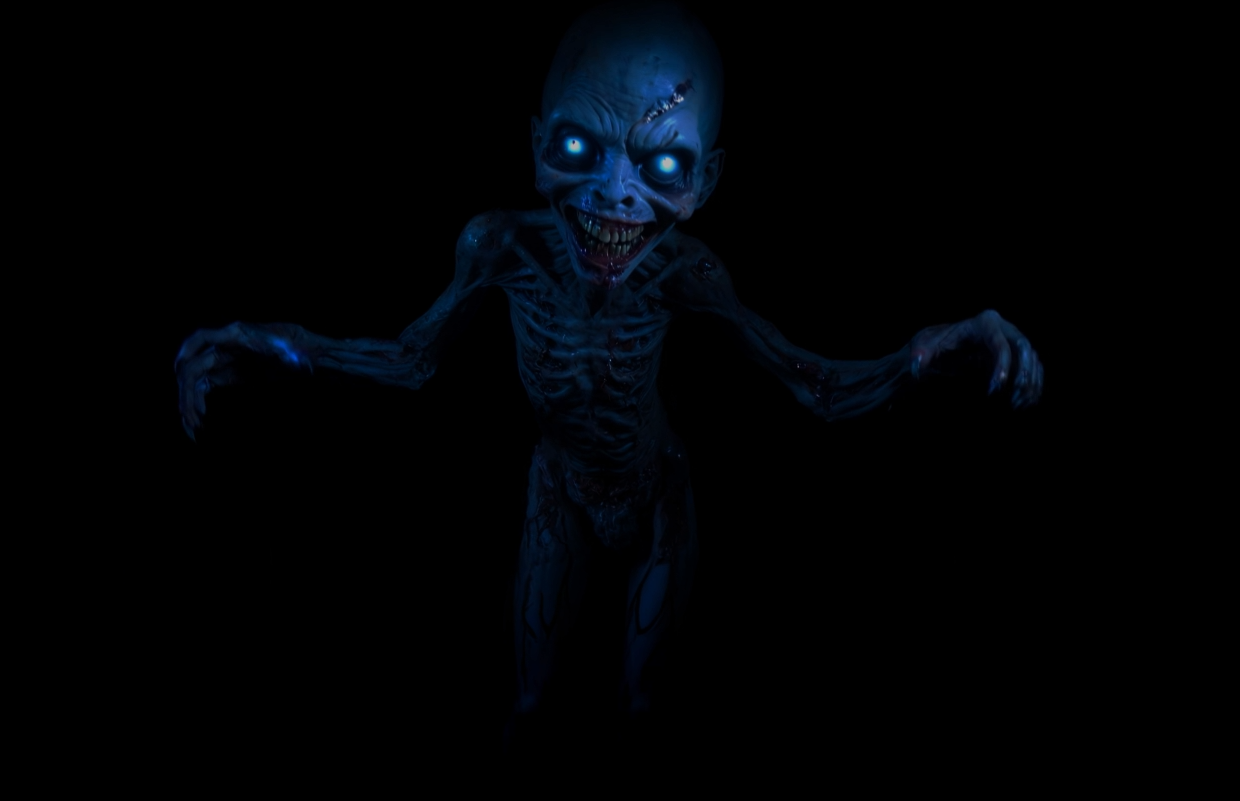
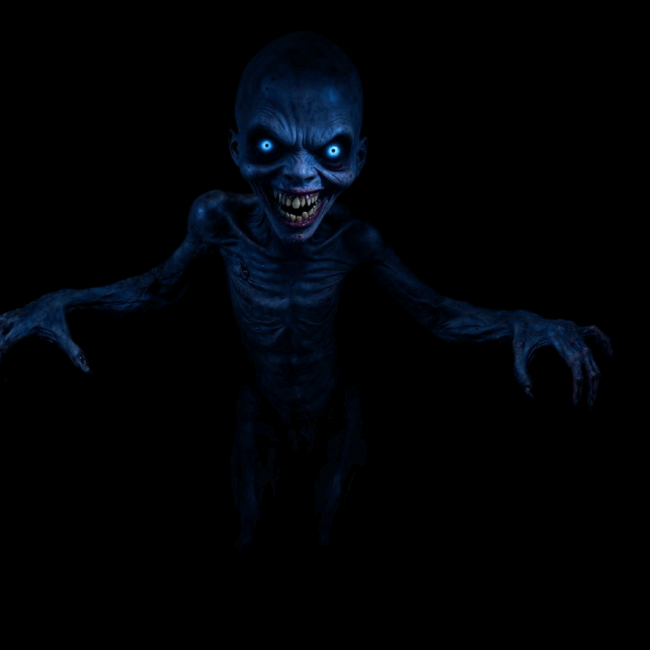
The final scene is more atmospheric but no less chilling. It begins in near-complete darkness with only two glowing blue eyes visible in the void. Slowly, Smiley creeps closer, and as he does, his body begins to take shape—first a silhouette, then slimy details, and finally his disturbing, ever-present grin. The audio design is top-notch, with a low growl building beneath the scene and layers of sinister laughter echoing all around. It creates an immersive dread that lingers long after the scene ends. Smiley may be small, but his impact is huge—perfect for eerie ambiance or as a creeping, climactic element to end your Halloween projection display.
🕷️💀 AtmosFX Just Unleashed Its Most Terrifying Collection Yet… 💀🕷️
AtmosFX’s Nightmares is a bold and grotesque new frontier for digital Halloween décor. For the first time, the studio has turned to AI to generate its cast of monsters—an ambitious creative shift that pays off in shocking, surreal, and unsettling ways. Rather than friendly ghosts or silly skeletons, this collection dives headfirst into body horror, psychological dread, and deeply unnatural designs. Each of the six original creatures comes with three animated scenes, offering a total of 18 nightmare-fueled sequences that are as technically impressive as they are terrifying.
The standout theme across Nightmares is distortion—of flesh, form, and even identity. These are monsters not just made to scare but to linger in the subconscious. They shift, morph, ooze, melt, scream, and sometimes even laugh right at you. This isn’t a lighthearted display for trick-or-treaters under ten—Nightmares is built for haunters and horror fans who want to elevate their Halloween display into a full-blown fright experience. Whether you’re projecting on windows, walls, TVs, or AtmosFX’s signature Hollusion material, these scenes will grip your audience with tension and revulsion in equal measure.
Abomination
Abomination opens the collection with one of the most visually disturbing sequences. In the first scene, a grotesque puddle of slime births a malformed creature, its body spawning limbs and faces as it screams and dissolves back into the ooze. The second scene presents a spider-like form with human heads protruding from its body, flickering in and out of shadow as it growls and stalks the viewer. The final scene begins with a smaller crab-like creature that grows into a multi-limbed monstrosity. The combination of strobe effects, guttural sound design, and seamless AI animation makes Abomination a visual overload—in the best possible way.
Bone Spider
Bone Spider brings arachnophobia to life in a way only AI could imagine. The first scene features a glistening, animated spiderweb forming in the wind before a skeletal spider descends from above. Its human skull-like head adds a macabre twist before it vanishes into the darkness. The second, longer scene introduces a trapped human, wrapped and dragged away by the spider in a beautifully choreographed moment of predatory horror. In the final quick-hitting scene, the spider drops from above with a blank white face that slowly morphs into a screaming skull. These animations are perfect for web-themed setups or projections against textured surfaces like garage doors or homemade webs.
Night Doll
Night Doll is a standout for fans of haunted toys and psychological horror. The first scene is a morbid transformation—the doll walks in, splits its cracked head open, and reveals a rotting skull inside, laughing all the while. The second scene shows it jerkily walking forward like a marionette, before its strings snap and it lunges at the viewer with a stretched, howling mouth. The final scene goes full nightmare: the doll crawls in, rises with glowing red eyes, then unleashes a monstrous tentacled slug from its mouth that coils around its body. It’s surreal, well-paced, and oozes malevolent charm. Projection-mapped onto a nursery window or child’s room prop, this would be devastatingly creepy.
Homunculus
Homunculus dives deep into body horror, focusing on two conjoined figures locked in eternal struggle. The first scene shows their flesh melting and merging as they scream in torment—a perfect use of AI’s ability to blend and distort forms. The second is a short jump scare where they slam against a glass surface, ideal for window projections. The third and most intense scene sees the two trying to rip themselves apart, splitting down the middle in a bloody, gory mess before running off in opposite directions. It’s gruesome, bizarre, and one of the most effective uses of horror pacing in the collection.
Necromancer
Necromancer brings a gothic, occult flair with unmatched levels of gore. In her first appearance, a floating cloak summons the witch’s bloated, hideous form. Blood gushes from her mouth and drenches her as she laughs and eventually melts into the pooling gore below her. The second scene shows her creeping forward, eyes glowing, before she lets out an inhuman, guttural scream. The final sequence begins with her laughing at the viewer before bending over and unleashing a flurry of slimy tentacles from every part of her body. This witch isn’t casting playful spells—she’s conjuring nightmares straight from the abyss. The detail, animation smoothness, and disturbing imagery make Necromancer one of the most memorable characters AtmosFX has ever produced.
Smiley
Smiley is the perfect finale to the set—a pint-sized imp with a giant personality and an even bigger grin. In the first scene, he approaches with ooze dripping down his tattered clothes, laughing maniacally until his head melts into a puddle. The second is a quick 15-second jump scare where he lunges from the shadows with a piercing scream. The third is atmospheric and brilliantly paced: only his glowing blue eyes are visible as he approaches in darkness, eventually revealing his full form amid growls and distant laughter. Smiley may be small, but he delivers some of the creepiest and most rewatchable scares of the entire collection.
What sets Nightmares apart isn’t just the scare factor—it’s the execution. The AI animation brings fluidity to the morphing, melting, and fusing that would be nearly impossible with traditional hand animation. The sound design is top-tier across the board, from bone-crunching body sounds to ambient growls, laughs, and whispers that elevate each scene. AtmosFX has leaned fully into unsettling horror, and the result is a collection that feels more like an art installation of fear than a digital decoration set.
For home haunters, horror fans, or anyone looking to add a truly intense edge to their Halloween setup, Nightmares delivers on every front. It’s not for young children—but for teens, adults, and scare enthusiasts, it offers unmatched ambiance and terror. Whether used as the main event or as supplemental projections to build tension, this collection will make your display unforgettable.
What We Love
- AI-Generated Horrors: The collection feels like a fresh creative leap for AtmosFX. Each monster is conceptually rich and uniquely disturbing, unlike anything they’ve produced before.
- Flexible Display Options: All scenes are compatible with TVs, windows, walls, and Hollusion setups—allowing full flexibility across haunt designs.
- Scene Variety: Each monster has three animations, making it easy to build scenes around them or rotate visuals to keep your haunt fresh.
- Uncompromising Tone: These aren’t family-friendly frights—they’re unapologetically intense, appealing to serious haunters looking for something new and nightmarish.
Creative Use Case Ideas
🎃 1. Hollusion Hallway of Horrors
Create a walk-through tunnel using AtmosFX’s Hollusion Projection Material (or sheer black mesh) along a path or garage. Display each Nightmares monster on alternating panels as guests walk by. Time the jump scares (Smiley, Homunculus wall slam, Bone Spider scream) to sync with foot traffic for maximum shock. Add low lighting and fog to complete the illusion of monsters appearing out of thin air.
🪞 2. Mirror of Madness Setup
Use the Doll Face and Night Doll scenes in a window setup with a cracked or antique mirror frame. Angle your projector so it appears the haunted doll is inside the mirror, watching—or trying to escape. Pair with ambient music box sound effects and flickering candlelight.
🕸️ 3. Bone Spider Web Facade
Build a DIY oversized spiderweb across your garage door, bushes, or porch using rope or white thread. Then project the Bone Spider scenes onto the web using a short-throw projector. It will look like the spider is crawling across its own webbed territory. Bonus: position the long scene with the trapped human to make it look like your web caught a real victim.
🩸 4. Bloody Witch Ritual Room
Create a dark ritual chamber for the Necromancer using red lighting, pentagram props, and dry ice fog. Project her first blood-spewing scene on a wall behind a faux altar or cauldron, making it look like she’s appearing during a summoning ritual. Include her tentacle scene for the finale, and scatter bones or spell books nearby to sell the concept.
🧠 5. Abomination in the Basement Window
Use the ooze-filled Abomination scenes in a low basement window, creating the illusion that something grotesque is clawing its way up from underground. Add fake sludge or dripping slime around the window frame to sell the effect.
👁️ 6. Hidden Eye Encounter with Smiley
Hide Smiley’s glowing-eye scene in unexpected places: behind shrubs, in a carport, or even in an old refrigerator on your porch. All visitors will see at first are two floating blue eyes—and then his shape slowly emerges. Combine with proximity-triggered speakers to play his laugh as someone walks by.
🛏️ 7. Bedroom Window Nightmare Loop
Use Doll Face, Night Doll, and Homunculus in a child’s bedroom window mockup with flickering lights and creepy music. Set it up to look like someone’s nightmares are being projected right through the glass. A great place for scenes involving melting heads, puppet strings, and crawling dolls.
🕷️ 8. Jump Scare Loop Wall
Pick your most aggressive jump scare scenes—Homunculus wall slam, Smiley scream, Bone Spider attack—and run them on a loop on a small monitor or projector hidden near a queue or trick-or-treat station. People passing by will let their guard down, then get hit with an in-your-face scare.
🧟 9. Two-Sided Terror Display
Set up a double-sided Hollusion rig in your yard—guests see Abomination from one side, and Necromancer from the other. It’ll feel like your entire property is under siege by different dimensions of nightmares. Time fog bursts and colored lighting to sync with each monster’s entrance.
🧬 10. DIY Haunted Greenhouse
Repurpose a clear greenhouse tent or gazebo with mesh sides. Inside, project Nightmares monsters on all walls. Decorate with hanging vines, bones, and biohazard tape to create a mutation lab or mind experiment gone wrong. Great for Homunculus, Abomination, and Necromancer combos.
Final Verdict
AtmosFX’s Nightmares collection is a bold evolution for the brand—and a terrifying triumph for serious haunters. This is not the lighthearted Halloween fare many have come to expect; it’s a full dive into grotesque, surreal, and truly disturbing horror. Leveraging AI to craft unpredictable morphs, melting flesh, and unnatural transformations, the collection delivers a level of visual and psychological discomfort that is both technically impressive and deeply unsettling.
Each of the six monsters brings something unique to the table—from the body horror of Homunculus, to the occult grotesquery of the Necromancer, to the impish terror of Smiley. With 18 scenes in total, the pacing is tight, the scares are effective, and the creative use of sound and transformation effects make this one of the most cinematic digital decoration sets AtmosFX has ever produced. It’s the perfect toolkit for those looking to create immersive, scream-worthy Halloween experiences—not for the faint of heart, and definitely not for small children.
If you’re aiming to push your haunt beyond pumpkins and ghosts and into real nightmare territory, Nightmares is an essential addition to your projection lineup.

Nyxia brings a whole new meaning to “breaking the fourth wall.”This original animation is one of the most creative and immersive wall effects we’ve seen...
HallowFX’s Spider SilhouettesSimple Shadows, Maximum Creep Factor HallowFX’s Spider Silhouettes taps into one of Halloween’s most universal fears—spiders. Using simple but effective shadow-style animations, this...
HallowFX’s Snake in a MirrorA Slithering Surprise That Strikes from the Shadows HallowFX’s Snake in a Mirror delivers a chilling twist on the classic haunted...
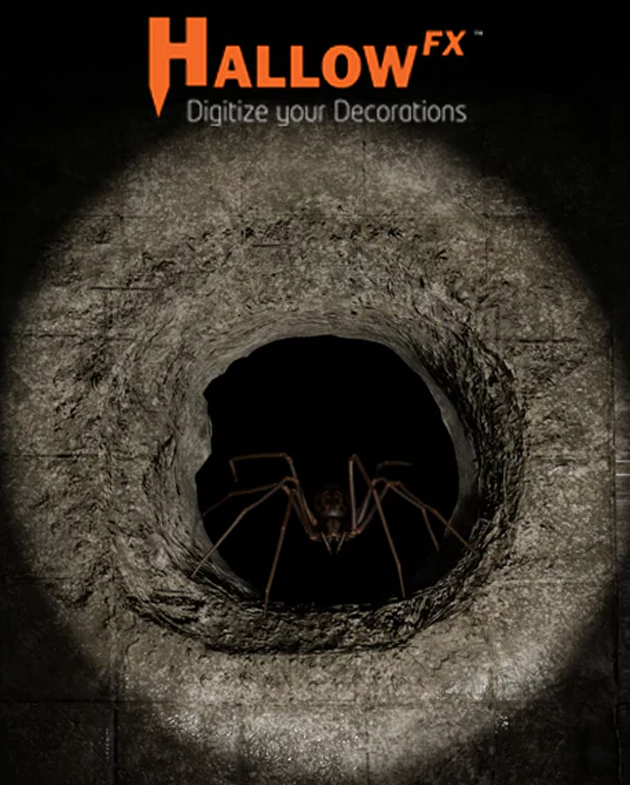
HallowFX’s Horror HoleFrom the Shadows, They Creep HallowFX’s Horror Hole taps into two of the most common phobias—spiders and rats—with a simple yet spine-tingling concept:...
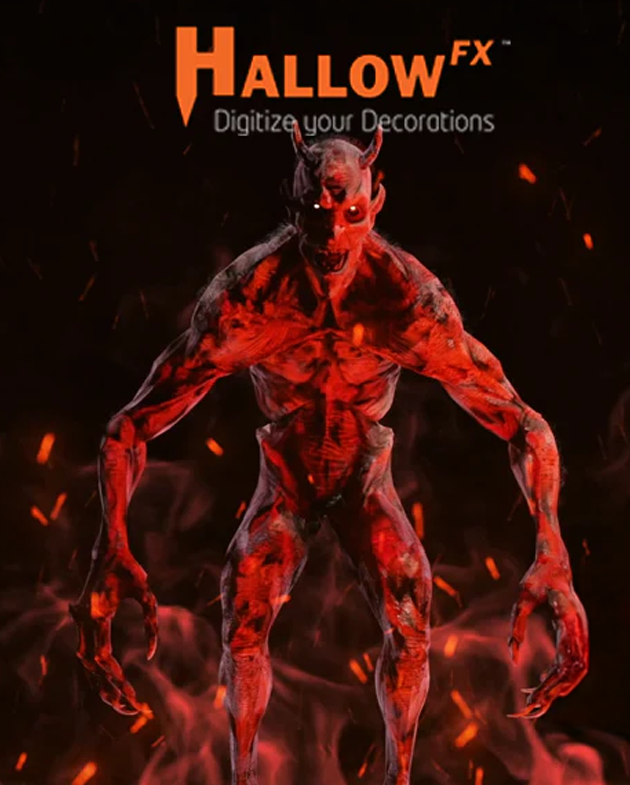
HallowFX’s Hell DemonStraight Outta the Underworld and Onto Your Garage Door If your haunt leans more toward infernal than playful, Hell Demon from HallowFX cranks...
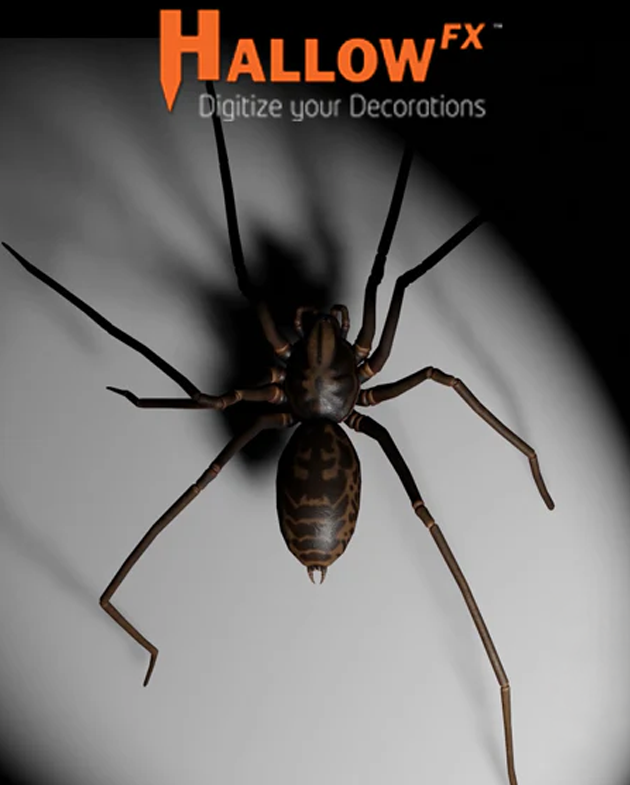
HallowFX’s Giant Spider ClimbingWhen Arachnophobia Takes Over Your Walls If your goal is to send shivers down spines this Halloween, HallowFX’s Giant Spider Climbing will...
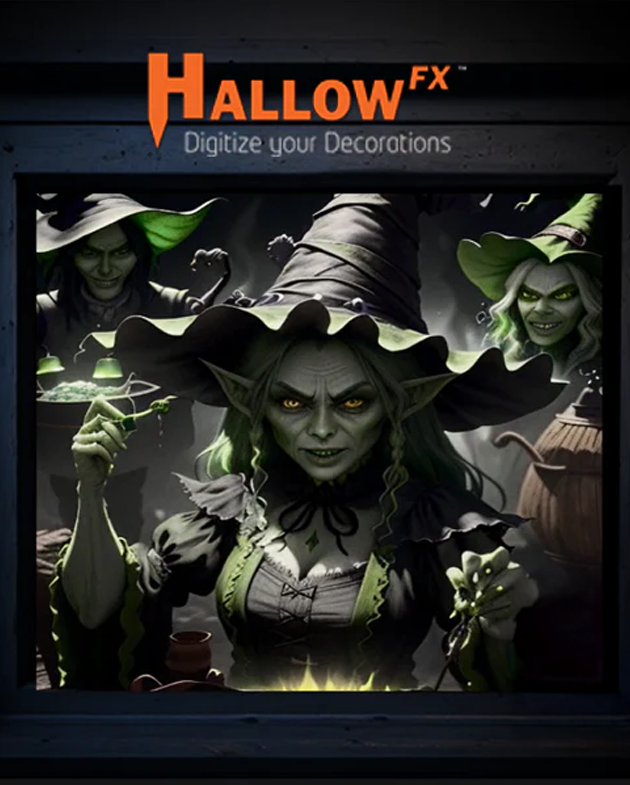
HallowFX’s Creepy Canvases – Witches & DemonsSpellbound and Sinister: A Haunted Gallery of the Occult With Creepy Canvases – Witches & Demons, HallowFX conjures up...
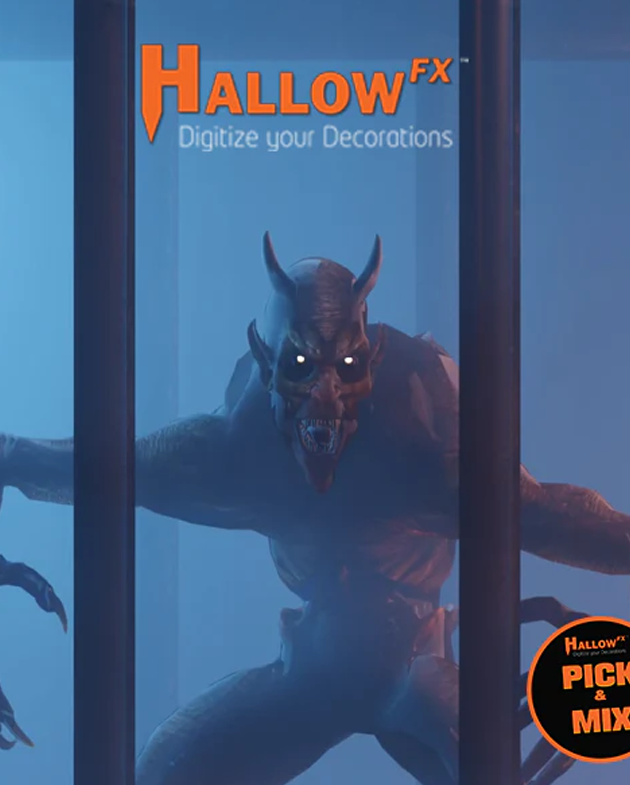
HallowFX’s Caged DemonHell Has a Holding Cell—and It’s in Your Front Yard Sometimes, the scariest creatures aren’t the ones chasing you—they’re the ones that want...
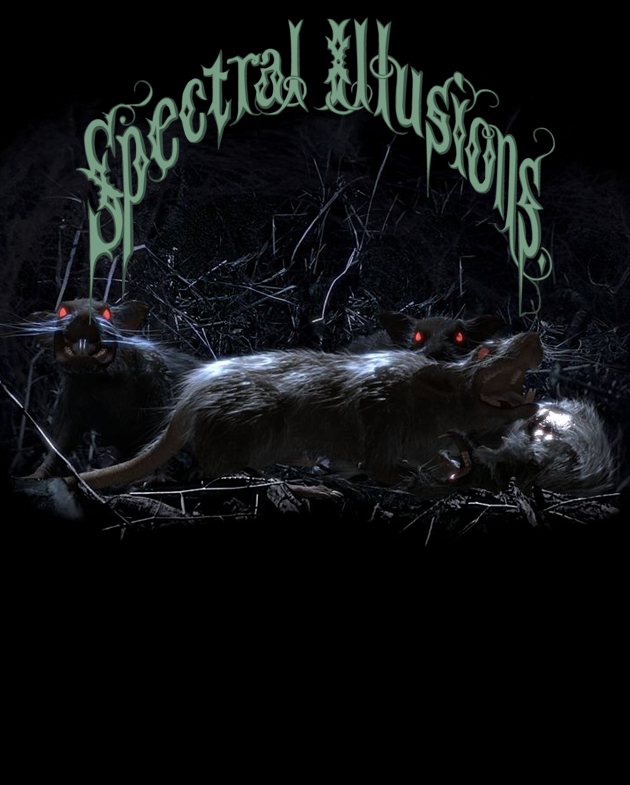
Oh, Rats! by Spectral Illusions“Rotten, ravenous, and ready to ruin your night.” Oh, Rats! is a small-screen digital effect from Spectral Illusions that brings a...
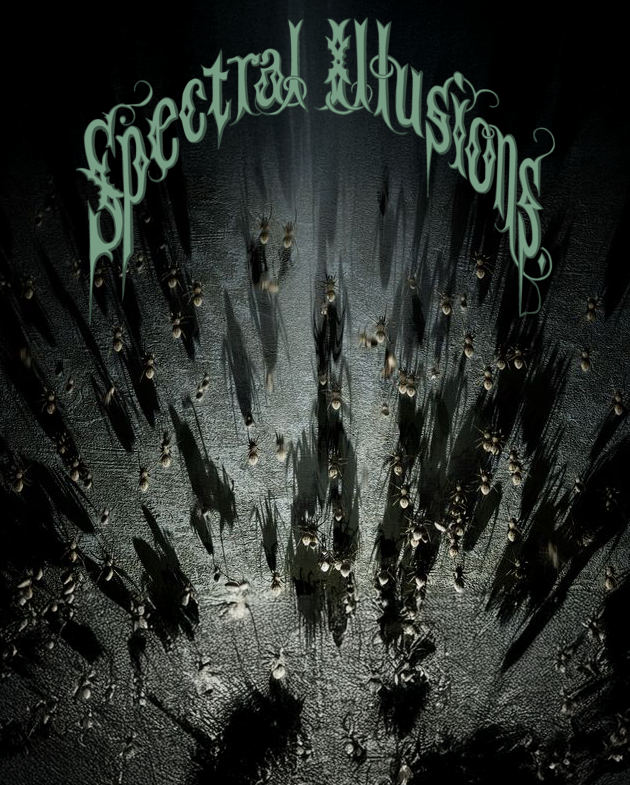
Angry Spiders by Spectral Illusions“The very angry spiders ran up the freakin’ walls,Out came the screams which made the spiders fall.” Angry Spiders from Spectral...
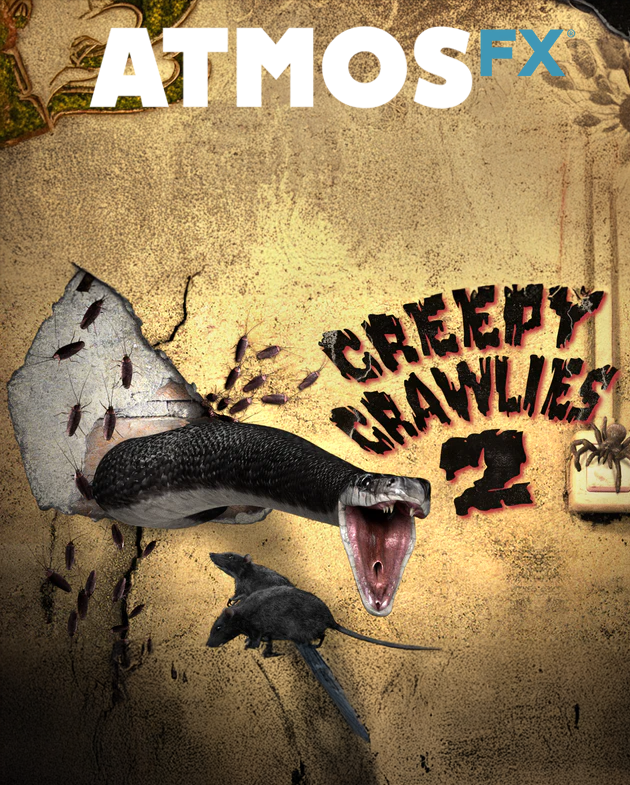
Creepy Crawlies 2 is a skin-crawling digital decoration collection from AtmosFX that brings your worst phobias to life. This set features high-definition animations of tarantulas,...

Crawling, Squirming, and Absolutely Disgusting—in All the Right Ways If you’re going for the “make their skin crawl” effect in your haunt this year, BUGS:...